
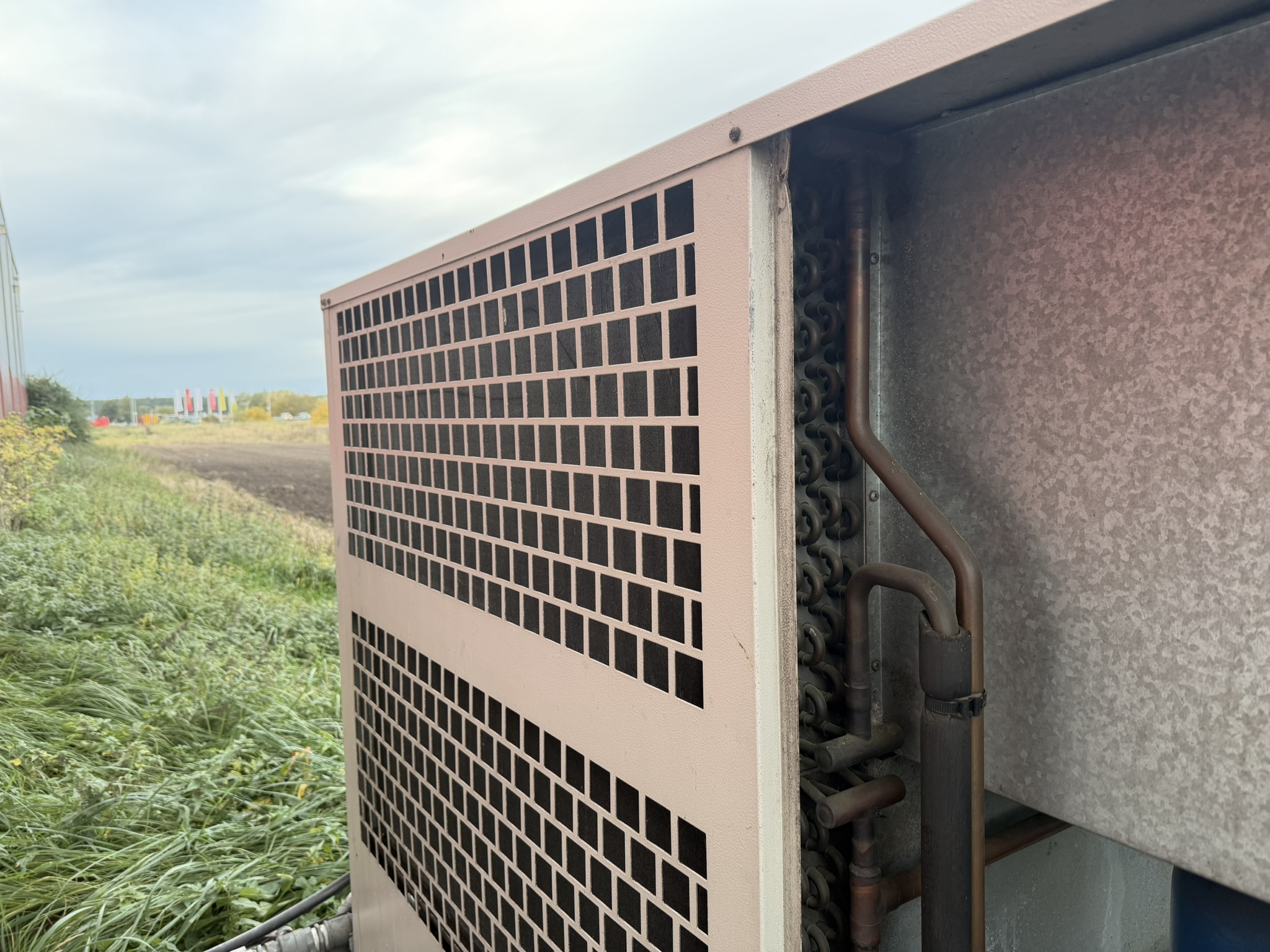

When a plate heat exchanger freezes, the plates crack on the inside and the two circuits become one. Water or glycol enters the refrigerant side, refrigerant escapes into the water system, and the controller often reports nothing more than low pressure. It is one of the most serious faults a chiller can have. It is also repairable, provided nobody tries to save time on drying.
What water does inside the circuit
| Where | Effect |
|---|---|
| Expansion valve | Ice forms at the orifice and blocks the flow |
| Oil | Ester oils absorb water and break down into acids |
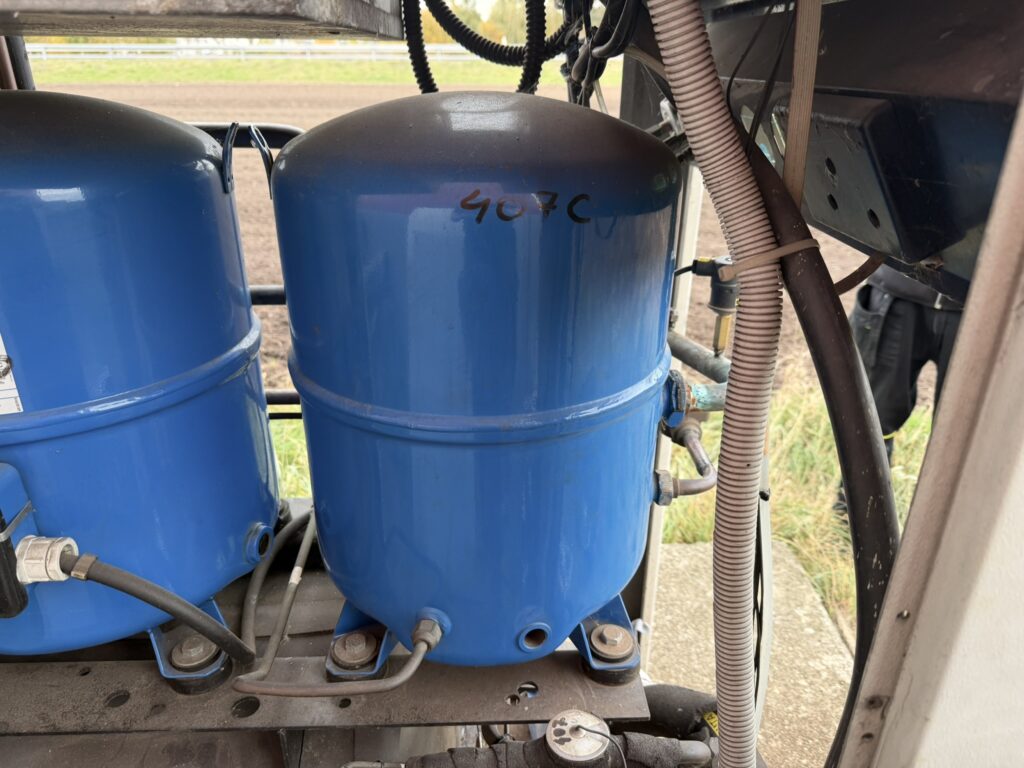
| Compressor motor | Acid attacks the winding insulation |
| Copper and steel | Corrosion and copper plating on bearing surfaces |
| Filter drier | Saturates within minutes and stops protecting |
The longer the unit runs or stands with water inside, the further this goes. Switching the circuit off and calling early is the cheapest decision in the whole repair.
How we confirm it
Signs are a falling pressure on the water side, a moisture indicator that has changed colour, milky oil and a refrigerant pressure that follows the water pressure. We isolate the evaporator hydraulically and pressure test it with nitrogen. How the freeze happens in the first place is covered in chiller evaporator freeze up.
The clean up
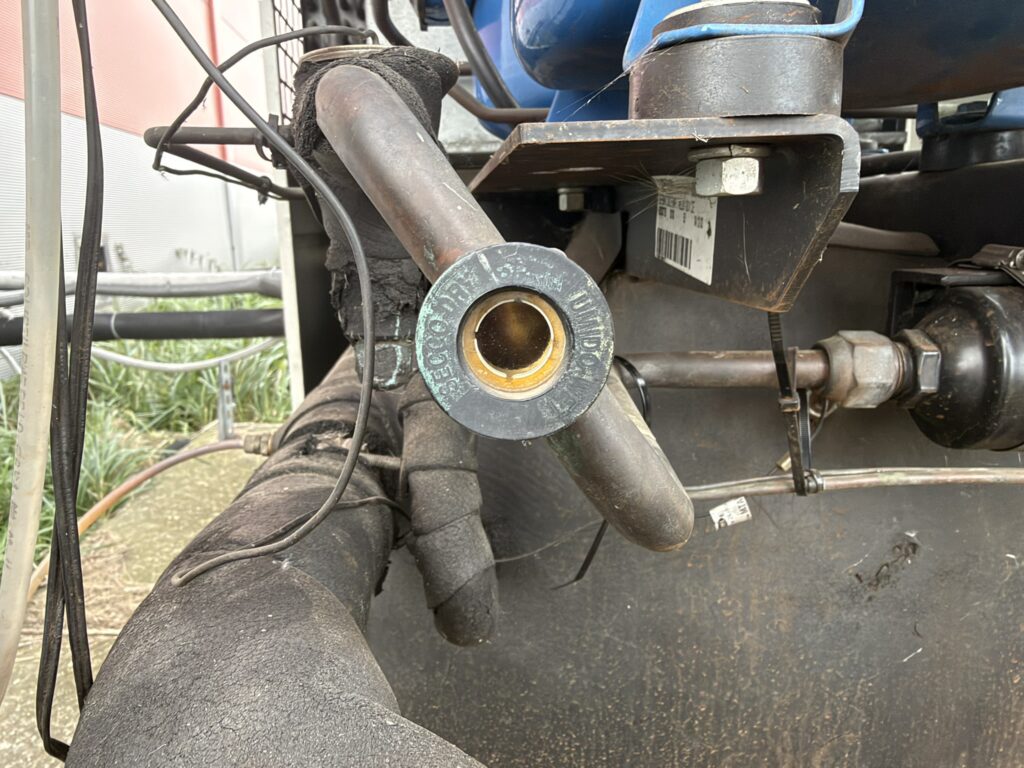
- Recover the refrigerant. It is contaminated and goes for reclamation or disposal.
- Drain free water from the lowest points: evaporator, suction accumulator, oil sump.
- Replace the evaporator. A cracked plate heat exchanger is not repaired.
- Purge with dry nitrogen, then evacuate in several stages, breaking the vacuum with nitrogen in between and warming components that still hold water.
- Judge dryness by the gauge: the vacuum must hold after the pump is isolated.
- Change the oil completely, with ester oils usually twice.
- Fit new filter driers with high water capacity and change them again after some days of running.
- Charge new refrigerant by weight and run the unit under observation.
The compressor question
A compressor that was stopped early usually survives. We test winding resistance and insulation, look at the oil and listen to the first start. If the insulation is low or the oil is acidic, we say so and quote a compressor replacement as part of the same job, because a weak compressor will contaminate the cleaned circuit again when it fails.
Follow up
One to two weeks after the restart we return for an acid test, a look at the moisture indicator and another filter change. Only then do we call the circuit clean. We also remove the cause of the freeze: glycol concentration, flow switch and freeze protection settings.
When it is not worth repairing
On a small, old unit with a refrigerant that may no longer be topped up, the sum of exchanger, refrigerant, oil and labour can exceed the value of the machine. You receive that sum before any work starts, so you can compare it with a replacement.
Costs
On site diagnosis starts at 800 EUR net, a working hour is 115 EUR net and travel 0.75 EUR net per km. Heat exchanger, refrigerant, oil and filters are quoted after the diagnosis. Smaller units are cleaned up in our workshop, see workshop repairs.
Questions we hear after a freeze
Can the second circuit keep running?
How long does drying take?
Is the refrigerant lost?
How do we prevent it happening again?
Send the model, serial number and a short description of what happened through the contact form or to info@chillerserwis.com.