
A chiller knows only what its sensors tell it. One wrong reading is enough to make it trip on freeze protection with water at 12 °C, load the wrong number of compressors or flood a compressor with liquid. Because the sensors are cheap, they are also the parts most often replaced on a guess. These are the mistakes we meet, and what is true instead.
Mistake 1: “The display shows a value, so the sensor is fine”
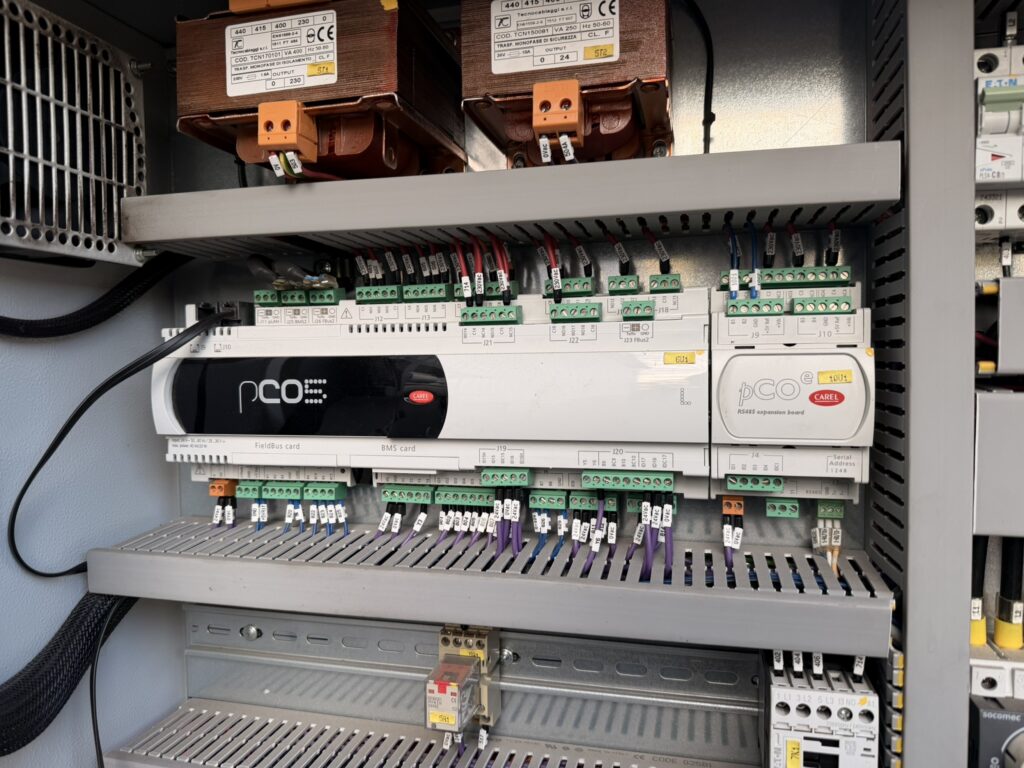
An open or shorted sensor is easy: the controller shows a limit value and a sensor alarm. The difficult ones read plausibly and wrongly. A drift of three kelvin on the leaving water sensor does not raise any alarm, but the unit now controls to the wrong temperature. We compare every sensor with a reference thermometer at the measuring point. After some hours at standstill, sensors in the same fluid should also agree with each other.
Mistake 2: “Any sensor of the same size will do”
Most controllers use NTC sensors, whose resistance falls as temperature rises, for example 10 kilohms at 25 °C. Others use PT1000 with 1000 ohms at 0 °C. Discharge lines have their own high temperature types. Fit the wrong one and the controller will display a neat number that is many kelvin off. The type and curve are in the controller documentation, and we check them before ordering.
Mistake 3: “The sensor is faulty” when the installation is
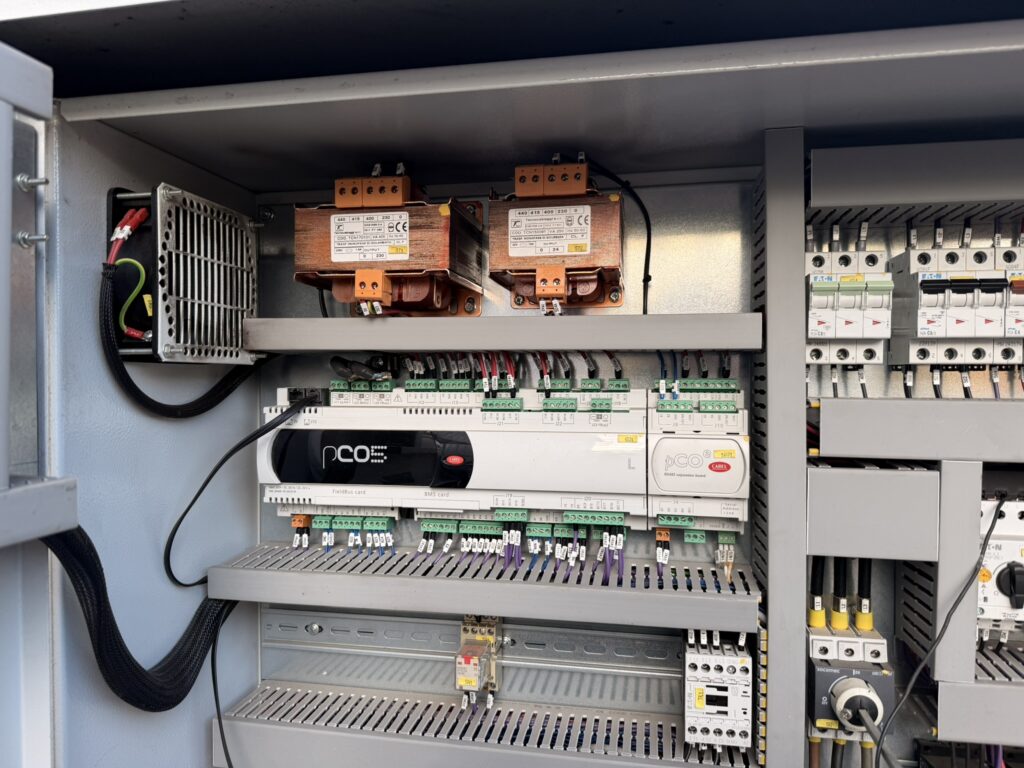
In our experience the element itself is often healthy. A sensor in a pocket without heat transfer paste reacts slowly. A strap on sensor that has come loose, or sits under wet insulation, measures the surroundings. Cables rub through on vibrating pipes and connectors corrode outdoors. Moisture in a junction box acts like a resistor in parallel and shifts the reading. A new sensor fitted the same way will show the same fault.
Mistake 4: bridging the input to keep running
A fixed resistor on a sensor input makes the alarm disappear and takes a protection away with it. On the leaving water sensor that protection is the one that stops the evaporator from freezing. On the discharge sensor it is the one that protects the compressor. We do not leave a site with a bridged input.
What a wrong reading imitates
| Sensor | Fault it can imitate |
|---|---|
| Leaving water | Freeze protection trips, wrong capacity |
| Entering water | Wrong staging, short cycling |
| Suction gas | Expansion valve fault, liquid return |
| Discharge gas | High discharge temperature trips, or missing protection |
| Outdoor air | Fan control problems, low pressure in winter |
That is why sensor checks are part of the diagnosis for expansion valve faults, high discharge temperature and short cycling.
How we test
The sensor is disconnected at the controller and its resistance measured while a reference instrument reads the real temperature. Both are compared with the manufacturer curve. The cable is tested for insulation to earth. Finally the controller input is checked with a precision resistor: if the display is right with the resistor, the fault is outside the controller. All sensors of the unit are checked in one visit, as in our inspection measurements.
Costs
On site diagnosis starts at 800 EUR net, a working hour is 115 EUR net and travel 0.75 EUR net per km. Sensors are inexpensive. The time goes into finding the cause. Crews travel from Wałsnów and Szczecin in Poland.
Short answers
Can I set an offset in the controller instead?
Do sensors need replacing on a schedule?
Can a sensor fault damage the compressor?
Do sensors from another brand fit?
Send the model, serial number and a photo of the alarm through the contact form or to info@chillerserwis.com.