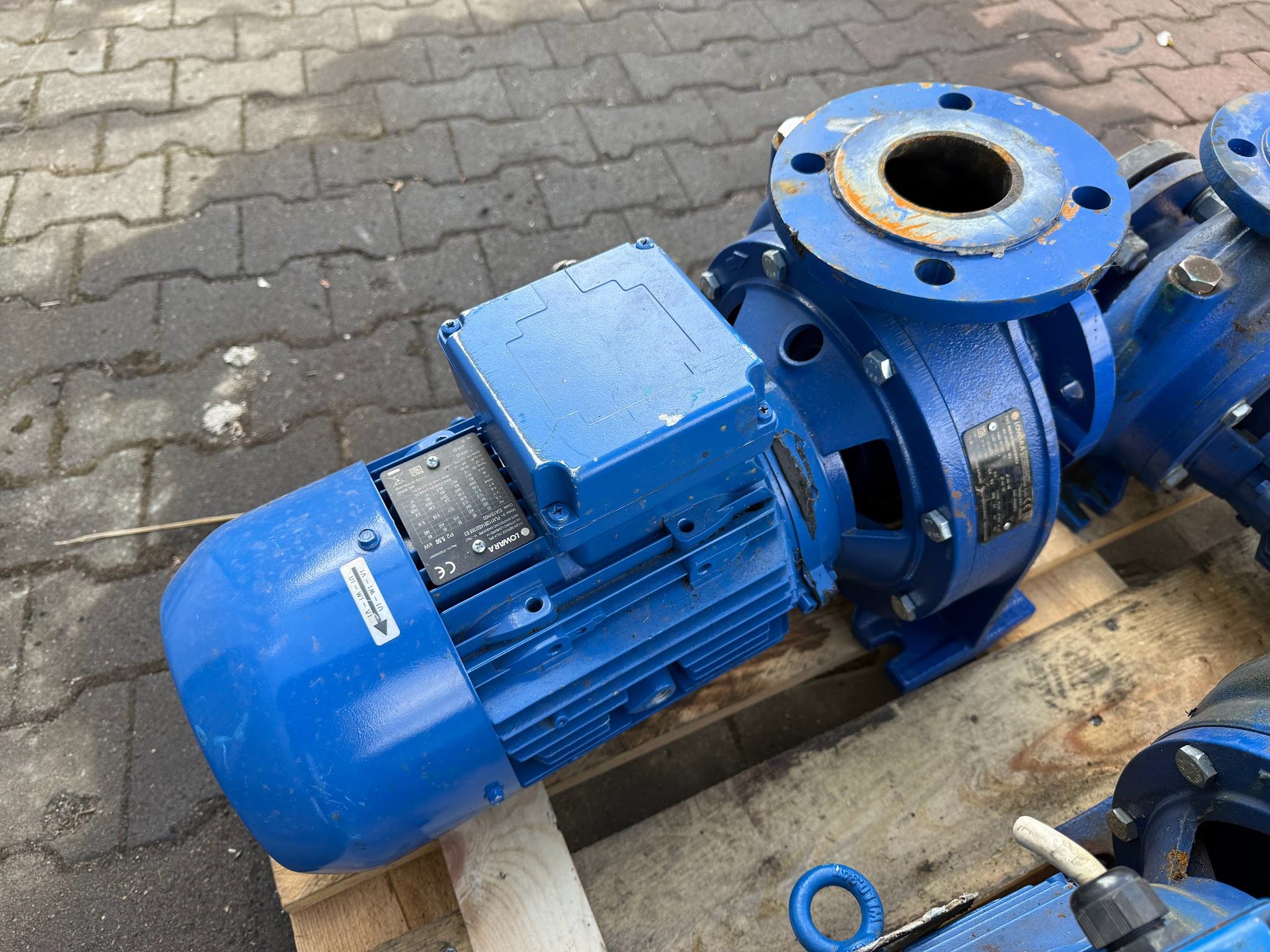

The circulation pump runs for years without anyone looking at it. Then there is a puddle under the seal, the bearing starts to growl or the flow switch trips, and the chiller is down because of a part that costs a fraction of a compressor. This is the sequence we follow from the first call to a pump that is back in service.
Step 1: find out what is actually wrong
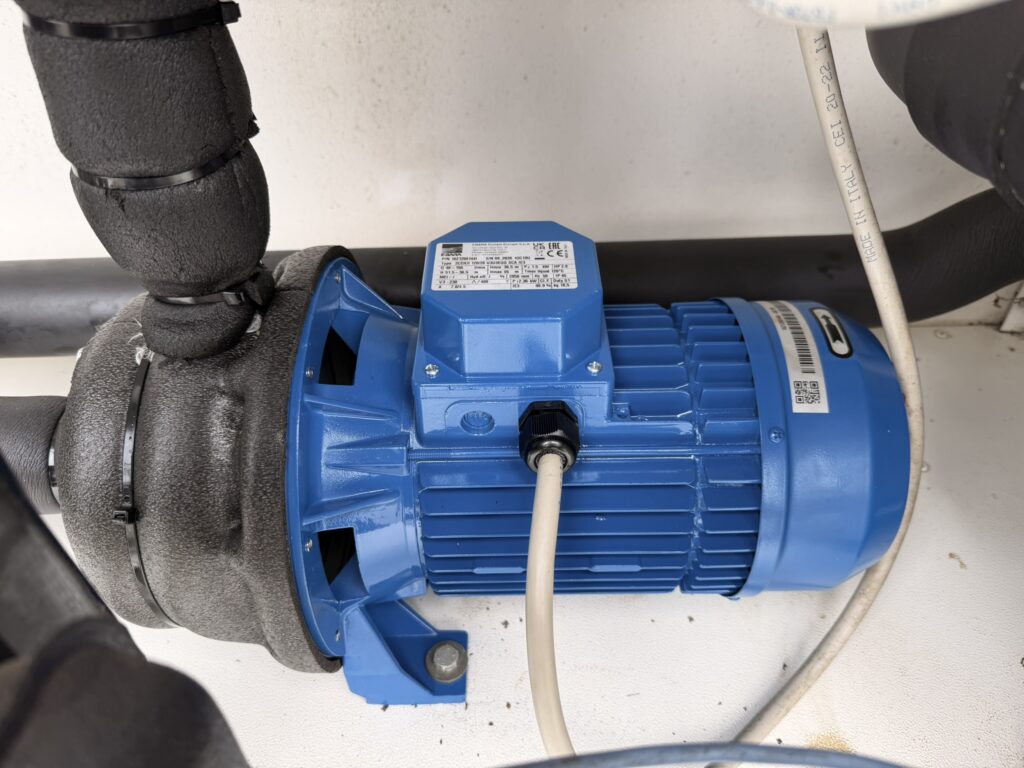
A leak at the shaft points to the mechanical seal. Noise that changes with speed points to bearings. A pump that runs quietly but gives little flow needs a different check: we read the pressure before and after the pump, compare the duty point with the pump curve and measure the motor current. Low flow is often not the pump at all. A blocked strainer, air in the system, a half closed valve or a motor turning the wrong way after electrical work all look the same from the control panel. The effect on the chiller is described in chiller flow switch alarm.
Step 2: decide between repair and replacement
- Seal leaking, shaft and impeller sound: fit a new mechanical seal.
- Bearing noise on a larger pump with an accessible motor: replace the bearings.
- Worn shaft, damaged impeller or a wet winding: replace the pump.
- System changed over the years and the pump no longer matches it: replace with a newly selected pump.
On small pumps a new unit is often cheaper than the hours needed to rebuild the old one. We give both figures so the choice is yours.
Step 3: check the fluid before fitting anything new
Mechanical seals fail early for three reasons: dry running after a drain down, abrasive particles and crystals from aged glycol, and a seal material that does not suit the glycol concentration. Fitting a new seal into the same fluid buys a year at most. We take a sample, check concentration and condition, and clean the strainer. See glycol testing and replacement.
Step 4: select and fit the pump
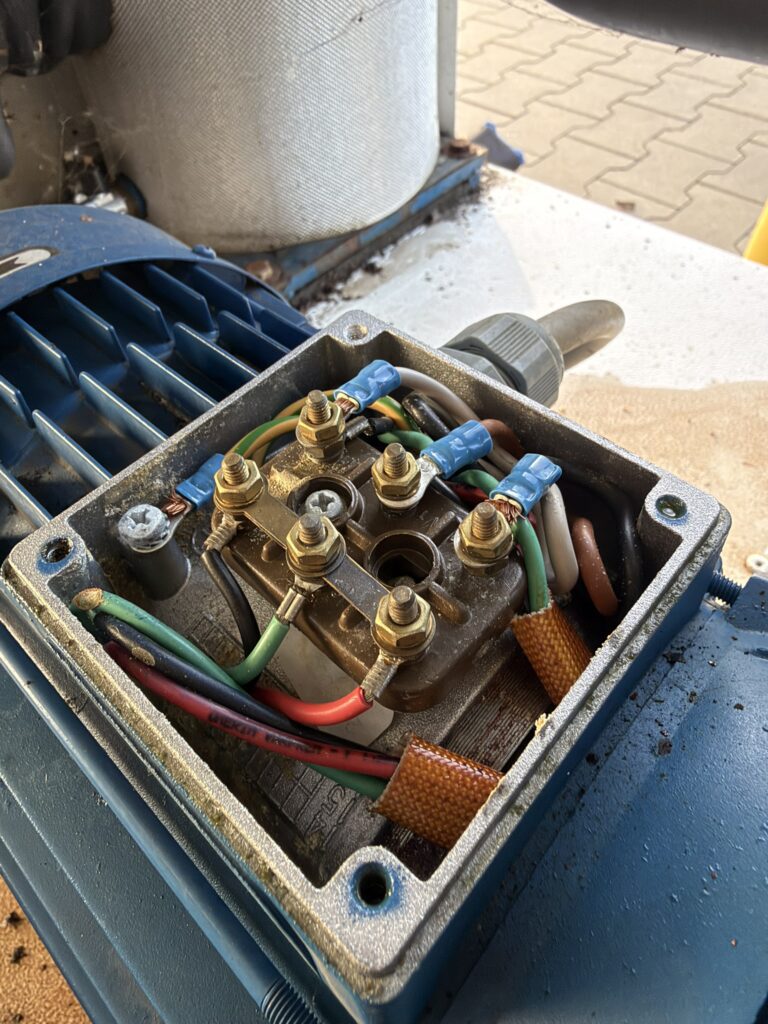
A replacement is chosen by the flow and head the system needs today, not by the nameplate of the old pump. We check port to port length and flange sizes, materials for glycol, motor power and the setting of the motor protection. After fitting, the system is vented, the direction of rotation is confirmed and the flow is calculated from the pressure drop across the evaporator. On twin pumps we test the automatic changeover and alternate the duty pump.
Step 5: test and record
The chiller is run under load. We record pump pressures, motor current and the water temperature difference across the evaporator, and we note the values in the report as a reference for the next inspection. A pump that is slowly losing performance is then visible long before it trips the chiller.
Workshop repair and a spare on the shelf
Pumps are easy to remove and ship. In our workshop we strip them, replace seal and bearings, check shaft, impeller and winding and test the pump before it leaves. For sites with a single pump, keeping an overhauled spare turns a stop of several days into a job of two hours. See workshop repairs.
Costs
On site diagnosis starts at 800 EUR net, a working hour is 115 EUR net and travel 0.75 EUR net per km. Seals, bearings or a new pump are quoted after the diagnosis. Crews travel from Wałsnów and Szczecin in Poland. Other repairs are listed under chiller repair.
Questions about chiller pumps
Can the pump keep running with a dripping seal?
How long does a mechanical seal last?
Do I need the same pump model?
Is a twin pump worth it?
Send a photo of the pump nameplate and the chiller nameplate through the contact form or to info@chillerserwis.com.