Plan the inspections and F-gas leak checks for a chiller in one step: enter the refrigerant, the charge and how the unit is used, and get the legal leak check interval, a recommended number of visits and a suggested calendar.
Inspection and leak check planner
The leak check interval is the legal minimum under Regulation (EU) 2024/573. The inspection frequency is our engineering recommendation and does not replace the manufacturer’s maintenance schedule.
Two different obligations
A chiller needs two kinds of attention, and they are often confused. The first is the F-gas leak check, which is required by law and depends only on the CO2 equivalent of the refrigerant charge and on whether a leak detection system is installed. The second is the technical inspection, which keeps the unit efficient and reliable. The law does not say how often a chiller must be inspected for performance, but the operating conditions do.
The planner above combines both. It calculates the legal leak check interval and suggests a number of inspections per year based on the operating mode and the hours the chiller runs. Visits are spread evenly over the year from the month you choose, and the leak checks are placed into the same visits, so you do not pay for extra travel.
How the recommendation is built
| Operating mode | Inspections per year | Main reason |
|---|---|---|
| Comfort cooling, summer only | 2 | Start-up check before the season and one check at peak load |
| Comfort cooling, all year | 2 | Summer peak and winter operation at low ambient |
| Process cooling, all year | 4 | Continuous load, production depends on the unit |
| Critical process without backup | 4 plus monthly operator rounds | A stop means lost production or product |
If the chiller runs more than 4,000 hours a year, the planner raises the recommendation to at least three visits, rounded to four for an even quarterly rhythm. Above 6,000 hours it always suggests a quarterly schedule. Compressors, fans and contactors wear in proportion to running hours and starts, so a comfort chiller that works all year in a server room behaves more like a process unit.
What a full inspection should include
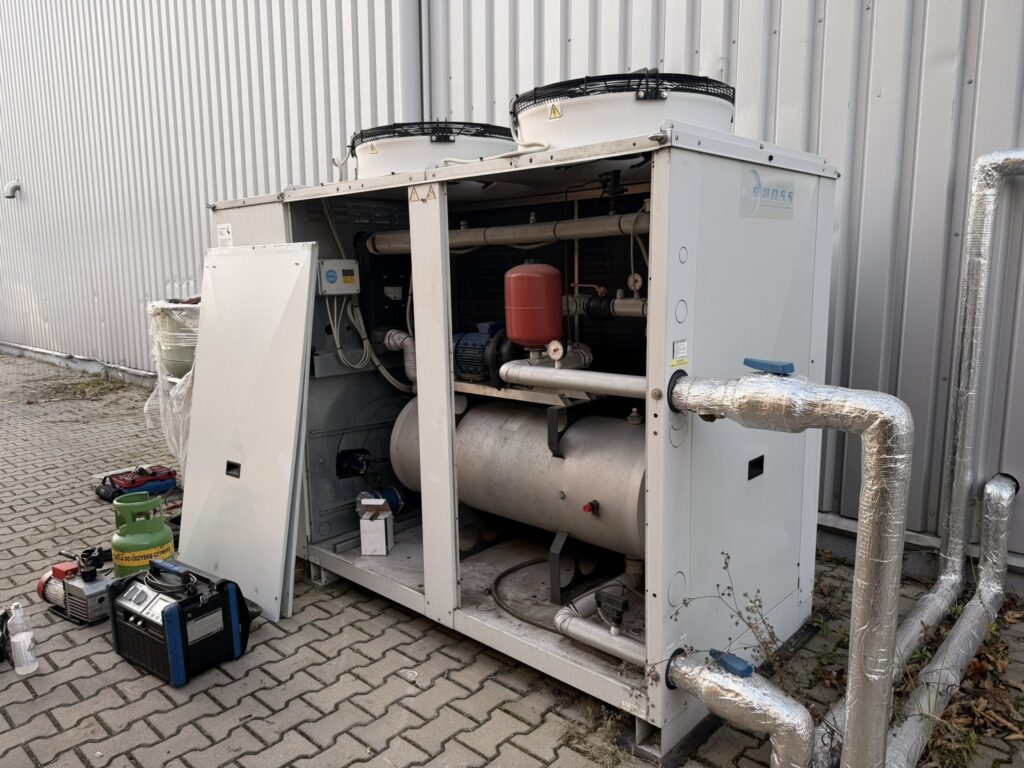
- Pressures and temperatures on both sides of the circuit, with superheat and subcooling calculated from them.
- Water side: supply and return temperatures, temperature difference, pressure drop across the evaporator, strainer condition.
- Compressor currents on each phase compared with the nameplate, contactor condition, tightness of terminals.
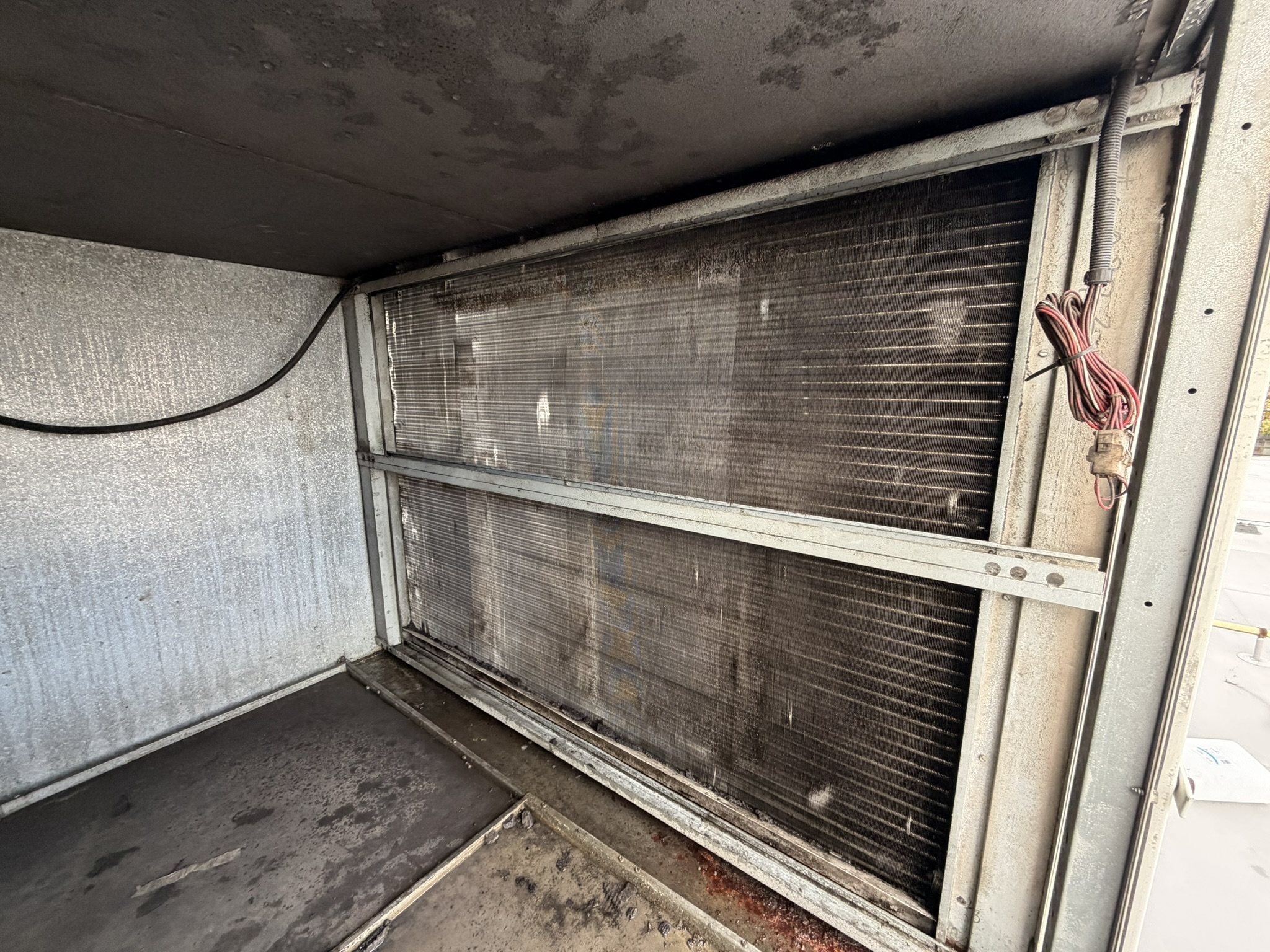
- Condenser condition, fans and fan speed control, or the condenser water side on water-cooled units.
- Oil level and colour where a sight glass exists, crankcase heater function.
- Safety devices: high and low pressure switches, flow switch, freeze protection setpoints.
- Alarm history and controller settings, compared with the previous visit.
- Leak check of the refrigerant circuit with a calibrated electronic detector.
The value of an inspection comes from comparing measurements over time. A condensing temperature that rises by 2 K per year, or a compressor current that slowly climbs, shows a problem long before it becomes an alarm. That is why we write every measurement into an electronic report that the customer signs on site, and we compare it with the previous one. More on this is on the technical inspections page.
Seasonal planning
For comfort cooling, the most important visit is the one before the season. Plan it four to six weeks before the first hot days, so there is time to order parts if something is found. Condenser cleaning belongs to this visit. For process chillers, avoid putting all inspections into the summer: a visit in late autumn checks the low ambient behaviour, the glycol concentration and the frost protection of outdoor pipes and dry coolers.
Example
A process chiller with 40 kg of R410A has 83.5 t CO2 eq. Without a leak detection system it needs a leak check every six months. As a process unit running 5,000 hours a year it should be inspected quarterly. The planner proposes four visits, two of which include the formal leak check record. With an LDS installed, one leak check per year would be enough, but the four technical visits stay. The GWP and CO2 equivalent calculator shows the same thresholds in more detail.
Frequently asked questions
Is the recommended inspection frequency a legal requirement?
No. Only the leak check interval is set by law. The inspection frequency is an engineering recommendation based on how hard the unit works. Some manufacturers or insurers set their own minimum, and that minimum takes priority.
Can the leak check be done during a regular inspection?
Yes, and it should be. The planner puts leak checks into the inspection visits, so the work is done in one trip and recorded in the same report.
What changes if I install a leak detection system?
The legal leak check interval doubles, for example from 6 to 12 months. The system itself must be checked once a year. The technical inspections are not reduced, because an LDS does not see fouled heat exchangers or worn contactors.
How do I plan several chillers at one site?
Run the planner for each unit and align the calendars to the unit with the most frequent visits. Grouping the units into the same visit dates saves travel costs and makes comparison easier.
Want a fixed inspection schedule?
Send us the list of your units with nameplate photos and we will propose a yearly plan with fixed prices per visit.