
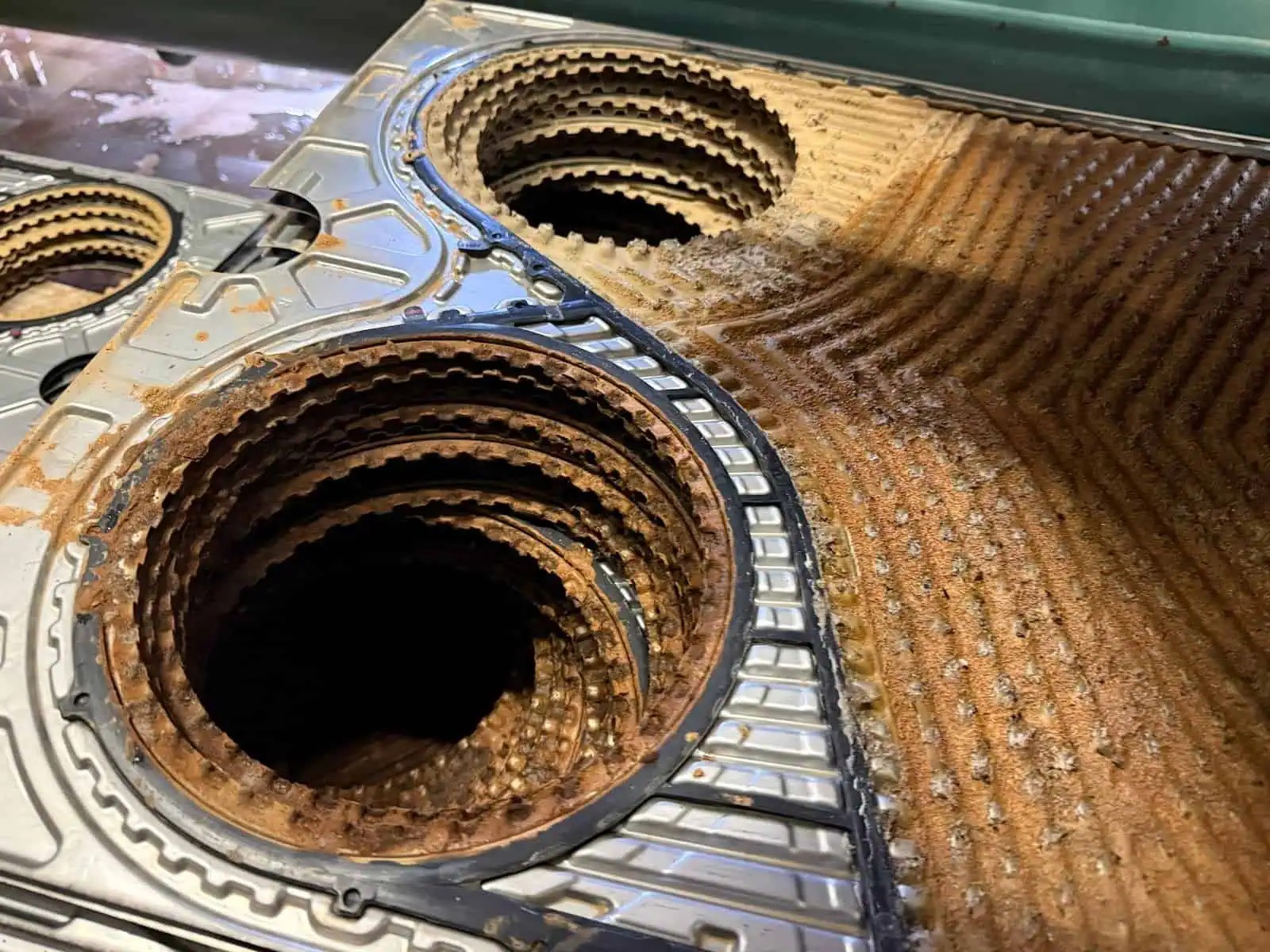

A frozen evaporator is one of the most expensive failures a chiller can have. Ice inside a plate or shell and tube heat exchanger can crack plates or tubes, and once that happens refrigerant and water mix. The good news: if the unit is handled correctly in the first hours, many freeze-ups end with a repair instead of a new heat exchanger. This guide explains why chiller evaporators freeze, what to do immediately and how we decide between repair and replacement.
Chiller evaporator freeze-up: what actually happens
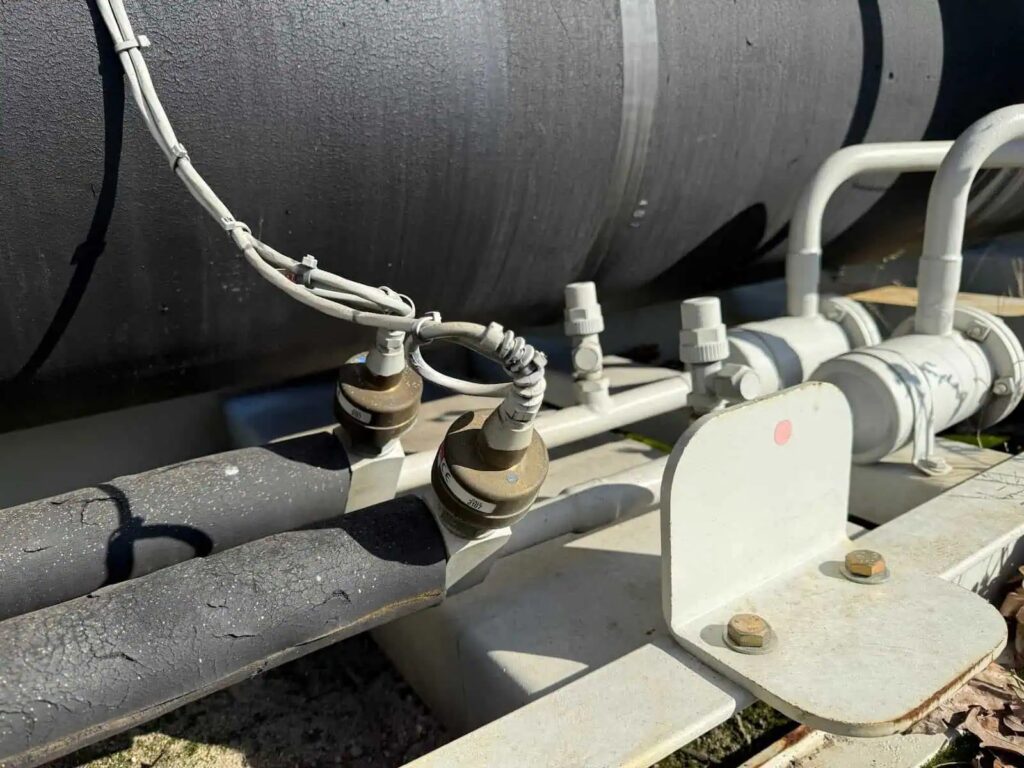
The evaporator transfers heat from chilled water or glycol to the refrigerant. The evaporating temperature is always below the water temperature. When flow drops or the suction pressure falls too far, ice forms at the coldest point of the water passages. Brazed plate evaporators are the most sensitive because their channels are narrow and hold very little water. Shell and tube evaporators tolerate more, but tubes still burst once an ice ring closes.
Five causes we find most often
- Low water flow. Blocked strainer, worn pump, closed valve or a flow switch that no longer trips at the right point.
- Low refrigerant charge. Suction pressure drops, superheat rises and the evaporating temperature falls below freezing.
- Setpoints too low for the fluid. A leaving water setpoint or freeze protection limit that suits 30 % glycol is dangerous with plain water.
- Diluted glycol. After a leak the system is often topped up with water, which raises the freezing point of the mixture.
- Faulty sensors. A drifted leaving water sensor lets the controller run colder than it should.
Two of these at the same time is the classic recipe for a burst plate. Flow problems are covered in detail in our article on the chiller flow switch alarm, and winter operation with weak condensing pressure in low condensing pressure in winter.
First steps after a freeze alarm
Do not restart the compressor again and again to “melt” the ice. Every start freezes more water. Instead:
- keep the compressors locked out but let the chilled water pump run so the ice thaws slowly,
- photograph the alarm history before anybody resets it,
- look for oil in the water circuit or moisture in the sight glass,
- call for service before the chiller goes back into operation.
How we diagnose a frozen evaporator
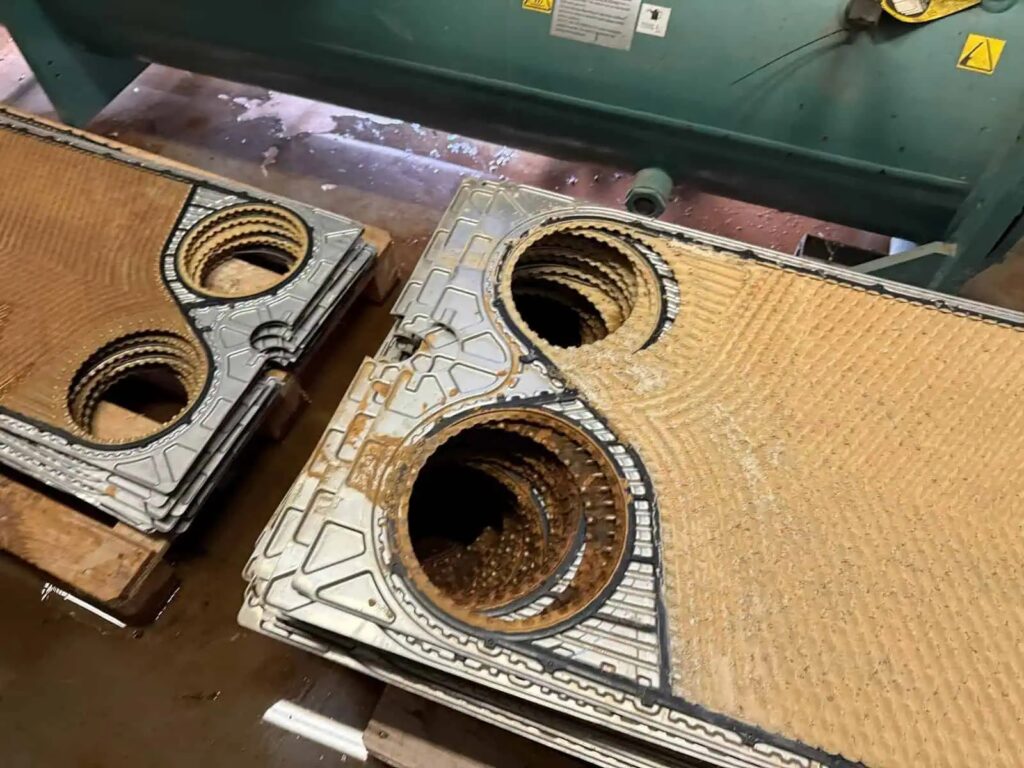
After thawing we test the evaporator for leaks first: the refrigerant side is held under pressure and the water is checked for refrigerant. On plate units the water side can also be pressure tested with nitrogen. Only when the heat exchanger is tight do we look for the root cause: we measure flow and temperature difference, test the flow switch, compare sensors with a reference thermometer and assess the charge from superheat and subcooling. Scale and dirt on the water side reduce flow and make the next freeze-up more likely, so cleaning is often part of the repair.
| Finding | Typical action |
|---|---|
| Evaporator tight, low flow | Clean strainer, check pump, reset flow switch, adjust freeze limit |
| Evaporator tight, low charge | Leak search, repair, evacuation and correct charge |
| Evaporator cracked | Replace heat exchanger, dry the circuit, new filter drier and oil |
Repair or replace the evaporator
If the evaporator is tight, fixing the cause and re-setting the protections is usually enough. If it is cracked, the refrigerant circuit has to be recovered, evacuated and dried, and the filter drier and oil are normally replaced because water forms acid in the system. A new brazed plate heat exchanger is often cheaper than repairing a shell and tube bundle. All work on the refrigerant circuit is documented in line with the F-gas Regulation (EU) 2024/573.
On-site diagnostics start from 800 EUR net, labour is 115 EUR net per hour and travel 0.75 EUR net per km. Smaller units and heat exchangers can also be sent for workshop repairs. Prevention is part of every visit in our chiller maintenance checklist.
Frozen evaporator: questions from operators
Can I restart the chiller once the ice has melted?
How do I know the evaporator is cracked?
Does more glycol prevent freezing?
How long does the repair take?
Is your chiller showing a freeze protection alarm, or has the evaporator already frozen? Send us the alarm history through the contact form or to info@chillerserwis.com and we will arrange a diagnostic visit.