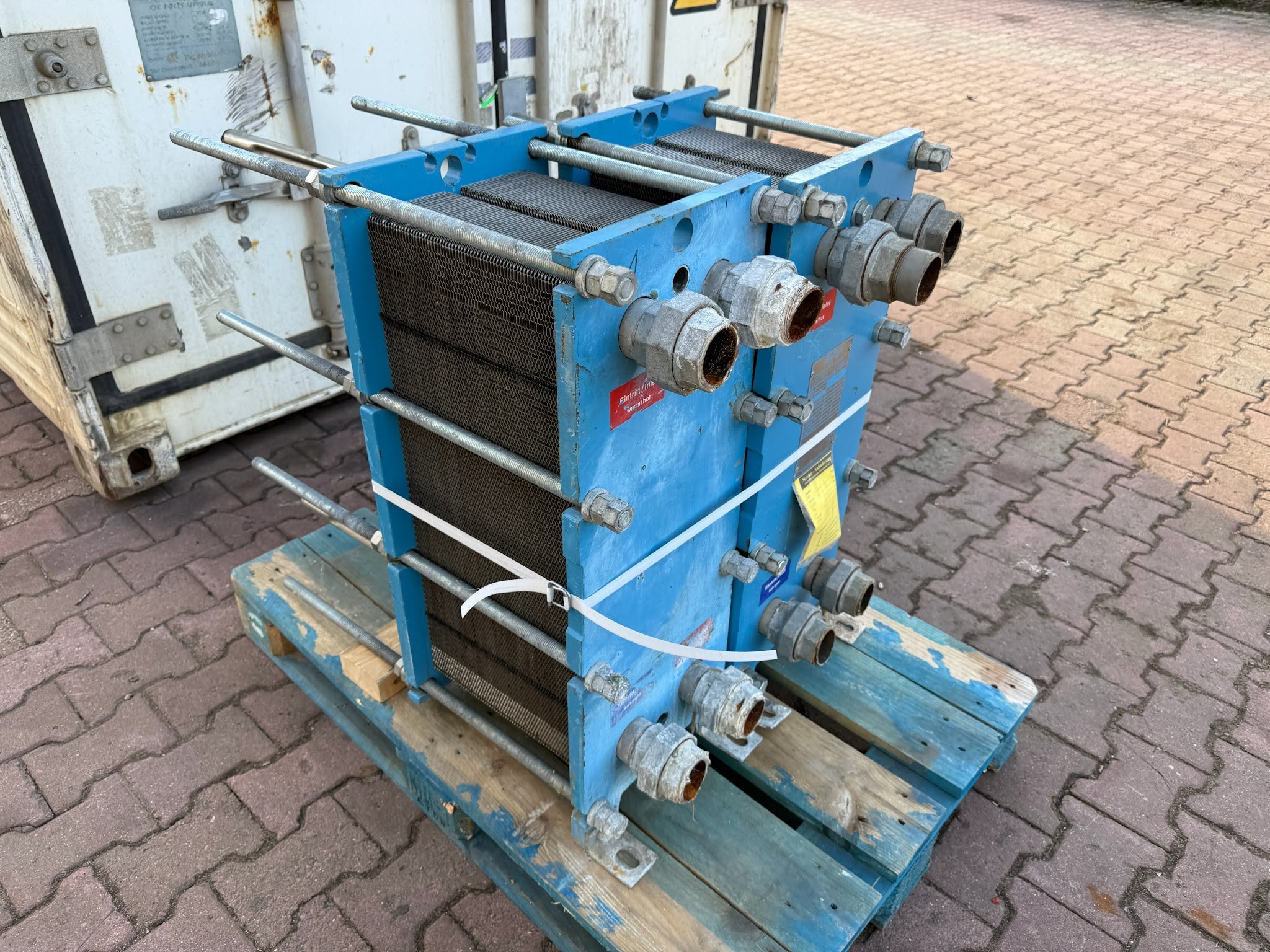

When a chiller with a clean condenser and a correct charge still delivers too little capacity, the cause is often the plate heat exchanger. The evaporator scales up on the water side, sludge from the system settles in the channels, or a plate has cracked after a freeze. This article explains how we test a chiller plate heat exchanger, when a chemical clean is enough, when we replace the unit and what you should budget for it.
Brazed or gasketed: the type decides what can be done
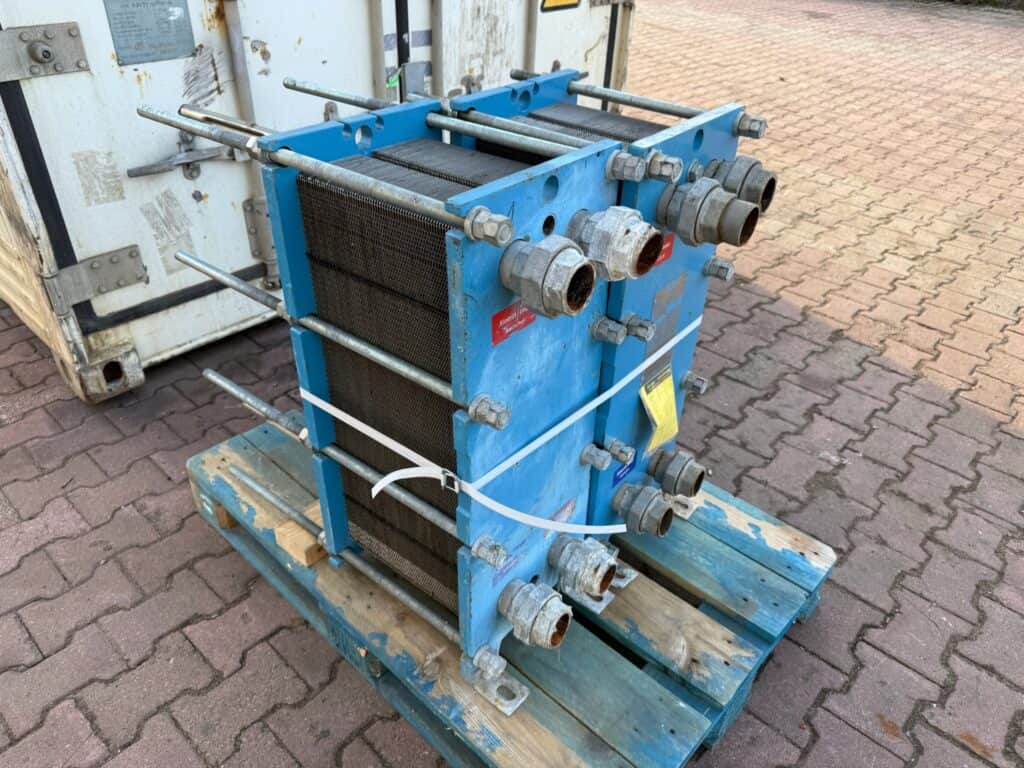
Chillers up to about 300 kW almost always use a brazed plate heat exchanger (copper or nickel brazed, made by SWEP, Alfa Laval, Danfoss and others). It cannot be opened. Cleaning is only possible chemically in circulation, and a cracked plate means replacement. Larger units and many water-cooled condensers use gasketed plate heat exchangers. These can be opened, cleaned plate by plate, fitted with new gaskets and bolted back together. The type is on the heat exchanger nameplate, usually on the end plate under the insulation.
How to recognise a fouled or damaged heat exchanger
The symptoms are unspecific, so we measure instead of guessing. Typical signs:
- The approach between chilled water outlet and evaporating temperature rises above 6 to 8 K. With a clean exchanger it is 3 to 5 K.
- Water side pressure drop increases, the pump delivers less flow, the flow switch trips.
- Low pressure trips at a normal charge, especially at part load.
- Water in the refrigerant circuit: moisture indicator turns yellow, oil goes milky. That is the sign of an internal plate crack.
- Pressure loss in the chilled water circuit with no visible leak: water is migrating into the refrigerant side.
An internal crack is an emergency for the compressor. Water in the refrigerant forms acid with the oil. If the unit keeps running, a winding burn-out follows, as described in chiller compressor replacement. If you suspect water in the circuit, switch the unit off and call.
Chemical cleaning: procedure and limits
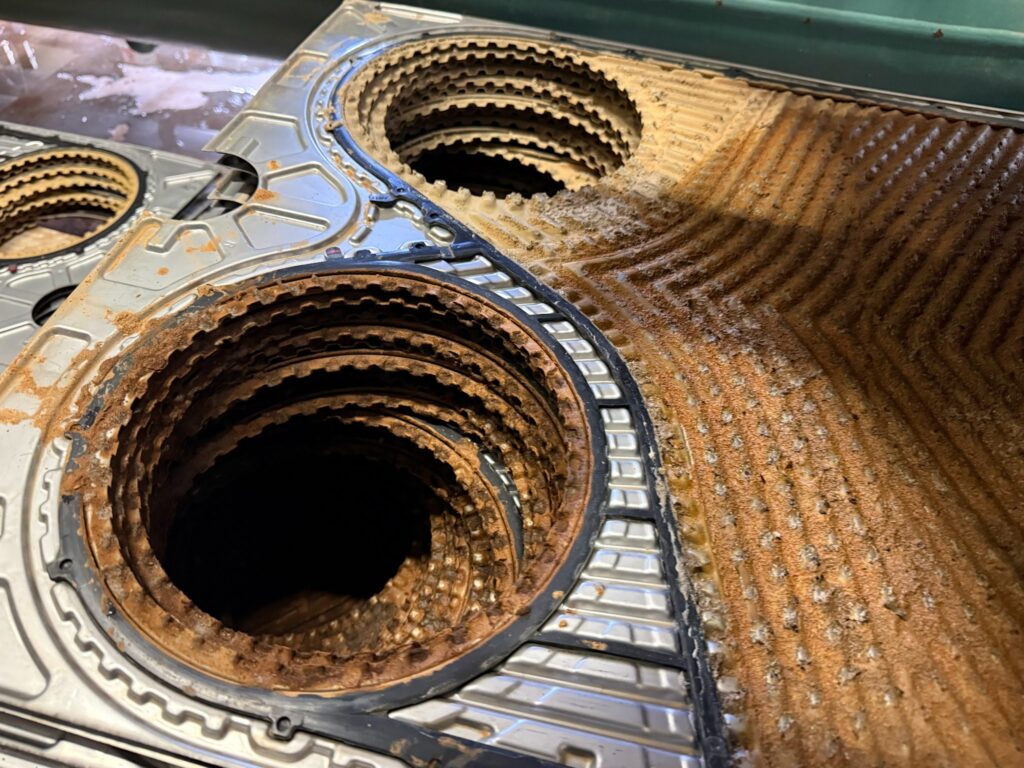
Chemical cleaning runs through a mobile flushing pump connected to the water connections of the heat exchanger. The cleaning solution circulates for 2 to 4 hours in counterflow, depending on scaling. We check the pH of the solution every 30 minutes. When acid consumption drops, the scale is dissolved. Then we neutralise, rinse and measure the pressure drop again. If it is back within the manufacturer’s figure, the clean has worked.
Cleaning has limits. Magnetite sludge and biofilm dissolve only partly. Brazed exchangers with copper brazing must not see ammonia based cleaners. And an exchanger that has frozen more than once will not respond to cleaning, because the channels are deformed. In those cases we replace.
Replacing the plate heat exchanger
Replacing a brazed evaporator is work on the refrigerant circuit: recover the refrigerant, unbraze or unflange the exchanger, fit the new one, replace the filter drier, pressure test, evacuate, charge by weight, leak check and logbook entry under F-gas Regulation (EU) 2024/573. With water in the circuit we add a flush of the refrigerant side and an oil change.
| Measure | Time on site | Typical cost |
|---|---|---|
| Measurement and diagnosis (pressure drop, temperatures, moisture indicator) | 2 to 3 hours | from 800 EUR including report |
| Chemical clean of a brazed exchanger | 4 to 6 hours | 900 to 1,800 EUR |
| Open, clean and regasket a gasketed exchanger | 1 to 2 days | 1,500 to 4,000 EUR plus gasket set |
| Replace brazed evaporator 50 to 150 kW | 1 to 2 days | 2,500 to 7,000 EUR including the exchanger |
| Extra with water in the refrigerant circuit | 4 to 8 hours | 800 to 2,500 EUR |
All figures net, plus refrigerant by weight and travel at 0.75 EUR per kilometre. Labour is charged at 115 EUR per hour.
Why the new exchanger fouls again
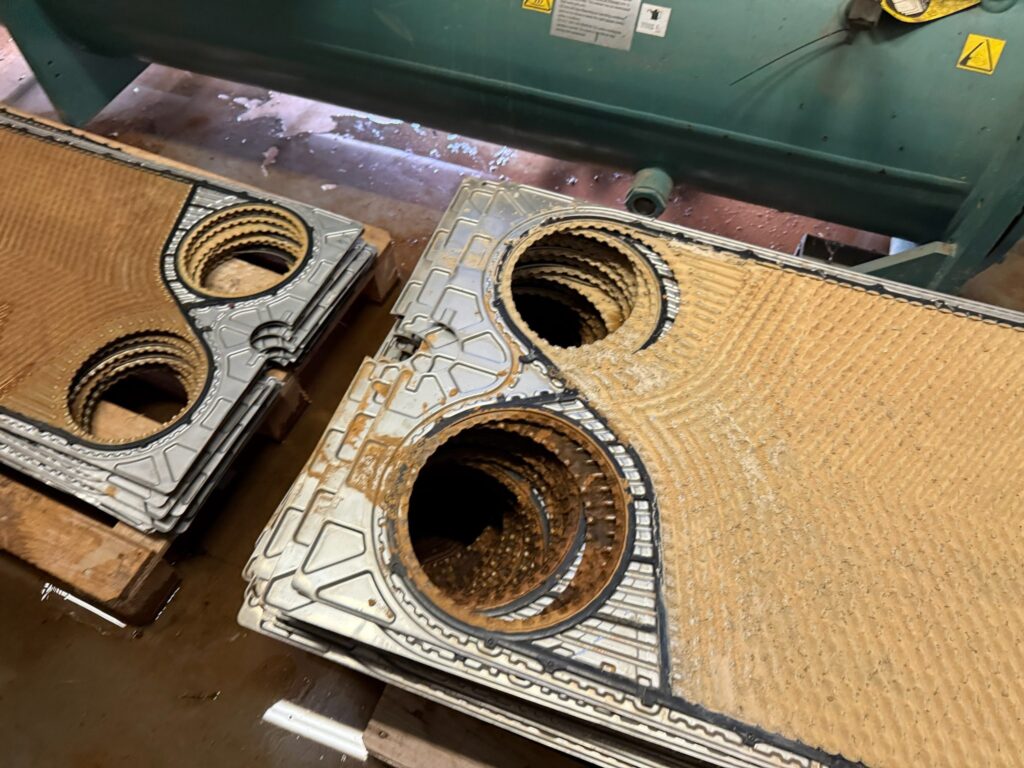
A new heat exchanger is only as good as the water that flows through it. Before fitting it we therefore check the chilled water circuit: hardness and pH of the fill water, glycol concentration, condition of the strainer, magnetite separator, open expansion vessels letting oxygen in. If there is no strainer in front of the evaporator, we fit one. If the water is hard, we recommend filling with softened water and inhibitor. How a flush of the whole network runs is described in chilled water system flushing. Without these steps the new exchanger is back on the list in two years.
What you can prepare
- A photo of the chiller nameplate and of the heat exchanger nameplate, if accessible.
- Information about the water: mains water, softened, glycol share, last analysis.
- Controller readings: chilled water supply, return, evaporating temperature, alarm log.
- Whether water has to be topped up and whether the moisture indicator is yellow.
- Access to the exchanger: insulation, space for the flushing pump, isolation valves.
Frequently asked questions about chiller plate heat exchangers
How often should the heat exchanger be cleaned?
Can I flush the exchanger myself?
How do I recognise water in the refrigerant circuit?
Can a brazed heat exchanger be repaired?
What documents do I receive after the work?
Is your chiller short of capacity or losing water? Send the nameplate, readings and site location through the contact form or to info@chillerserwis.com. We will tell you whether cleaning or replacement is the better choice.