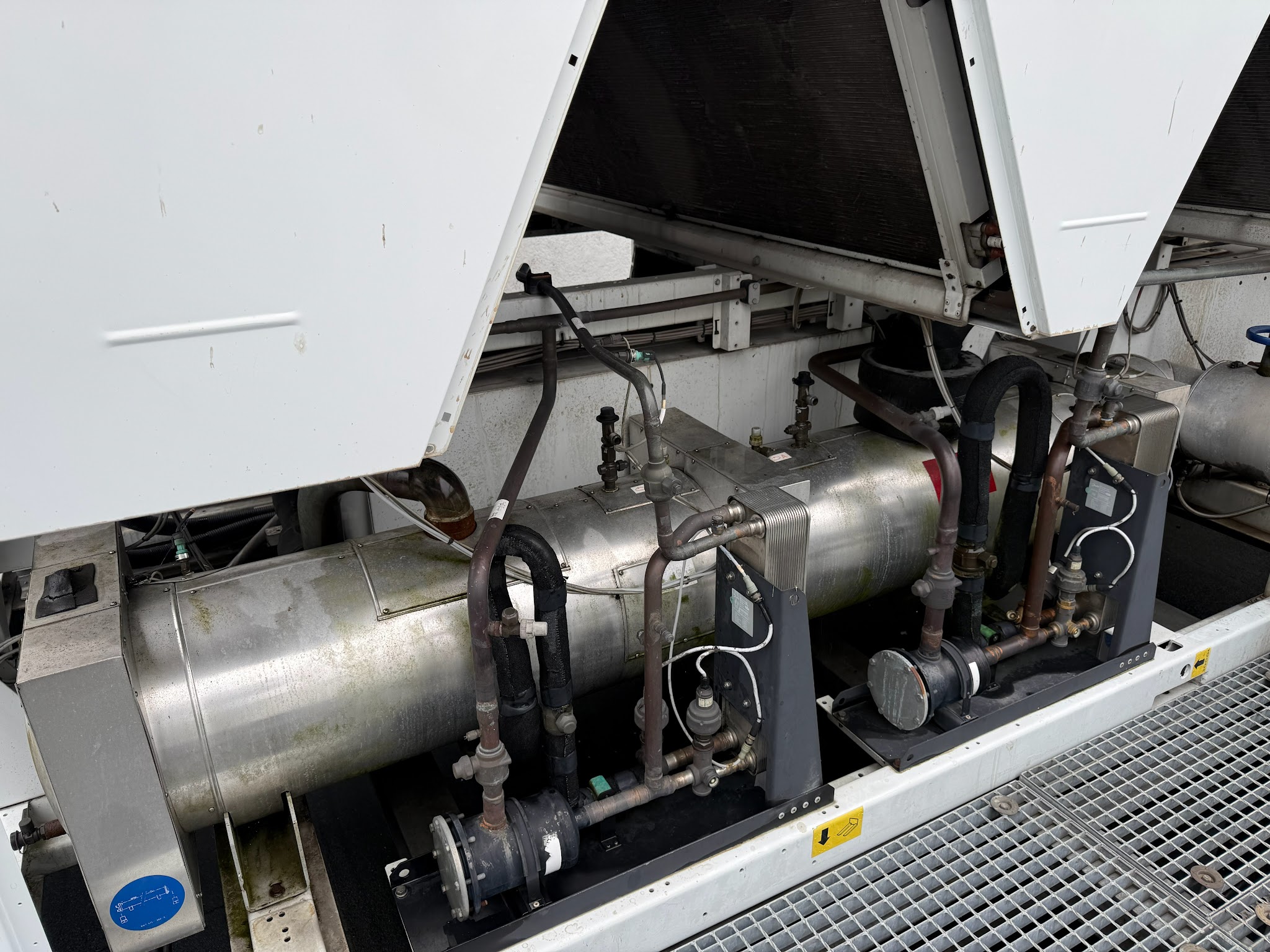

Low oil pressure, oil differential fault, oil level alarm: the wording differs between manufacturers, but the message is the same. The controller has stopped the compressor because it cannot confirm that the bearings are being lubricated. Operators usually call us with the same handful of questions, so we have collected them here together with what we do on site.
“The compressor restarts after a reset. Can we keep running?”
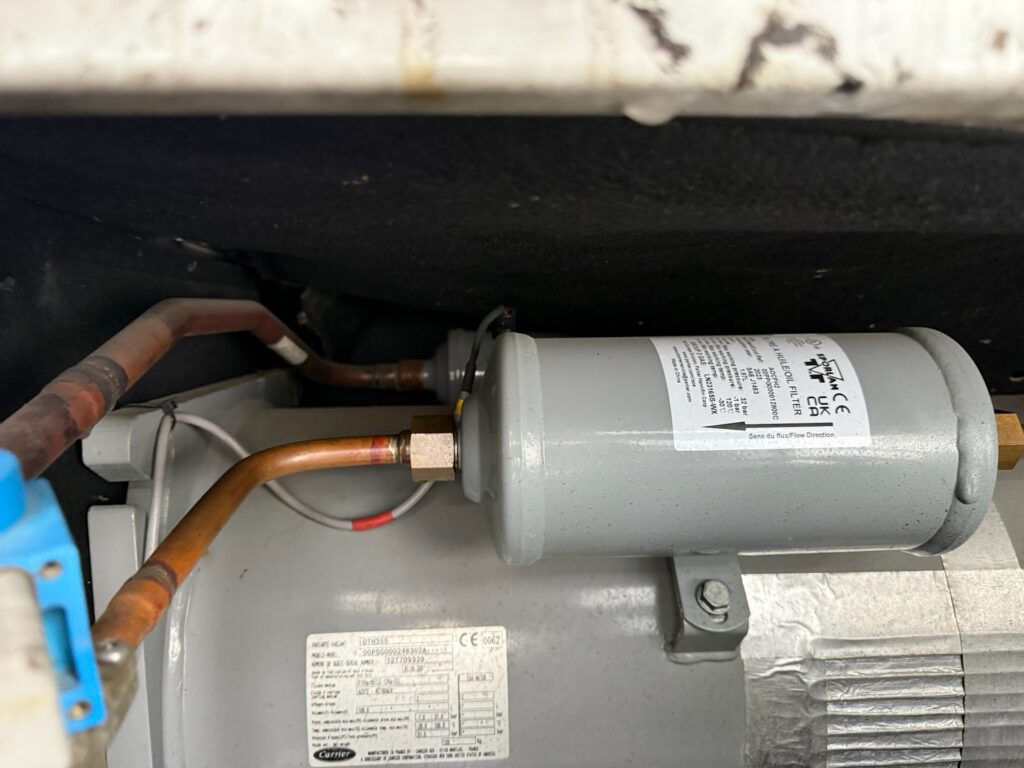
One reset to see whether the fault returns is reasonable if the oil level is visible and the compressor sounds normal. A second and third reset are a gamble. Every start without proper lubrication wears the bearings, and a screw or piston compressor that has run dry rarely announces it before it fails. If the alarm comes back within minutes of each start, leave the circuit off and let the second circuit carry the load if the unit has one.
“Where has the oil gone?”
In most cases it is still in the system. Oil leaves the compressor with the discharge gas and has to travel back with the refrigerant. When superheat is too low, when the unit runs for long periods at minimum load or when the oil return line and its solenoid are blocked, oil collects in the evaporator and the level in the compressor or oil separator drops. Topping up without fixing the return only moves the problem: a few days later the oil comes back and the compressor is overfilled. We correct the cause first and add oil last, by measured amount.
“Why does it only happen on cold mornings?”
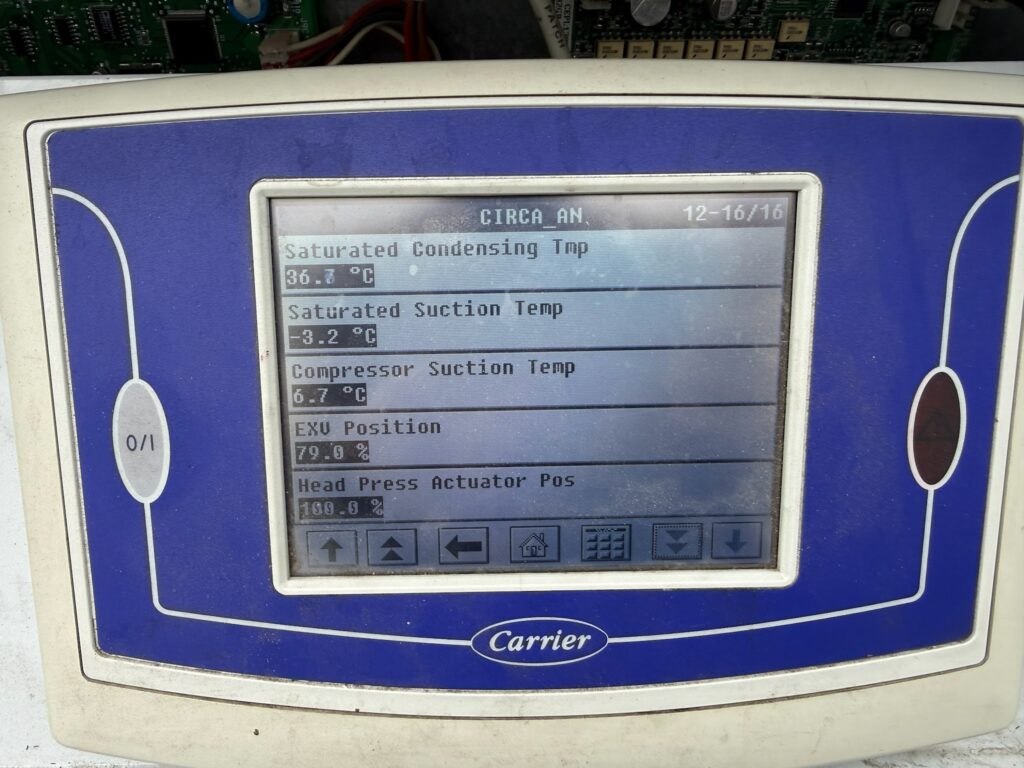
Many screw compressors have no oil pump. Oil is pushed from the separator into the compressor by the difference between discharge and suction pressure. On a cold day with the fans running flat out, the condensing pressure falls and that difference becomes too small. The controller sees low oil pressure and stops the machine. The repair is in the head pressure control: fan staging, fan speed control or a condensing pressure valve. See low condensing pressure in winter for the background.
“The oil looks foamy at start. Is that a problem?”
Yes. Foaming means refrigerant has dissolved in the oil during standstill and now boils out as the pressure in the crankcase drops. Diluted oil lubricates poorly and the oil pump or pressure difference cannot build a stable pressure. We check the crankcase heater and its fuse, the temperature of the oil sump and whether liquid refrigerant floods back in operation. A faulty expansion valve is a common partner of this fault, described in chiller expansion valve fault.
What we measure before we decide
- suction, discharge and oil pressure with our own gauges, compared with the controller readings,
- pressure drop across the oil filter on screw compressors,
- oil level with the compressor running and stopped,
- superheat and subcooling, to see whether liquid returns to the compressor,
- function of the crankcase heater, oil solenoid and level or flow switch,
- when needed, an oil sample for acid, water and metal particles.
A sensor that reads wrong is cheaper than a compressor, so the comparison between gauge and transducer always comes first.
Typical repairs
Replacing a clogged oil filter and the oil charge, renewing a pressure transducer or differential switch, repairing the crankcase heater circuit, cleaning or replacing the oil return solenoid, resetting superheat and head pressure control. If the oil analysis shows bearing metal, we discuss the next step openly. Sometimes that is a planned compressor replacement before the machine fails in the middle of production.
Costs and travel
On site diagnosis starts at 800 EUR net. Each working hour is 115 EUR net and travel is 0.75 EUR net per km. Oil, filters, sensors and laboratory analysis are quoted after the diagnosis. Our crews travel from Wałsnów and Szczecin in Poland. Compressors and small units can also be sent to us, see workshop repairs and the general chiller repair page.
More short answers
Which oil does my chiller need?
How often should compressor oil be analysed?
Can a dirty oil filter cause the alarm?
Is an oil level alarm the same as an oil pressure alarm?
Send the chiller model, serial number and a photo of the alarm log through the contact form or to info@chillerserwis.com and we will suggest a date.