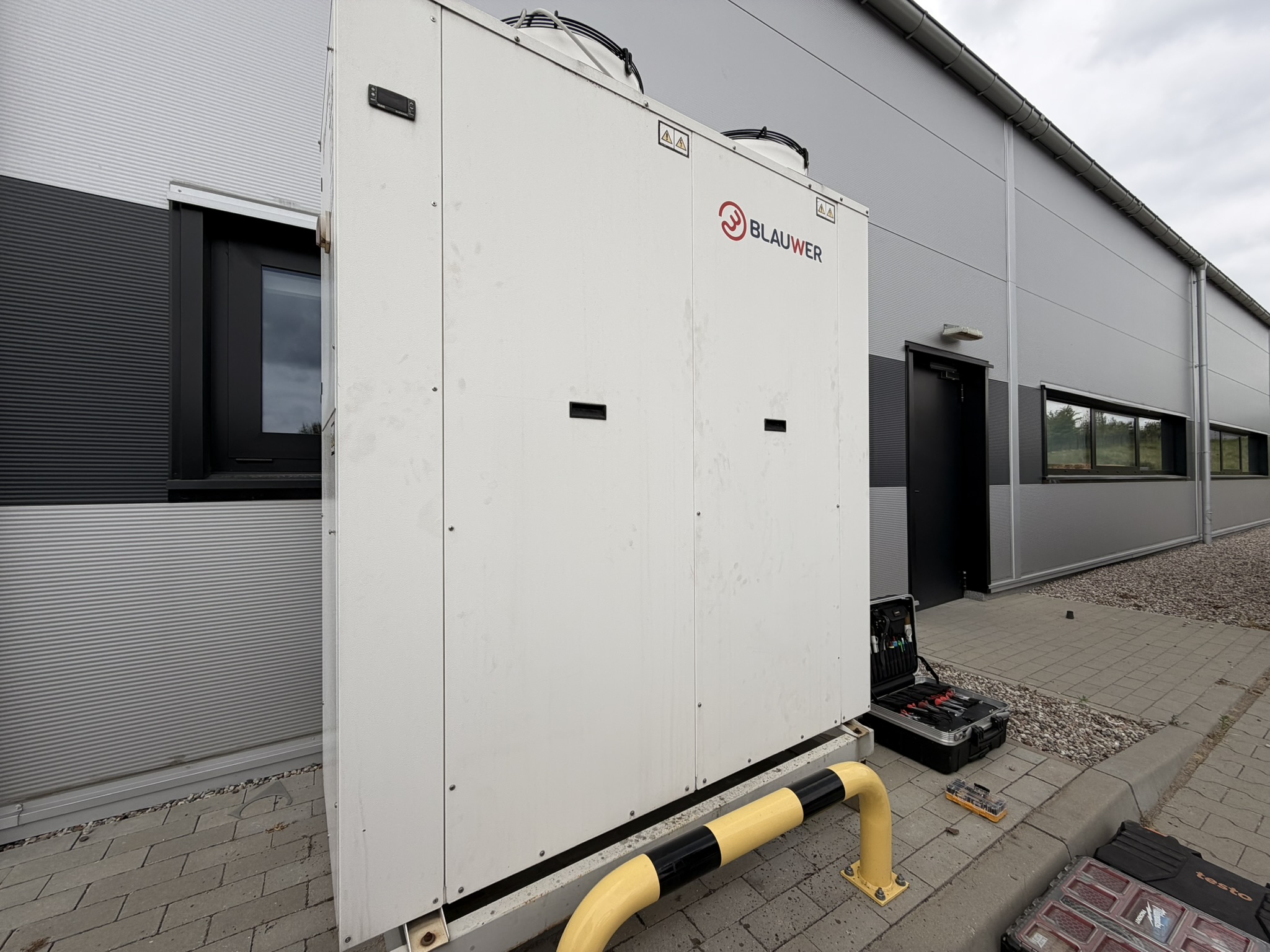

The call came on a Monday morning: one compressor of a two circuit air cooled chiller had tripped its motor protection over the weekend. The operator reset it twice, it ran for ten minutes each time and stopped again. Production was running on one circuit. This is how the visit went, and it is close to what we do every time a compressor trips on overload.
First look: which device tripped
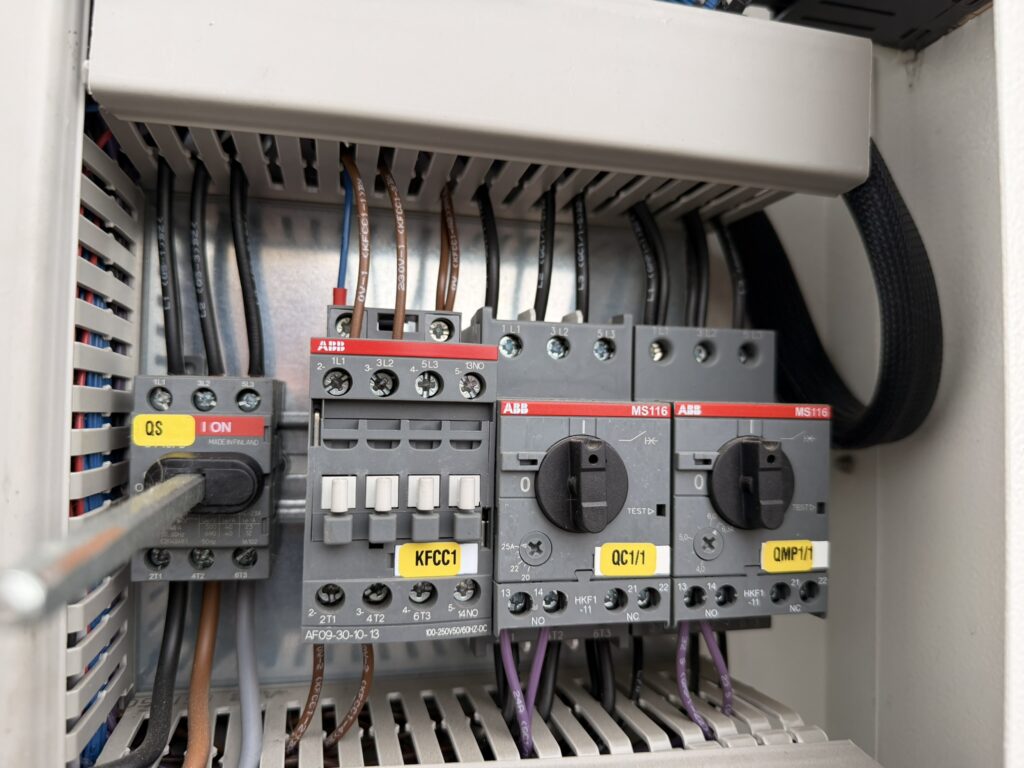
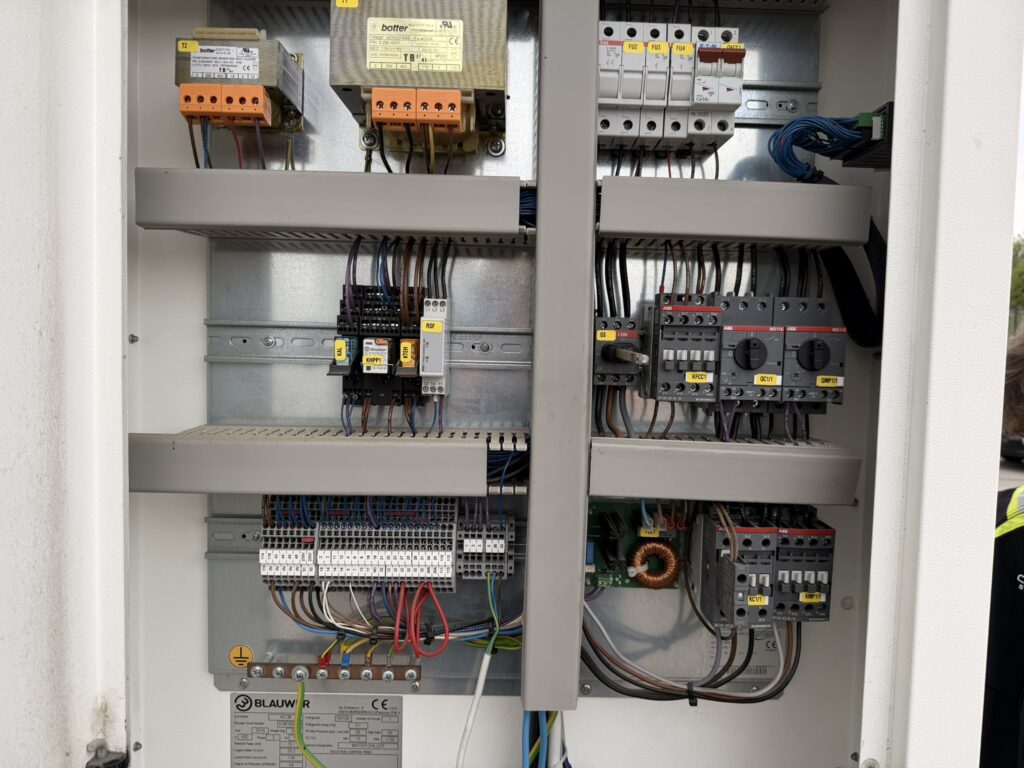
Inside the panel there were three candidates: the motor protection circuit breaker, the thermistor relay watching the winding temperature and the phase monitor. The breaker had tripped, the thermistor relay had not. That already narrowed it down. An overcurrent trip with a cool winding points to the supply, the switchgear or a mechanical overload rather than to poor motor cooling.
Supply and contactor
Voltage at the incoming terminals was balanced within one percent. At the compressor terminals, during start, one phase sagged by more than twenty volts. The compressor contactor showed the reason: one contact was pitted and burnt. With a poor contact the motor runs close to single phasing, the current in the other two windings rises and the breaker does exactly what it should. A contactor is a wear part. After years of starts it deserves a look at every inspection.
Winding tests before the restart
Changing the contactor and pressing start would have been quick, but a motor that has run on a weak phase may already be damaged. With the compressor isolated we measured the three winding resistances, which were equal, and the insulation resistance to earth, which was high. We never perform an insulation test on a compressor that is under vacuum, and we repeat a low reading after the crankcase heater has been on for some hours, because refrigerant dissolved in the oil can pull the value down.
Running current and operating point
With a new contactor fitted the compressor started cleanly. Current was now equal in all three phases and a little below the nameplate value at the measured pressures. We also checked what else could push the current up: condensing pressure, the condition of the coil, fan operation and the setting of the breaker, which matched the nameplate. Had the current been high with a healthy supply, the next stop would have been the refrigerant circuit, as described in chiller high pressure alarm.
Other causes we meet
| Finding | What it usually means |
|---|---|
| Thermistor chain open, current normal | Motor not cooled enough: refrigerant shortage, high superheat, too many starts |
| Unequal currents, equal voltages | Winding fault developing |
| High current on all phases | High condensing pressure, liquid return, mechanical damage |
| Trip at every start | Seized compressor, missing phase, failed start equipment |
| Low insulation resistance | Moisture or acid in the circuit, damaged winding |
Frequent starts heat the motor more than steady running does. If the log shows dozens of starts per hour, read chiller short cycling as well.
What the customer received
A report with the measured voltages, currents, resistances and insulation values, photos of the damaged contactor and a short list of recommendations: replace the contactor of the second compressor at the next inspection and tighten all power terminals. If the winding had been faulty, the report would have included a quote for a compressor replacement with circuit cleaning and an acid test.
Prices
On site diagnosis starts at 800 EUR net, a working hour costs 115 EUR net and travel 0.75 EUR net per km. Contactors, protection relays and sensors are quoted before fitting. Crews leave from Wałsnów and Szczecin in Poland.
Asked by maintenance teams
How many times can I reset the motor protection?
Can the breaker setting be raised a little?
Does a soft starter prevent overload trips?
What should I send before the visit?
Write to us through the contact form or at info@chillerserwis.com. Small chillers can be brought to our workshop, see workshop repairs.