
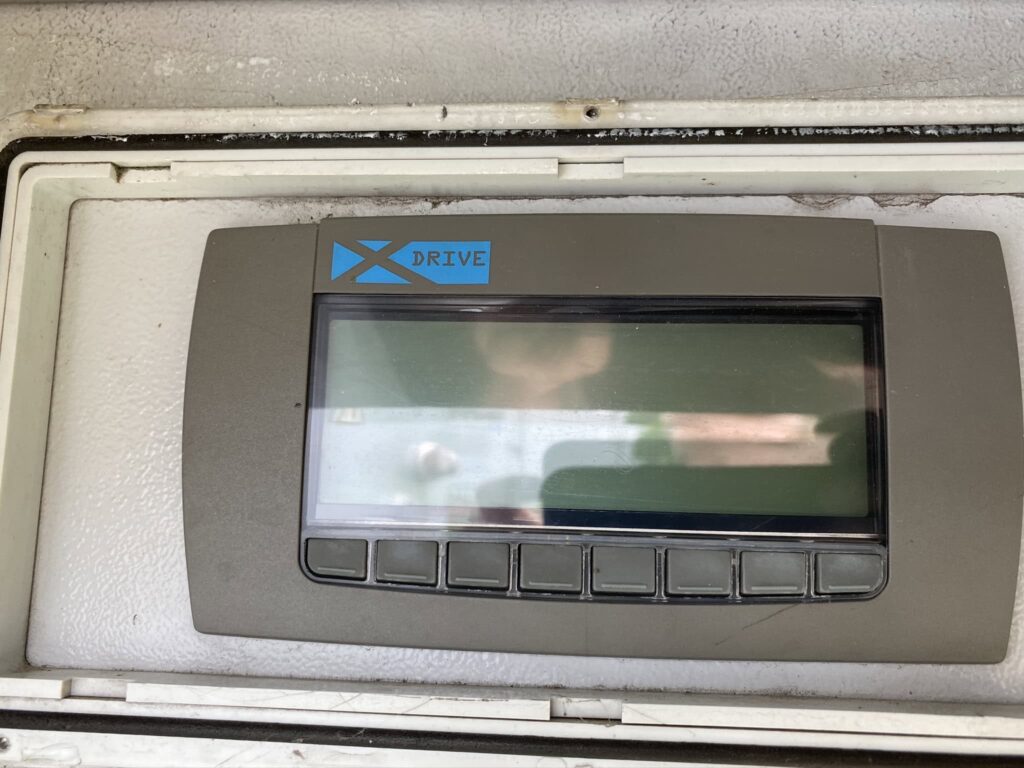
It is a cold morning, the controller is powered, the chilled water pump is running, and yet the compressor does not start. Sometimes there is an alarm on the display, sometimes nothing at all. When a chiller is not starting in winter, the first question is not “what is broken?” but “does the chiller actually need to run?”. In many cases the unit is doing exactly what it should. In others, a protective function has locked it for a good reason, and forcing a start would damage the compressor. This article shows how to tell no cooling demand from a real fault, which winter causes are typical and what your team can check before calling a service engineer.
No demand or a real fault?
A chiller starts only when the chilled water return temperature is above the set point plus the switching differential. In winter, offices and many production halls have little heat load, and the water in the circuit often stays below the set point on its own. The controller then shows “Standby”, “No Load” or simply the current temperature. That is normal operation, not a breakdown.
You are looking at a real fault when one of these applies:
- An alarm code is active, an LED is flashing or the display reports a lockout.
- The return temperature is clearly above the set point and the compressor still does not start.
- The compressor starts but stops again after a few seconds or minutes, often several times in a row.
Two more harmless reasons are easy to overlook. After every stop, the controller counts down an anti-short-cycle timer, usually several minutes, to protect the motor and contactors. After an alarm reset the chiller therefore waits, even though everything looks fine. And in many buildings the chiller needs an enable signal from the building management system (BMS) or a time schedule. After switching the plant to heating mode, that signal is often simply off. Ask whoever manages the building automation whether the chiller is allowed to run before anyone drives out.
Crankcase heater and cold oil
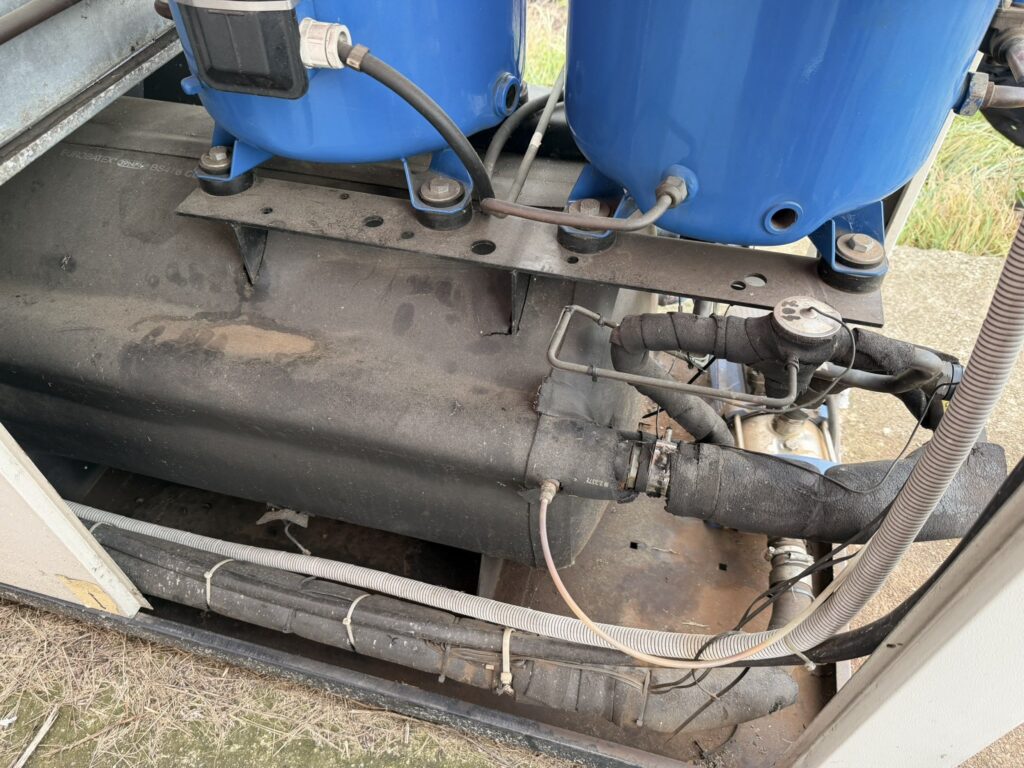
The crankcase heater is a small part with a big role in winter. It keeps the compressor oil warmer than the surroundings, so that refrigerant does not condense in the crankcase and dissolve in the oil. If the heater is off, refrigerant migrates to the coldest point of the system, which on a frosty night is the compressor.
At start, the oil and refrigerant mixture foams violently. The compressor draws in foam instead of oil, loses lubrication and can suffer bearing damage in the first seconds. That is why many controllers block the start until the crankcase has been heated for a set time after power is restored. Depending on the manufacturer, this lockout lasts anywhere from 6 to 24 hours; the exact time is in the unit’s documentation.
The classic winter mistake is to isolate the chiller’s main power during a long standstill. The heater goes off with it. Someone switches the power back on and tries to start the chiller straight away. Our advice is simple: leave the main supply on through the winter, even when the chiller is not supposed to cool. Your team can check whether the power was off recently, and can carefully touch the lower part of the compressor with a gloved hand: a warm crankcase means the heater works. A cold crankcase with power on needs an electrical measurement by the service engineer.
Low pressure trips at low ambient temperature
Every air-cooled chiller has a permitted operating envelope. A low outdoor temperature lowers the condensing pressure, and with it the pressure on the suction side. At start, the suction pressure can fall below the low pressure switch setting. The controller stops the compressor and shows “LP” or “Low Pressure”. The typical pattern is start, stop after a short time, alarm, repeated with every reset.
Chillers designed for year-round operation have a low ambient kit: stepless speed control of the condenser fans or another form of head pressure control, plus a delay of the low pressure alarm during start. Without this equipment, a chiller in frost may start and stop several times in a row, which wears contactors and the compressor quickly.
Site conditions matter too. Strong wind blowing straight into the condenser cools the coil even further. Snow on the fins or ice on the fan blades disturbs the air flow. Clear snow from around the unit, but do not chip ice off the fins, as they bend very easily. If the low pressure alarm returns after every reset, a refrigerant leak is another possible cause. It shows up more clearly in winter because the system already runs at low pressures.
Flow, glycol and frost protection
A chiller will not start without flow through the evaporator. In winter the pump is sometimes switched off together with the rest of the plant, strainers clog after weeks of standstill, and in circuits without glycol the water in outdoor pipes can freeze. In all these cases the flow switch withholds its permission and the controller blocks the start. Check that the pump is running and compare the gauges before and after the strainer; a large difference points to a clogged strainer.
The second safeguard is the evaporator frost protection. If the leaving water temperature is below its setting, the controller will not start the compressor. Cold glycol also becomes more viscous, so the flow drops and the flow switch may trip. If the glycol concentration is too low, the frost protection setting must be raised or the mixture corrected, otherwise the evaporator can crack. A refractometer gives a quick reading; a laboratory analysis of the fluid gives the full picture. See our glycol testing and replacement service for details.
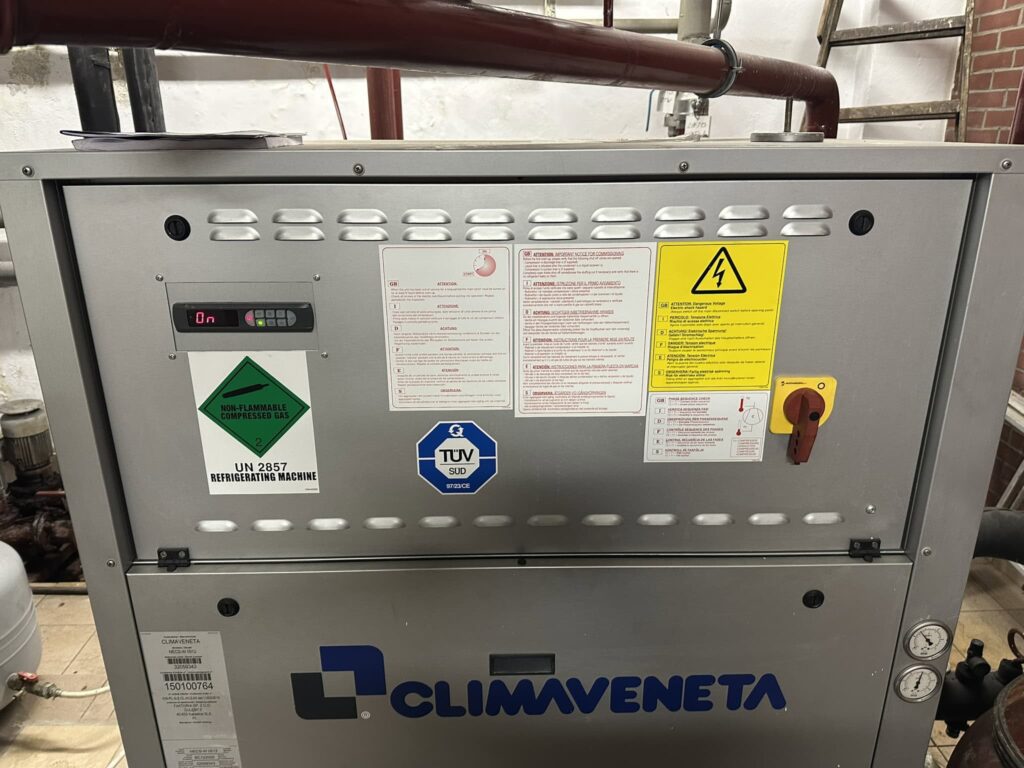
What your team can check and what the service engineer does
| Check point | Maintenance team | Service engineer |
|---|---|---|
| Display: standby, alarm or timer? | Yes, read it and take a photo | Evaluation of the alarm history |
| Power supply, fuses, emergency stop | Yes, visual check | Measurement under load |
| Enable signal from BMS or external contact | Yes, ask the building services team | Testing the interface |
| Pump and system pressure | Yes | Flow measurement |
| Glycol concentration | Refractometer, if available | Laboratory analysis, correcting the mixture |
| Low pressure, head pressure control, refrigerant charge | No | Yes, certified technician under the F-gas Regulation |
| Compressor, crankcase heater, contactors | No | Yes |
We do not recommend bridging safety devices or resetting the same alarm again and again. Every forced start with cold oil raises the risk of compressor damage. One reset after removing an obvious cause is fine; if the alarm comes back, it is time to call for service.
Before you get in touch, collect a few facts: the alarm code and the time it appeared, the outdoor temperature, the chilled water return temperature and whether the power was switched off in the last days. With that information the engineer arrives with the right parts and instruments, and the visit is shorter.
Prevention and cost of a diagnosis
Most winter faults can be avoided with an autumn inspection: check the glycol, test the fan speed control, measure the crankcase heater, review the alarm history and confirm the BMS enable signals. Our checklist on how to prepare a chiller for winter covers these steps in detail. For systems from 5 t CO₂ equivalent, periodic leak checks are mandatory anyway, and they combine well with this inspection. Compressor manufacturers such as Copeland publish the permitted operating envelopes and start requirements for their models.
If your chiller does not start although there is a cooling demand, we offer an on-site diagnosis from 800 EUR net. It includes reading out the controller, pressure measurements on the refrigerant circuit and a written report. Additional working time costs 115 EUR net per hour and travel 0.75 EUR net per km. More information is on the chiller repair page.
Frequently asked questions
My chiller shows no alarm but does not start. Is it broken?
How long must the crankcase heater run before a start?
Can a chiller start in freezing weather?
Can I switch the chiller off completely for the winter?
What do you need for a quick assessment?
Is your chiller not starting this winter and you are unsure whether it is a fault? Write to us through the contact form or at info@chillerserwis.com. We will help you assess the situation and plan a visit if one is needed.