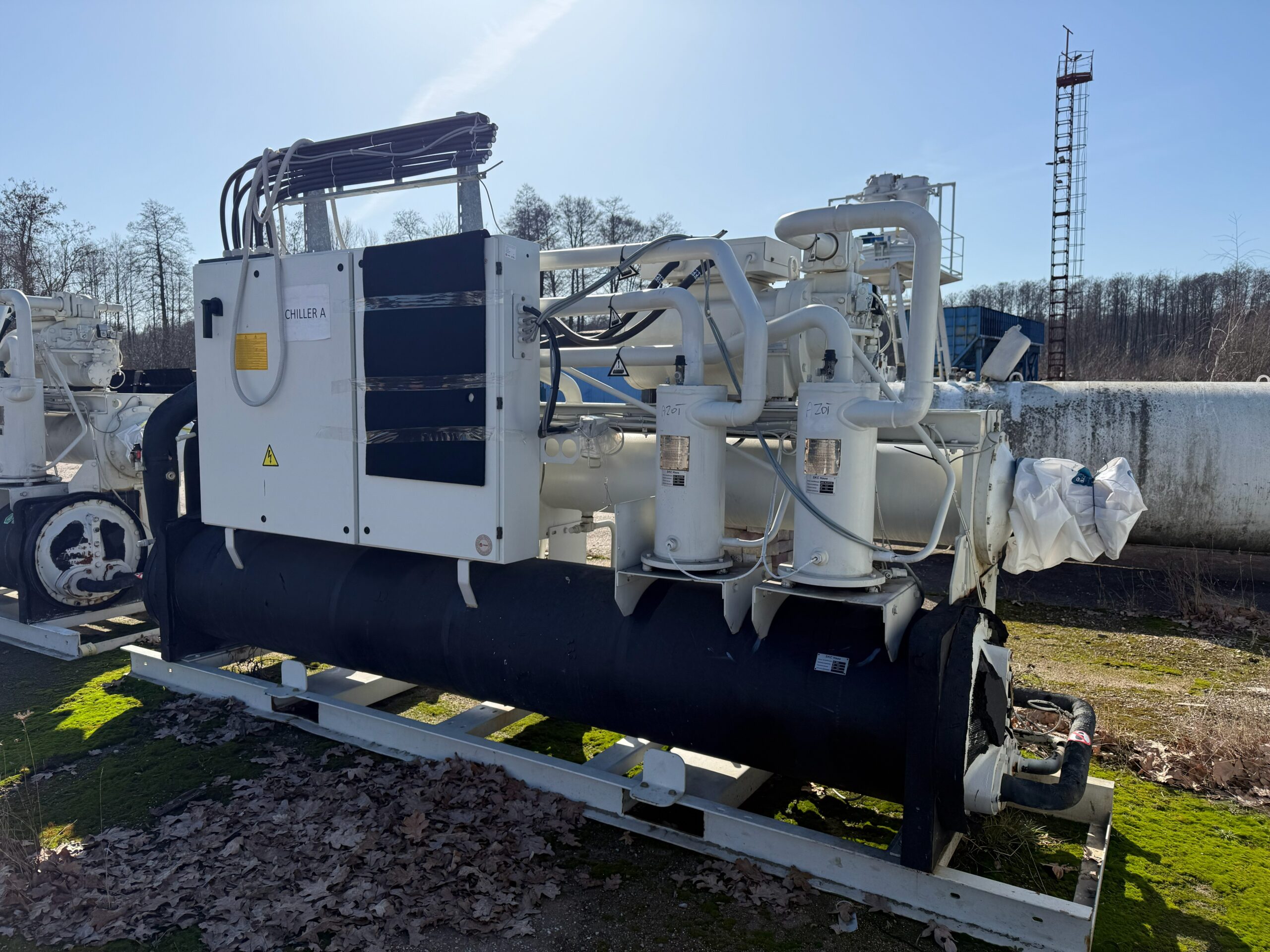

Most chiller failures that show up in January are decided in October. A frozen evaporator, a compressor that will not start after weeks without power, a burst pipe on the roof: all of these are cheap to prevent and expensive to repair. Whether your chiller keeps running through the winter for process cooling or is shut down until spring, it needs a short, structured preparation. This guide explains what to check, which decisions you have to make and what your maintenance team can do without a refrigeration engineer.
First decision: run through winter or shut down?
The preparation depends on how the chiller will be used over the next months.
| Operating mode | Typical sites | Main risk in winter |
|---|---|---|
| Year-round operation | Plastics, food, data rooms, laser and machine cooling | Low ambient temperature: low pressure alarms, unstable control, frost on outdoor piping |
| Standby with occasional cooling | Offices, hotels, retail with server rooms | Long standstill, oil dilution in the compressor, frost in idle pipes |
| Full shutdown until spring | Comfort cooling only, seasonal production | Water left in the evaporator or outdoor pipes freezes and bursts |
Step 1: check the frost protection of the fluid
If the circuit is filled with a water and glycol mixture, check the concentration before the first frost. A refractometer gives a fast reading on site, but it cannot tell you whether the inhibitors are still active. Old glycol becomes acidic, attacks steel and copper and forms sludge in the evaporator. For systems older than two to three years we recommend a laboratory analysis, which we offer for 295 EUR net including interpretation.
As a rule of thumb, the freezing point of the mixture should be at least 5 K below the lowest expected outdoor temperature at the site. Ethylene glycol at 30 % protects to roughly minus 15 °C, propylene glycol at the same concentration to roughly minus 12 °C. Use our glycol calculator to check the mixture for your system volume.
Step 2: decide what happens to pure water circuits
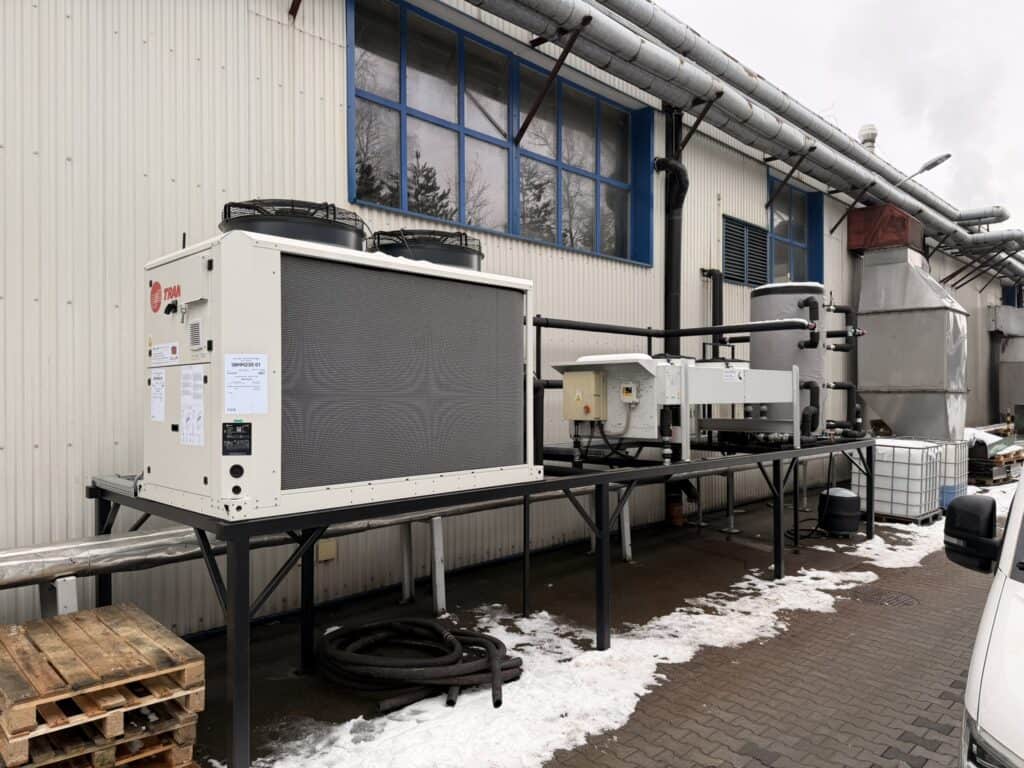
A chiller filled with pure water and located outdoors must either keep the water moving and heated, or be drained. A plate heat exchanger cannot always be drained completely, so many manufacturers recommend blowing it out with compressed air or filling it with glycol for the winter. Do not rely on the chiller’s own anti-freeze function if the power supply could fail: when the pump stops, the protection stops too.
Step 3: keep the crankcase heater powered
Scroll and screw compressors usually have a crankcase or oil heater. It keeps refrigerant from migrating into the oil during standstill. If the main power is switched off for weeks, the controller will often block the compressor for 6 to 24 hours after power returns. Leave the main supply on during the winter if you might need cooling on short notice.
Step 4: check low ambient operation
For chillers that run in winter, the condenser pressure control is critical. Fan speed control or head pressure control must keep the condensing pressure high enough, otherwise the suction pressure collapses at start and the low pressure switch trips. A service engineer checks the fan controller settings, the refrigerant charge and the behaviour of the expansion valve at low load. Under the F-gas Regulation (EU) 2024/573, any work on the refrigerant circuit must be done by certified personnel.
Step 5: clean the condenser and remove leaves
Leaves and dirt left on the condenser over winter hold moisture and speed up corrosion of the fins. Remove loose debris with a soft brush, never with a pressure washer. Make sure snow cannot block the air intake and that the unit is not sitting in a spot where meltwater refreezes around the base.
Step 6: protect outdoor piping and valves
- Check insulation and trace heating on pipes running outside or through unheated spaces.
- Close and drain dead legs that will not be used.
- Check that the expansion vessel pressure and the system pressure are within the setpoints.
- Clean the strainer before the heating season, when flow problems are hardest to diagnose.
Winter preparation checklist
| Task | Maintenance team | Refrigeration service |
|---|---|---|
| Glycol concentration with refractometer | Yes | Laboratory analysis and correction |
| Draining or blowing out pure water circuits | Yes, following the manual | On request |
| Strainer cleaning, system pressure | Yes | Flow measurement |
| Crankcase heater and power supply | Keep powered | Current measurement |
| Fan speed control, low pressure behaviour | No | Yes |
| Leak check required by the F-gas Regulation | No | Yes, certified technician |
Not sure whether your unit is due for its leak check? Our F-gas inspection interval calculator shows the required frequency based on refrigerant and charge.
Costs
A winter inspection is billed by time: 115 EUR net per hour plus travel at 0.75 EUR net per km. If the chiller already shows alarms or does not start, we offer a full on-site diagnosis from 800 EUR net with a written report. More about our work on the chiller repair page.
Frequently asked questions
When should a chiller be prepared for winter?
Can I simply switch the chiller off for the winter?
Is a higher glycol concentration always safer?
What do you need for a quote?
Want your chiller ready before the frost? Send us the unit data and location through the contact form or by email to info@chillerserwis.com and we will propose a date.