
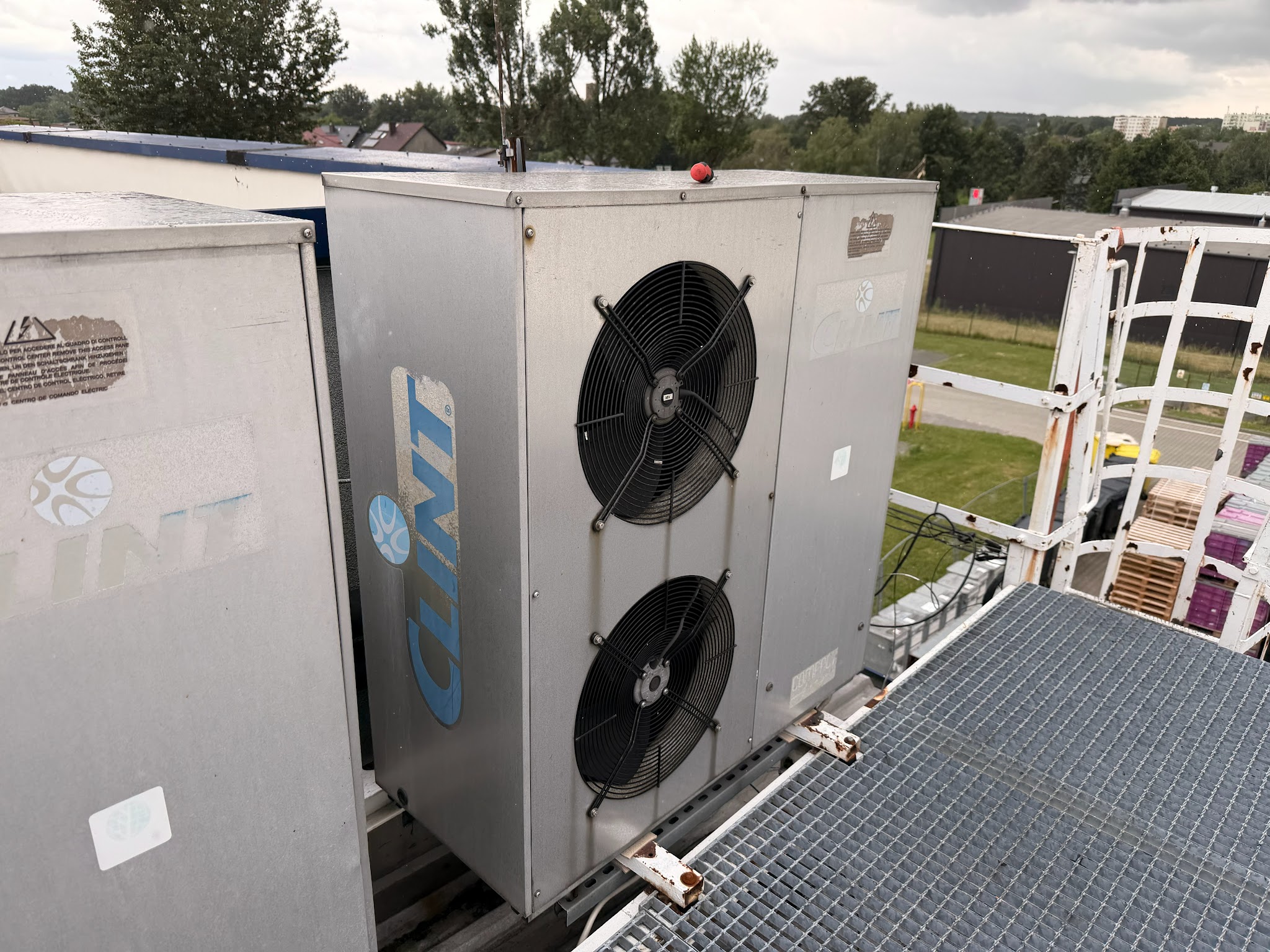

The discharge temperature is the temperature of the hot gas leaving the compressor. It is one of the most useful early warnings of trouble in a refrigeration circuit, yet it is often ignored until the compressor trips or the oil turns dark. Operators tell us many things about it that are only half true. Here are the most common myths and what we actually find on site.
Myth 1: a hot discharge line is normal in summer
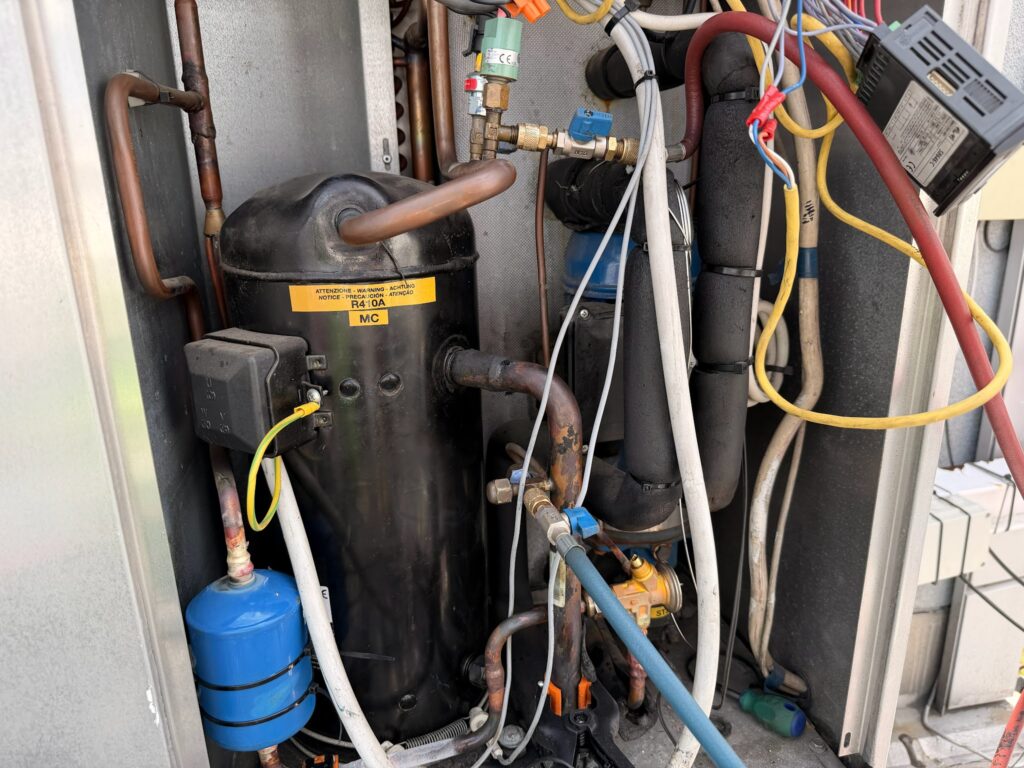
Partly true. Higher condensing pressure in summer raises the discharge temperature, but only by a predictable amount. When the value approaches the limit set by the compressor manufacturer, often somewhere between 110 and 130 °C on the discharge line, something else is wrong. Oil starts to break down at high temperatures, valves and seals age faster and the motor windings of hermetic compressors get less cooling from the suction gas. A unit that trips on discharge temperature only on hot afternoons usually has a condenser or charge problem that is hidden for the rest of the year.
Myth 2: the sensor must be faulty
Sometimes it is, but we check it against a contact thermometer before replacing anything. In most cases the reading is correct. The real causes we find most often:
- high superheat because of a refrigerant shortage or an underfeeding expansion valve,
- high condensing pressure from a dirty condenser, failed fans or recirculating warm air,
- low suction pressure, which raises the compression ratio,
- air or nitrogen left in the circuit after an earlier repair,
- worn compressor valves or an internal bypass that recompresses hot gas,
- a liquid or vapour injection system that no longer works on compressors that need it.
Myth 3: more refrigerant will cool it down
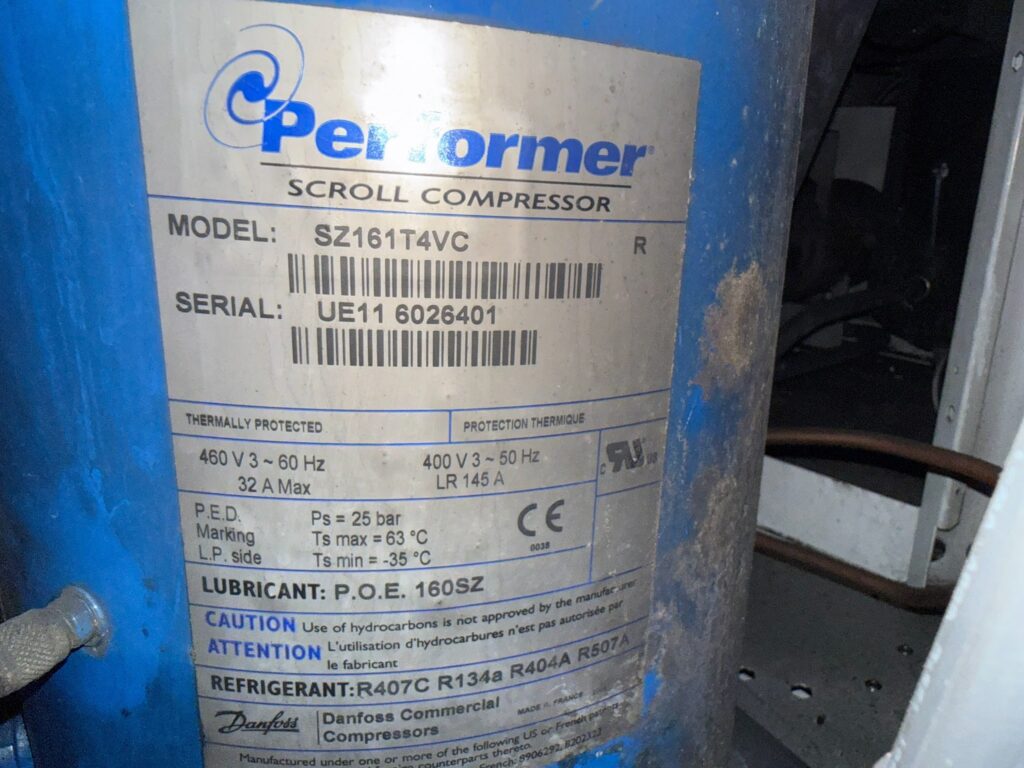
Adding refrigerant without measuring is the most common mistake. If the circuit is short of charge, a correct top up lowers the superheat and with it the discharge temperature. If the cause is a dirty condenser or air in the circuit, extra refrigerant raises the condensing pressure further and makes things worse. We always measure superheat, subcooling and both pressures before deciding.
Myth 4: cleaning the condenser is enough
A clean condenser solves many cases, see what a dirty condenser costs. But when the condensing pressure is normal and the discharge temperature is still high, the problem lies on the suction side or inside the compressor. Then we look at the expansion valve, the filter drier and the oil. Dark oil with a burnt smell and high acidity shows that the compressor has run too hot for a long time, and the oil, the drier and sometimes the compressor need attention.
Myth 5: the compressor is finished anyway
Not necessarily. If we find the cause early, the compressor keeps running for years. We check the current draw, the oil condition and the pressure difference the compressor can build. Only when these confirm internal wear do we quote a replacement, see chiller compressor replacement.
After a condenser fan replacement by another company, a chiller showed discharge temperatures close to the limit. Pressures looked a little high, nothing more. A standing test after recovery confirmed non condensable gas in the circuit. After evacuation, a new drier and a charge by weight the discharge temperature dropped by more than 20 K.
What we check and what it costs
| Check | What it shows |
|---|---|
| Superheat and subcooling | Charge and expansion valve |
| Condensing pressure against ambient | Condenser, fans, air in the circuit |
| Compression ratio and current | Compressor wear |
| Oil colour and acid test | How long the compressor ran too hot |
Diagnosis on site from 800 EUR net, 115 EUR net per hour, travel 0.75 EUR net per km. More on our chiller repair page.
Questions about discharge temperature
Where is the discharge temperature measured?
Can high discharge temperature be caused by the chilled water side?
Should I reset the alarm and keep running?
Do you take oil samples?
Send us the alarm history and the model through the contact form or to info@chillerserwis.com.