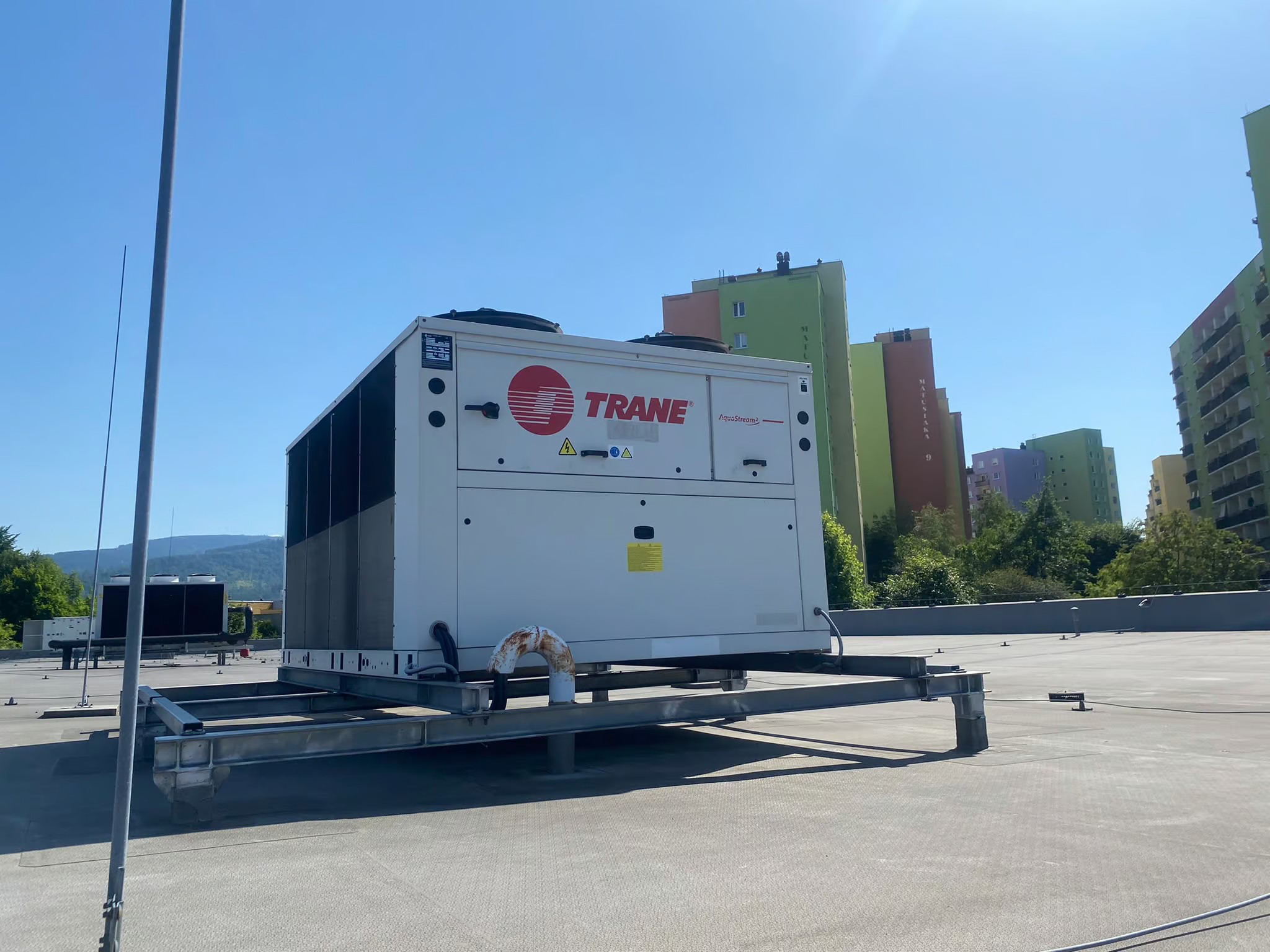

The chiller low pressure alarm is one of the most frequent faults we are called for, especially in autumn and winter. The compressor stops because suction pressure drops below the safety limit. Resetting the alarm buys a few hours at best. The real cause is usually one of five things: a refrigerant leak, low water flow, a blocked filter drier, an expansion valve that no longer controls properly or condensing pressure that collapses in cold weather. Below is the order in which we check them.
Why the low pressure safety trips
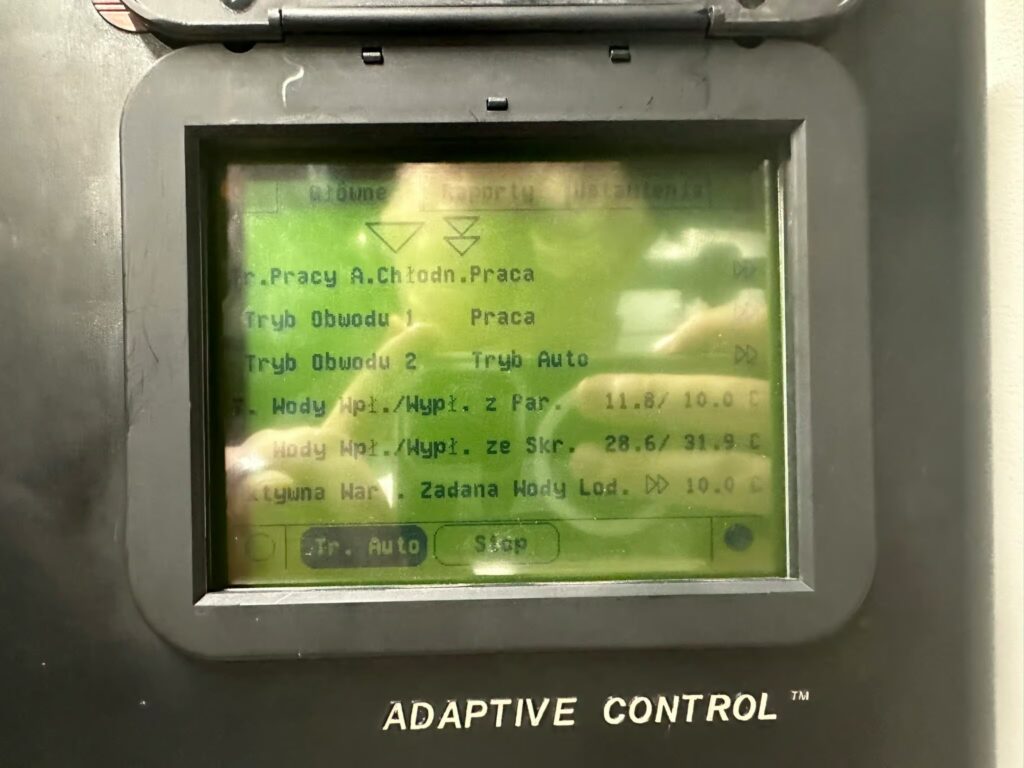
The low pressure switch or suction pressure sensor protects three things at once: the compressor against poor oil return and overheating, the evaporator against freezing and the refrigerant circuit against running in vacuum. On modern controllers the limit is often expressed as an evaporating temperature, for example around 2 °C with plain water and lower with glycol. When the alarm appears repeatedly, something in the circuit has changed.
Chiller low pressure alarm: five typical causes
- Refrigerant leak. High superheat, low subcooling and bubbles in the sight glass in summer.
- Low chilled water flow. Large temperature difference across the evaporator and low superheat.
- Blocked filter drier. Temperature drop across the drier and flash gas after it.
- Expansion valve problems. Hunting superheat and swinging suction pressure.
- Low condensing pressure in winter. Alarms only at start up and in cold weather.
The winter case is explained in detail in low condensing pressure in winter. If the evaporator has already frozen after repeated trips, read chiller evaporator freeze-up before restarting.
Our diagnostic sequence
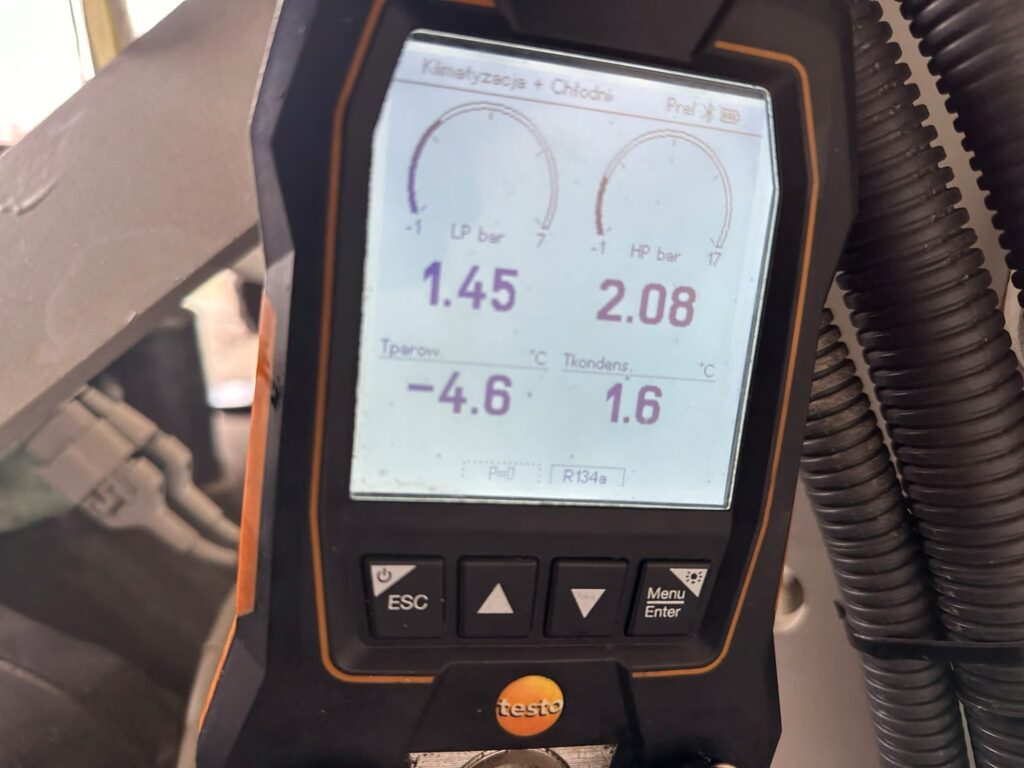
We start with the alarm history: does the trip happen at start up, at part load or only in cold weather? Then we measure suction and discharge pressure, superheat and subcooling, and the chilled water temperatures in and out. Together these values point clearly in one direction. If the readings suggest a low charge, the whole circuit is leak tested with an electronic detector and, if needed, pressurised with nitrogen. Topping up without finding the leak is not a repair, and under the F-gas rules it is not allowed either.
| Reading | Most likely cause |
|---|---|
| High superheat, low subcooling | Refrigerant shortage |
| Low superheat, large water delta T | Low water flow |
| Normal charge, temperature drop at drier | Blocked filter drier |
| Hunting superheat | Expansion valve or its sensor |
Repair and documentation
Depending on the result we replace the filter drier, adjust or replace the expansion valve, repair the leak, evacuate and recharge by weight according to the nameplate. After the repair we test under load and set the safety limits to match the fluid. All work on the refrigerant circuit is recorded in line with the F-gas Regulation (EU) 2024/573.
On-site diagnostics start from 800 EUR net, labour is 115 EUR net per hour and travel 0.75 EUR net per km. If you send us the model and serial number in advance, we bring the most likely spare parts on the first visit. For regular checks that catch these problems early see our chiller maintenance checklist.
Low pressure alarm: questions we hear
Can I just reset the low pressure alarm?
Is low pressure always caused by missing refrigerant?
Why does the alarm only appear in winter?
Can refrigerant be added without a leak search?
Is your chiller tripping on low pressure? Send the model, serial number and a photo of the alarm history through the contact form or to info@chillerserwis.com.