
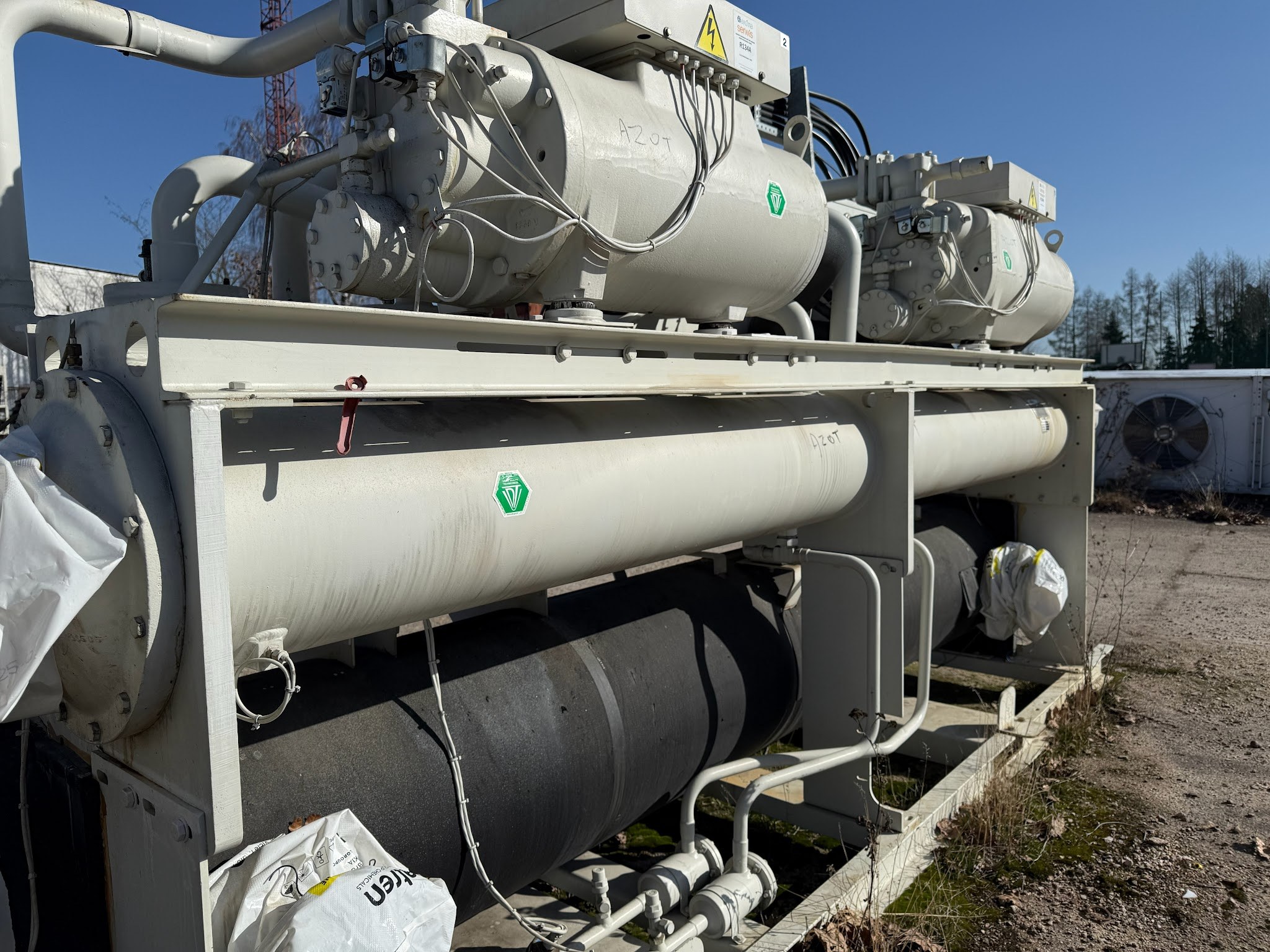

The compressor is the most expensive part of a chiller, and replacing it is the moment that decides whether the unit runs another ten years or fails again in two. A new compressor fitted into a circuit that was never cleaned dies of the same acid as the old one. This article explains how we tell a failed compressor from a fault next to it, how a chiller compressor replacement runs step by step, what it costs for scroll and screw machines and when we advise against it.
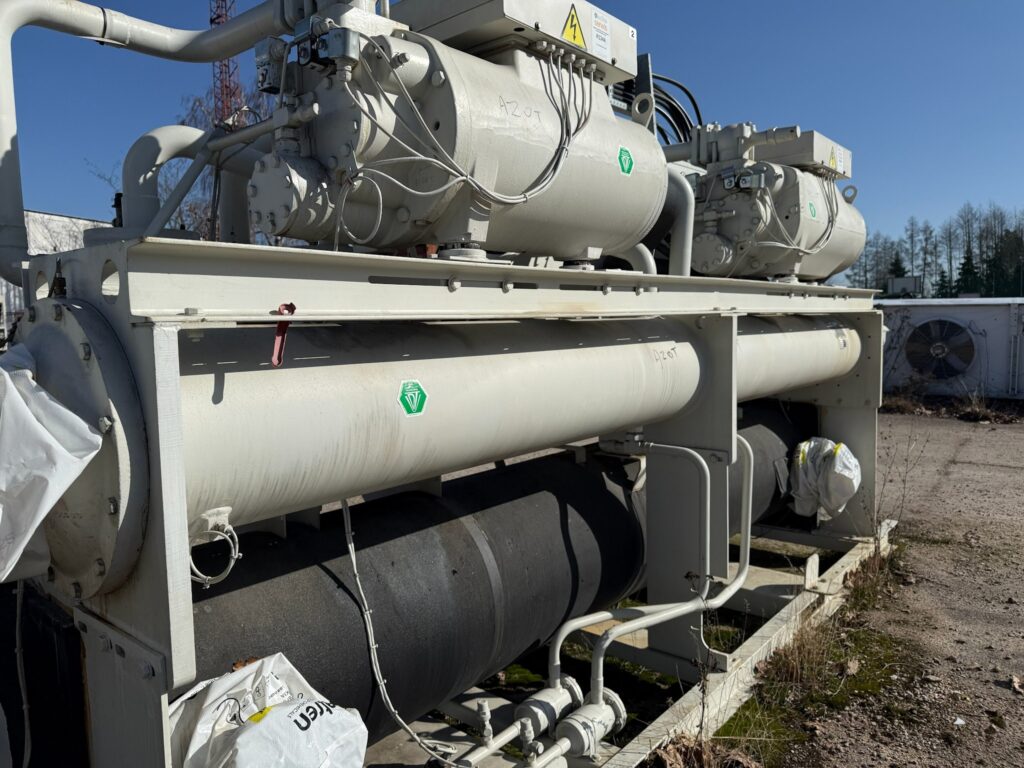
How we tell a dead compressor from a fault next to it
Not every compressor trip means a replacement. We distinguish four findings, and only two of them lead to a new compressor.
- Electrical winding failure. Insulation resistance below 1 MΩ to earth, shorted turns, motor protection tripping at normal current. The compressor is replaced and the circuit has to be flushed because of acid.
- Mechanical failure. Metal particles in the oil, knocking at start, compressor runs but does not pump (suction and discharge pressure equalise). Replacement, oil analysis and a search for the cause, usually liquid slugging or oil starvation.
- Fault in the periphery. Contactor, run capacitor, phase monitor, crankcase heater, high pressure switch. The compressor is healthy, the fault sits beside it. Repair without replacement.
- Operating conditions. Excessive superheat, liquid in the suction line, too many starts per hour. The compressor is still intact but will not stay that way. Adjustment of the expansion valve, the controls or the hydraulics.
So every compressor replacement starts with a diagnosis: insulation test, oil sample with acid test, current per phase, pressures and temperatures in the circuit. Only then do we order a part. How such a diagnosis runs is described on the chiller repair page.
Replacement step by step
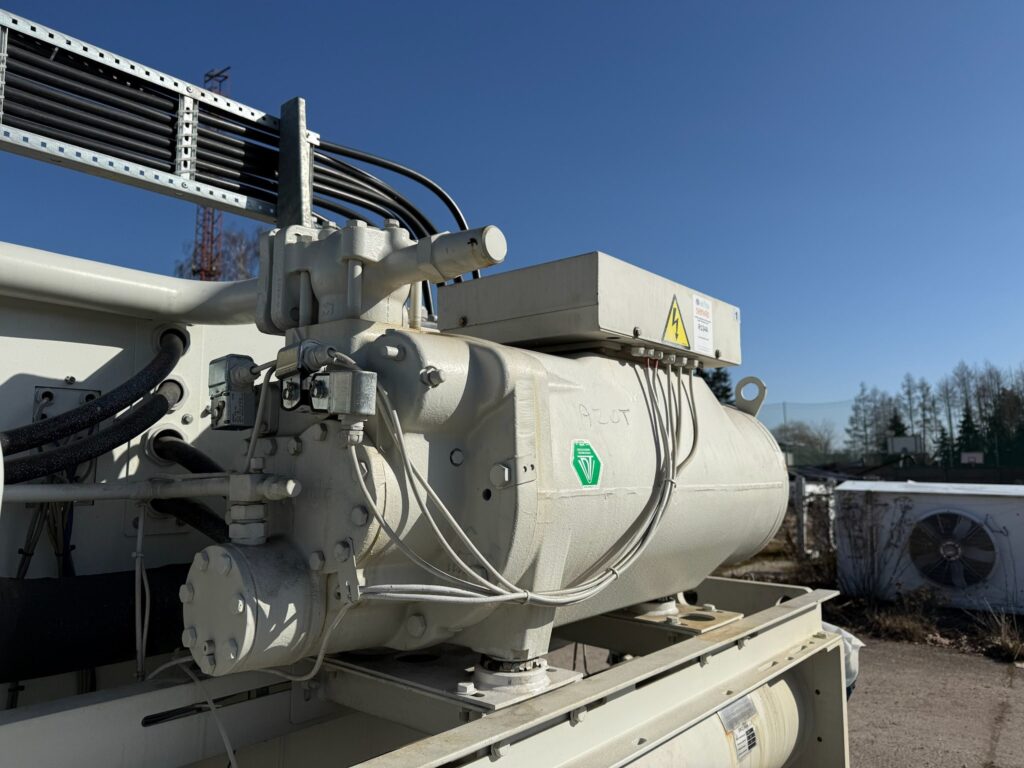
The details differ between scroll compressors with brazed connections and screw compressors with flanges, but the sequence stays the same.
- Recover and weigh the refrigerant. The recovered amount compared with the nameplate already says a lot about the circuit.
- Take an oil sample and run an acid test. With acidic oil, plan a flush of the circuit and a suction line acid filter.
- Disconnect the compressor electrically and mechanically. On screw machines inspect the oil separator and oil lines as well.
- Fit the new compressor, renew the vibration mounts, braze or flange the connections, replace the liquid line filter drier.
- Pressure test with nitrogen, then evacuate below 500 microns with a hold test.
- Charge refrigerant by weight, top up oil to the correct level, check rotation on scroll and screw compressors.
- Test run with a measurement report: superheat, subcooling, current per phase, oil pressure on screw units, clear the alarm log.
- Record the work and the refrigerant quantity in the equipment logbook under F-gas Regulation (EU) 2024/573.
Acid decides between success and failure. After a winding burn-out, acid sits in the oil, the pipework and the evaporator. If only the compressor is swapped, the acid attacks the new winding and the second failure follows within 6 to 18 months. That is why after an electrical failure we always replace the filter drier, fit a suction line acid filter and check the oil again after 100 running hours.
What a compressor replacement costs
The figures below come from our own jobs on R410A, R407C and R134a units. The price of the compressor itself depends on the manufacturer and the lead time.
| Unit | Compressor | Labour on site | Typical total |
|---|---|---|---|
| Air-cooled, 30 to 60 kW, single scroll | 1,500 to 3,500 EUR | 8 to 12 hours | 3,000 to 6,000 EUR |
| Air-cooled, 100 to 200 kW, tandem scroll | 3,000 to 7,000 EUR per compressor | 12 to 20 hours | 6,000 to 12,000 EUR |
| Screw compressor 200 to 500 kW | 12,000 to 30,000 EUR | 24 to 40 hours | 18,000 to 40,000 EUR |
| Extra when acid is found | flush, acid filter, second oil change | 4 to 8 hours | 800 to 2,500 EUR |
Add refrigerant by weight, travel at 0.75 EUR per kilometre and labour at 115 EUR per hour. For screw compressors it is often worth rebuilding the existing unit in our workshop: new bearings, new slide valve, rewound motor. It takes longer but often costs half. Details are on the workshop repairs page.
When we advise against a replacement
A new compressor in an old chiller is not always the right call. We advise against it when several of these apply: unit older than 18 years, refrigerant R22 or R404A with a high GWP, condenser coil with visible fin corrosion, evaporator with a freeze damage in its history, controller without spare parts supply, second compressor failure within five years. In those cases the money is better spent on a new or refurbished chiller. We run that calculation with you on the basis of the measurement report, not on gut feeling.
What to prepare before you ask for a quote
- A photo of the chiller nameplate and, if accessible, the compressor nameplate.
- The alarm code and time of the first trip, and how many resets were made.
- Date of the last maintenance and the last leak check from the logbook.
- Whether the compressor still starts, hums or trips immediately.
- Access: roof, crane, lift platform, door widths for transport.
With this information we can plan the diagnosis and reserve a replacement compressor before we arrive. That shortens the downtime by several days.
Frequently asked questions about chiller compressor replacement
Can I fit a compressor from another manufacturer?
How long does a compressor replacement take?
Does the refrigerant have to be replaced?
What happens to the old compressor?
Is replacement worth it on a 15 year old chiller?
Has your compressor failed or is it running oddly? Send the nameplate, alarm code and site location through the contact form or to info@chillerserwis.com. We will come back with a proposal for diagnosis and replacement.