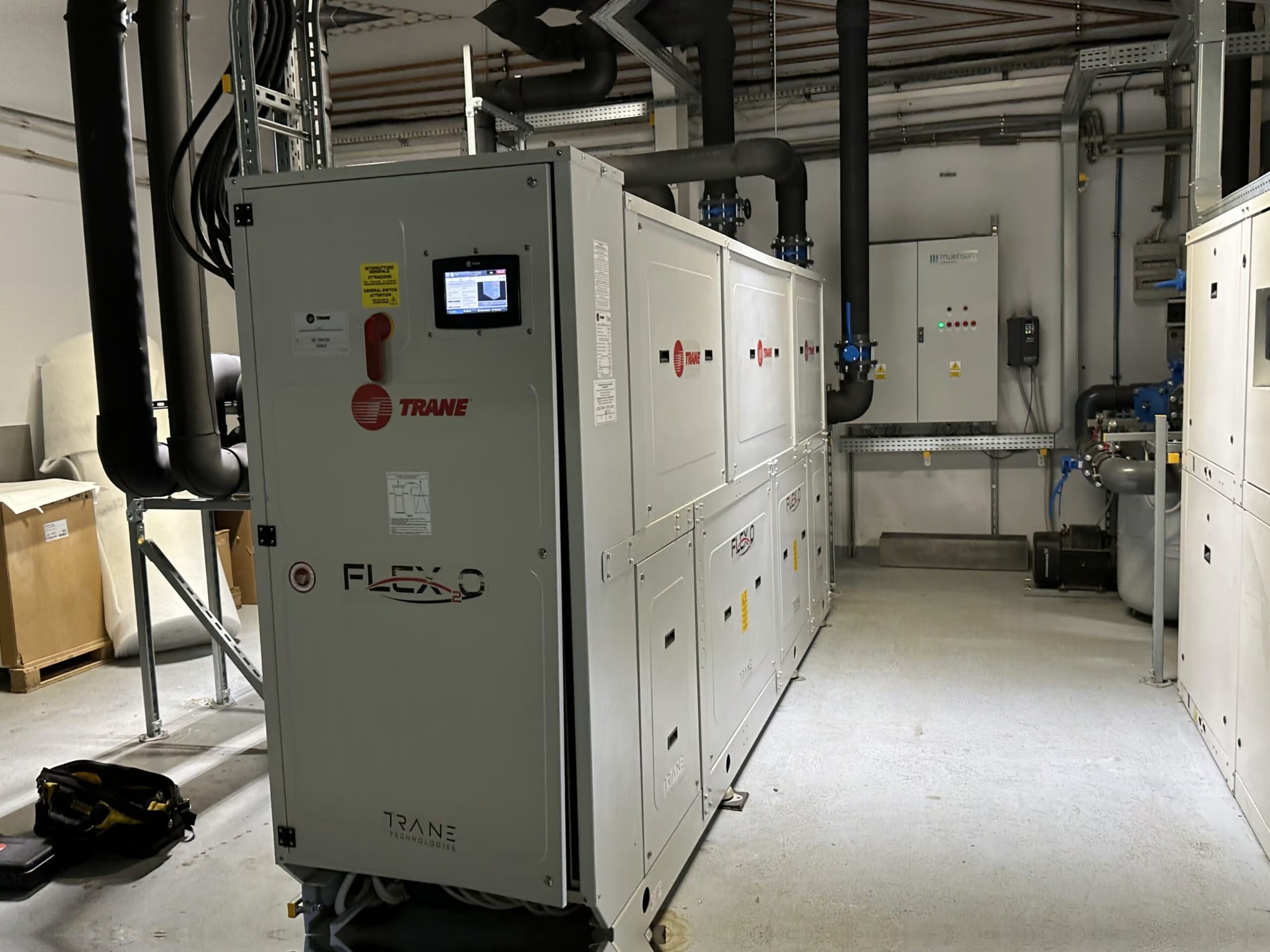

Chiller short cycling means the compressor starts, runs for a few minutes and stops again, over and over. It wastes energy, wears out contactors and compressors and makes the chilled water temperature swing. A few starts per hour are normal. Runtimes of two or three minutes are not. The cause is rarely the compressor itself. It is usually the combination of load, water volume, control settings and safety devices.
How to recognise short cycling
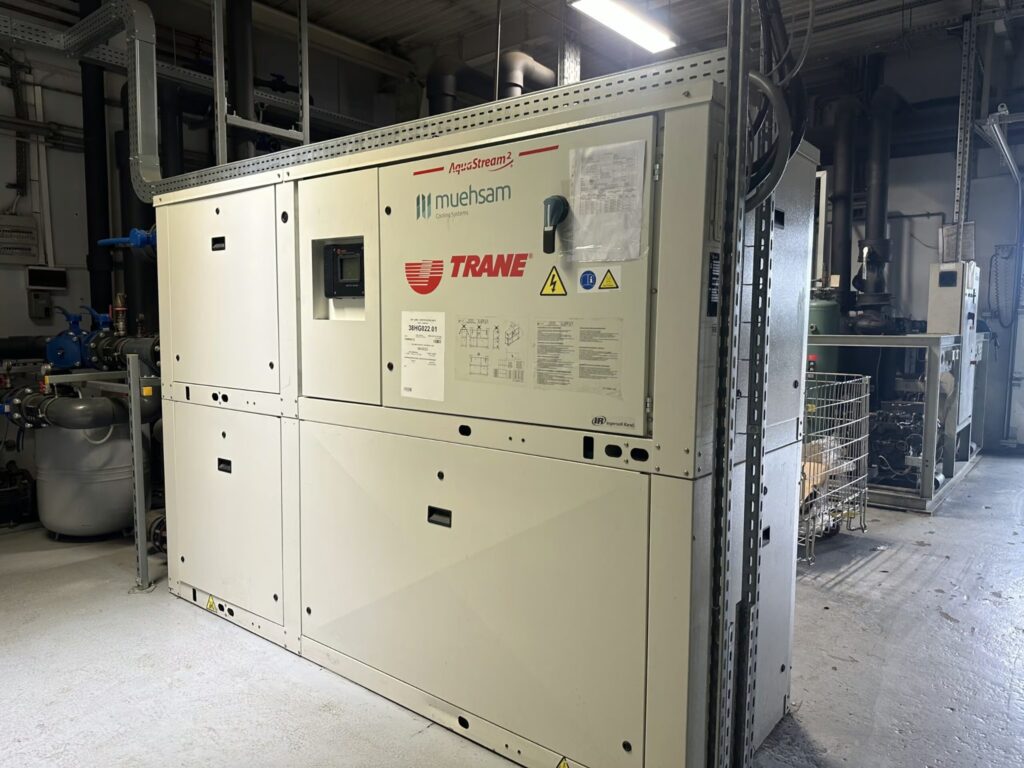
The controller shows a high number of starts per hour, compressor runtimes are short and the leaving water temperature moves up and down by several degrees. Most controllers record starts and running hours per compressor. When starts grow much faster than running hours, the unit is short cycling.
Chiller short cycling: what causes it
- Too little water in the system. The temperature changes so quickly that the compressor reaches the setpoint within minutes. A buffer tank is the usual fix.
- Tight control band. A small differential around the setpoint and short minimum run times make the unit react to every small change.
- Low pressure trips. The compressor starts, the suction pressure drops, the safety stops it and after the delay it starts again. From outside this looks like normal cycling.
- High pressure or motor protection. The unit stops under load after a few minutes because of a dirty condenser, a fan fault or high current.
- Oversized chiller. The design load never appears, so the unit runs at a small fraction of its capacity for most of the year.
Low pressure trips are covered in our article on the chiller low pressure alarm.
What we measure on site
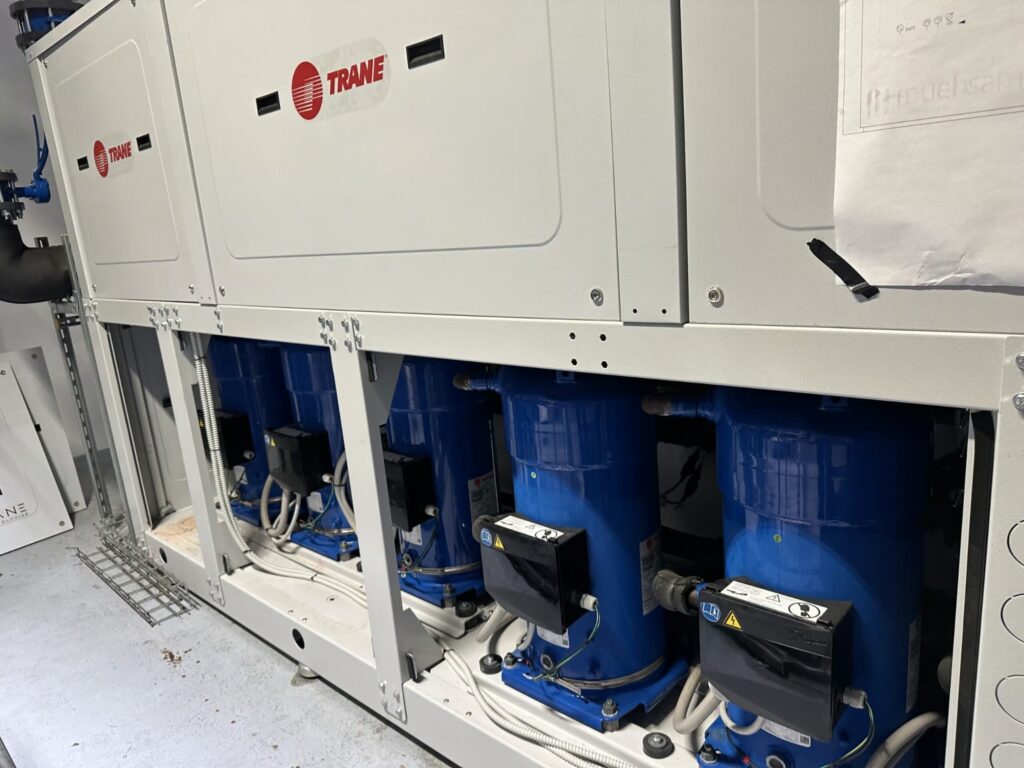
We read starts, runtimes and the alarm history, then measure under real load: water temperatures in and out, flow, pressures, superheat and compressor current. If the compressor runs until the setpoint and stops normally, the problem is system volume or control settings. If it stops through a safety device, we look for the fault in the refrigerant circuit or the electrics. We also check the hydraulics, because an open bypass or a wrongly set three way valve can hide most of the load from the chiller.
| Finding | Typical fix |
|---|---|
| Small system volume | Buffer tank, wider differential |
| Aggressive control settings | New differential, minimum run and off times |
| Safety trips | Repair leak, clean condenser, replace sensor or valve |
| Oversized unit | Capacity staging, buffer, in some cases a smaller chiller |
Costs and next steps
On-site diagnostics start from 800 EUR net, labour is 115 EUR net per hour and travel 0.75 EUR net per km. In many cases new control settings solve the problem on the first visit. Bigger changes such as a buffer tank are planned together with you. Regular inspections that catch these issues early are part of our chiller maintenance checklist, and repairs in our facility are described under workshop repairs.
Short cycling: frequent questions
How many starts per hour are acceptable?
Does short cycling damage the compressor?
Will a buffer tank always help?
Can short cycling be fixed remotely?
Is your chiller short cycling? Send the model, serial number and, if possible, the number of starts and running hours through the contact form or to info@chillerserwis.com.