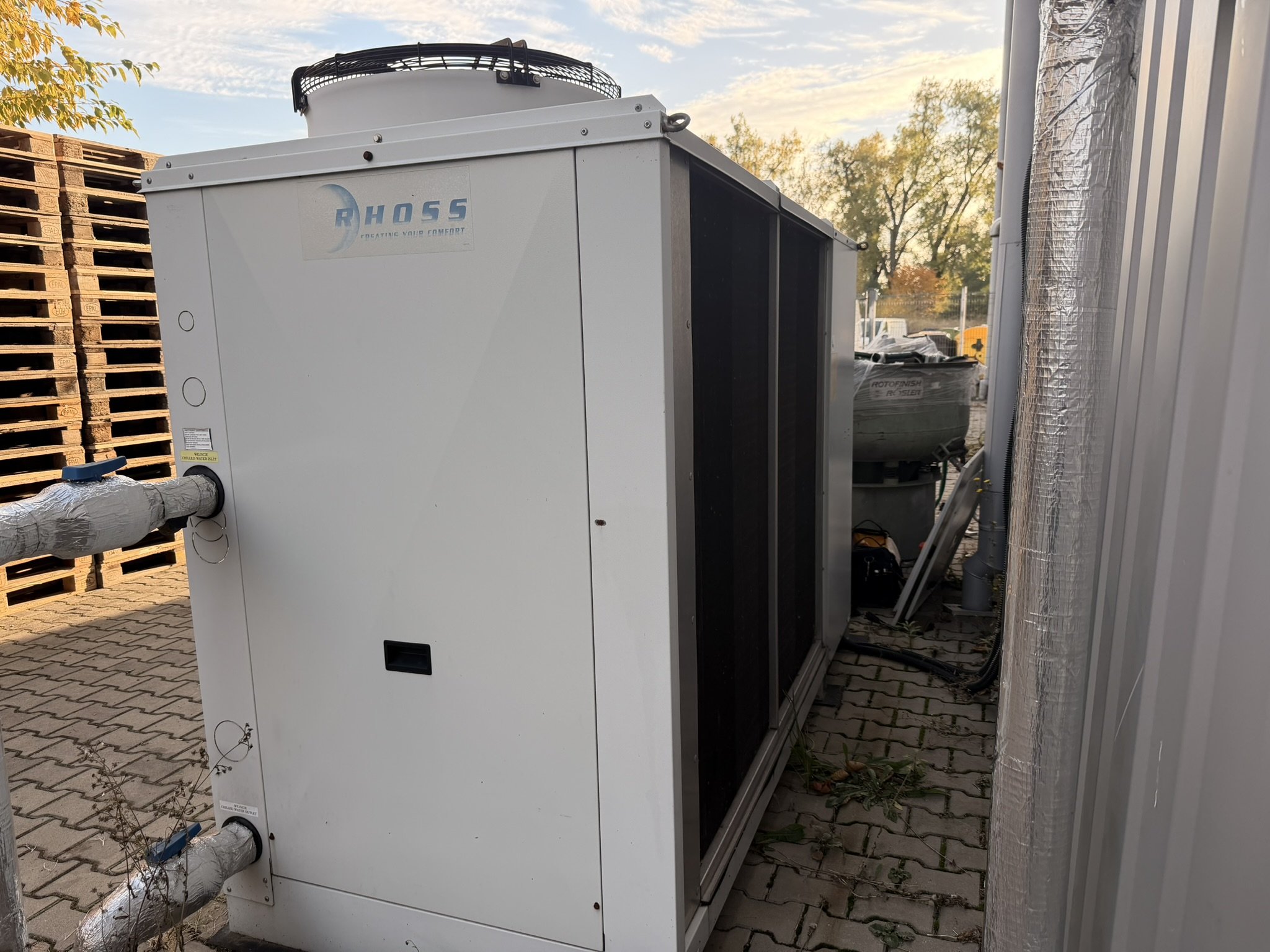

A dirty condenser rarely stops a chiller outright. The unit keeps cooling, the process keeps running, and nobody notices that the compressors are working harder every month. The bill arrives later: higher electricity consumption, high pressure trips on the first hot afternoon and a compressor that ages faster than it should. In this article we put numbers on that cost, using a 300 kW chiller as an example, and explain how to recognise a fouled coil, what your own staff can clean and when the job belongs to a specialist.
Why dirt on the condenser costs energy
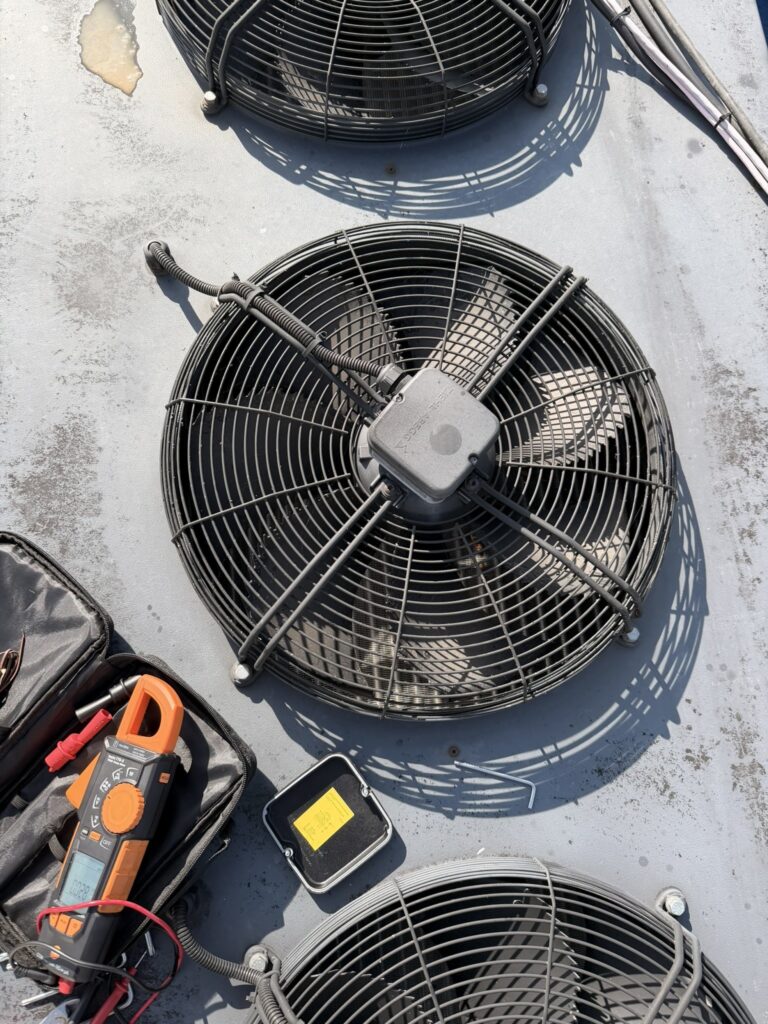
The condenser rejects all the heat the chiller removes from your process or building, plus the heat of compression, to the outside air. It can only do that as well as air can flow through the fin pack. A layer of dirt works against it twice: it insulates the fins and it chokes the air flow. Axial fans then run on the steep part of their curve, so even a moderate deposit cuts the air volume noticeably.
Less air means a higher condensing temperature, and a higher condensing temperature means a higher condensing pressure. The compressor has to lift the refrigerant against that pressure, and its power input rises. A widely used rule of thumb: every 1 K increase in condensing temperature raises the compressor power input by about 2 to 3 % and reduces the cooling capacity by about 1 %. The chiller therefore uses more electricity and delivers less cold at the same time.
There is also a hidden cost. A compressor that runs constantly at high discharge pressure and temperature degrades its oil and motor windings faster. Excessive condensing pressure is one of the main causes of compressor failure named by refrigeration component manufacturers.
How much it costs: typical values
The table below summarises typical values from measurements before and after cleaning on air-cooled chillers. The exact figures depend on the refrigerant, the design and the outdoor temperature, but the order of magnitude is consistent in practice.
| Condition of the fin pack | Drop in air flow | Rise in condensing temperature | Extra compressor power |
|---|---|---|---|
| Clean coil | reference | 0 K | 0 % |
| Light dust film | 10 to 15 % | +2 to 3 K | +4 to 8 % |
| Clear deposit, fins partly blocked | 20 to 30 % | +4 to 7 K | +10 to 18 % |
| Mat of poplar fluff or greasy film | 40 to 60 % | +8 to 15 K | +25 to 40 %, high pressure trips |
Worked example: a 300 kW chiller
Take an air-cooled chiller with 300 kW cooling capacity and an EER of 3.0. At full load it draws about 100 kW of electrical power. Assume 1,500 full-load hours per year, which corresponds roughly to one shift through the cooling season.
- Clean condenser: 100 kW × 1,500 h = 150,000 kWh per year.
- Fouled condenser with 15 % extra consumption: an additional 15 kW, so 22,500 kWh per year.
- At 0.20 EUR per kWh, that is about 4,500 EUR of extra energy cost every year.
For process cooling that runs around the clock, the numbers grow quickly. The same chiller with 6,000 full-load hours and the same 15 % penalty wastes about 90,000 kWh, roughly 18,000 EUR a year at the same tariff. A heavily blocked coil in the 25 to 40 % range can cost more than that in a single season.
Compare this with the cost of cleaning: for one chiller it usually takes a few hours on site. That makes condenser cleaning one of the measures with the shortest payback in chiller maintenance. A clean coil also prevents high pressure shutdowns on hot days, exactly when you need the cooling most. If you want to see what your chiller uses in the first place, our page on how much electricity a chiller uses shows how to estimate it.
How to recognise a fouled condenser
- Visual check: shine a torch at an angle into the fin pack. If no light comes through on the other side, the pack is blocked.
- High pressure alarms in summer: if the chiller trips on warm afternoons, the condenser is the first suspect.
- Fans always at maximum speed: even at moderate outdoor temperatures this points to poor heat transfer.
- Rising consumption at the same load: a sub-meter on the chiller shows the trend over months.
- Location: units next to kitchen exhaust, paint shops, bakeries, roads or under trees foul much faster.
The type of dirt depends on the site. Rooftops near roads collect mineral dust and soot. In spring, poplar fluff and pollen form a dense mat on the air inlet. Food plants and industrial kitchens coat the fins with a greasy aerosol that plain water does not remove, and metalworking plants add oil mist from cooling emulsions. A greasy or compacted deposit deep in the fin pack can only be removed with a suitable cleaning agent.
What your staff can do and what they should not
Leaves and loose dirt on the surface can be removed by your staff with a soft brush, with the unit switched off and isolated. Loose dust can also be rinsed out with low water pressure, from the inside outwards.
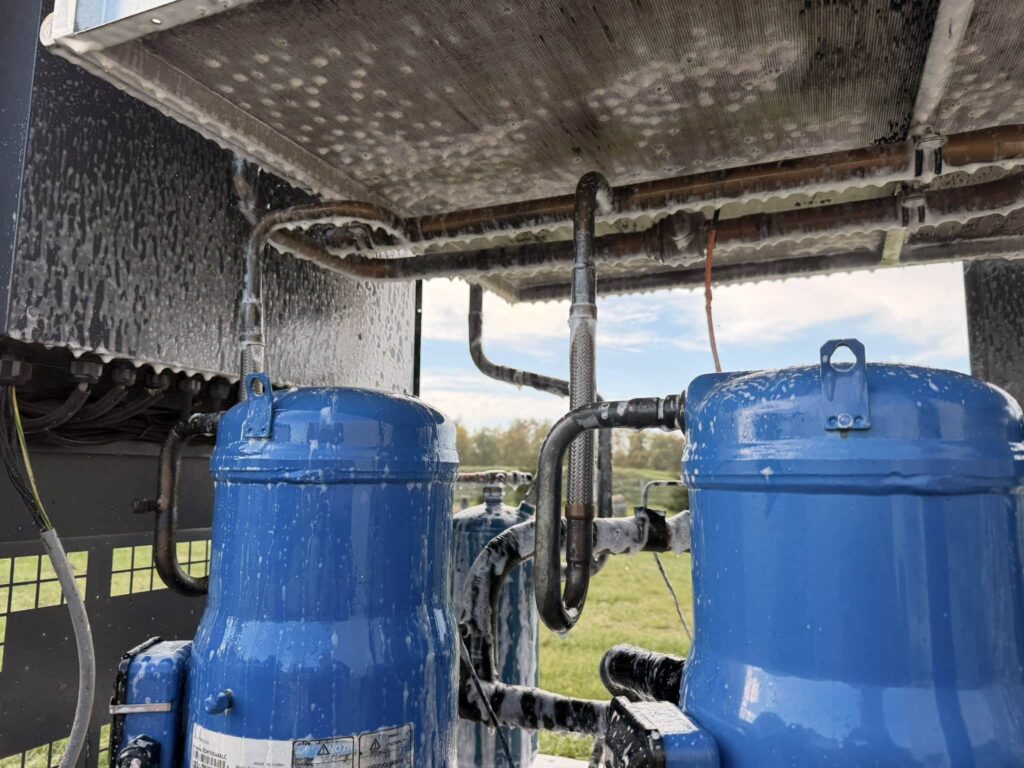
A pressure washer is a bad idea. It bends the aluminium fins and drives the dirt deeper into the pack. Bent fins choke the air flow worse than the dirt that was supposed to disappear. Sticky deposits of grease, pollen or industrial dust need a fin-safe cleaning agent: alkaline for grease and organic deposits, acidic for mineral scale, always with inhibitors that protect aluminium and copper. The foam is applied, left to react and then rinsed at controlled pressure. This work also includes checking the fins, the fans and the control, so it belongs in the hands of a specialist. How we do it is described on our condenser and coil cleaning page.
We measure the condensing temperature and the power input before and after cleaning and record both in the service report, together with photos. The difference in condensing pressure is the clearest proof that the work has paid off.
How often to clean
For chillers in a normal environment we recommend cleaning at least once a year, ideally in spring before the cooling season or in autumn after it. Sites with heavy fouling, such as food production, plastics processing or units near trees, benefit from two cleanings a year: after the spring pollen season and before winter. Dry coolers used for free cooling should be clean before winter, otherwise the compressors take over more often and the savings from free cooling shrink.
It makes sense to combine cleaning with the periodic leak check required under the F-gas Regulation (EU) 2024/573, so that one visit covers both. Cleaning is quoted according to the size and accessibility of the condenser; photos of the fins and the nameplate are enough for a first estimate. Working time is charged at 115 EUR net per hour and travel at 0.75 EUR net per km. If the chiller also shows faults, we offer a full diagnosis from 800 EUR net.
Frequently asked questions
Is cleaning worth it on smaller chillers?
Can I hose down the condenser with a garden hose?
Does the same apply to dry coolers?
Do you have to switch the chiller off for cleaning?
How do I know the cleaning made a difference?
Do you suspect your condenser is wasting energy? Send us photos of the fins, the nameplate and the site location through the contact form or to info@chillerserwis.com. We will get back to you with an assessment.