
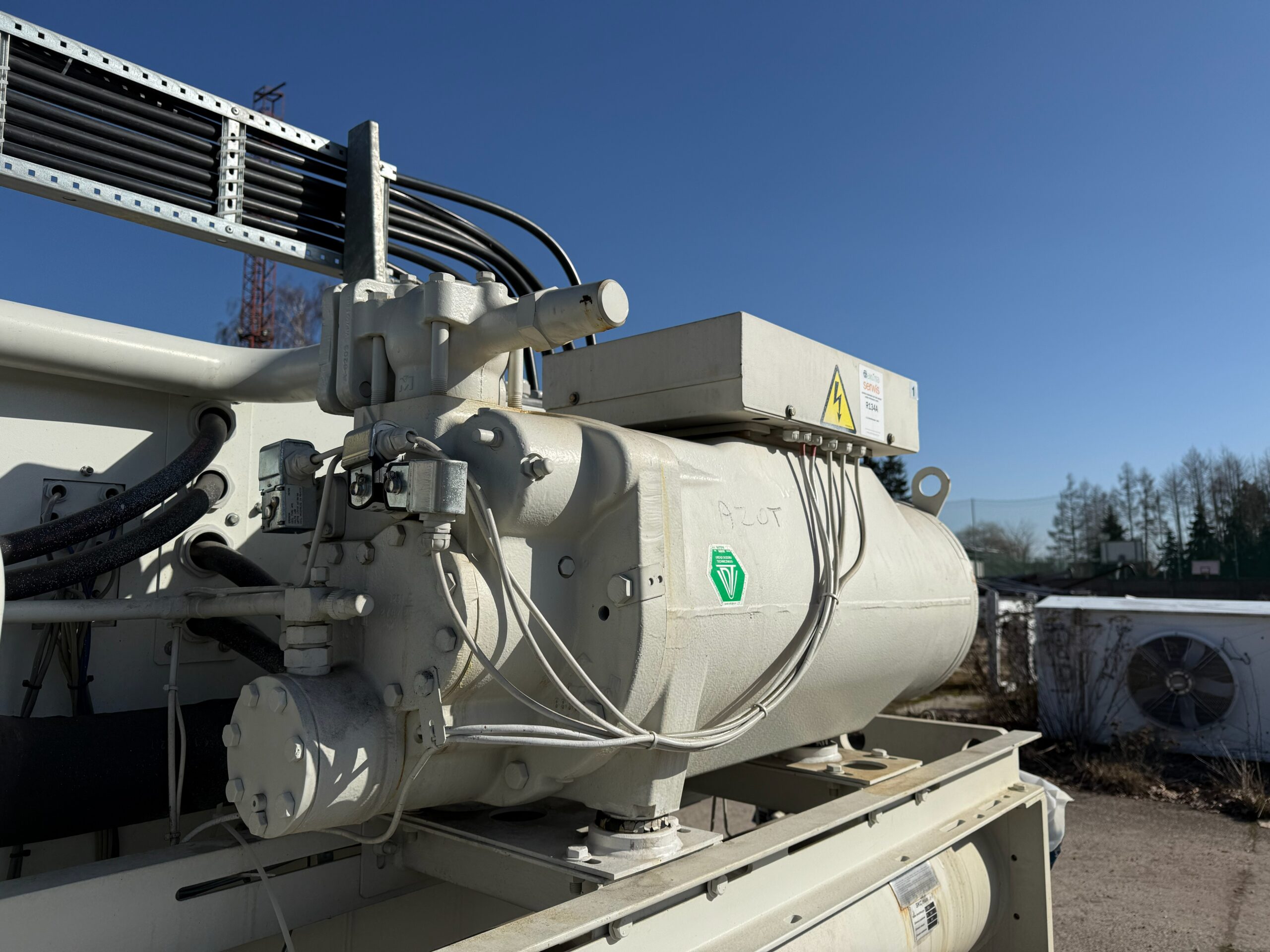

A chiller that suddenly sounds different is telling you something. Rattling, knocking, a high pitched whine or a new vibration in the frame are often the first signs of a problem that will become a breakdown if nobody reacts. At the same time, not every noise is a fault: some sounds are part of normal operation. This article helps you tell them apart, shows which noises point to which component and explains what you can safely check before calling a service engineer.
Normal sounds versus warning signs
A chiller has fans, one or more compressors, pumps, solenoid and expansion valves and a controller switching contactors. A steady hum from the compressor, the whoosh of the condenser fans, a click when a valve or contactor switches and a short hiss at start are normal. What matters is change: a sound that was not there last month, a sound that gets louder over weeks or one that comes with vibration you can feel.
What the noise tells you
| Noise | Likely source | Urgency |
|---|---|---|
| Metallic knocking from the compressor, especially at start | Liquid refrigerant or oil slugging, worn bearings or valves | High: stop and call service, risk of compressor failure |
| Rattling or loud scroll noise during operation | Operation outside the envelope, low suction pressure, wrong rotation after electrical work | High |
| Grinding or rumbling from a fan | Fan motor bearing worn, blade touching the guard | Medium: plan repair within days |
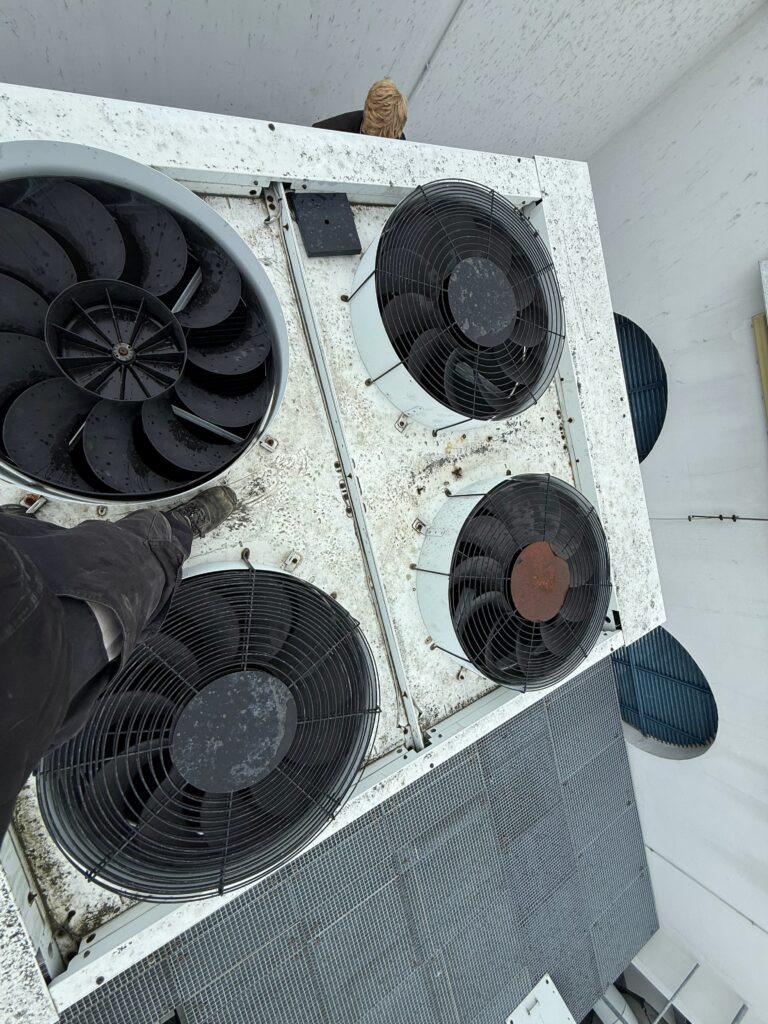
| Whistling or periodic vibration from fans | Unbalanced or damaged blade, ice or debris on the blade | Medium |
| Gravel like noise from the pump | Cavitation from low system pressure or air in the circuit | Medium: check pressure and vent |
| Hammering in the pipes when valves switch | Water hammer, fast closing valves, air pockets | Medium |
| Buzzing or chattering contactor | Low control voltage, worn contacts | Medium: electrical check |
| Rattling panels or pipes | Loose screws, missing pipe clamps, worn anti vibration mounts | Low, but vibration damages pipes over time |
Why compressor noise is the most serious
Compressors are designed to compress gas, not liquid. When liquid refrigerant reaches the compressor, because of a faulty expansion valve, too much refrigerant, low load or a crankcase heater that has failed, the result is a hard knocking sound and mechanical stress on the valves or scrolls. A compressor that is replaced costs many times more than the diagnosis that would have found the cause. If you hear knocking from the compressor, switch the unit off and do not restart it repeatedly.
Rotation matters too. A scroll compressor running backwards after work on the power supply sounds loud and rough and produces no cooling. Most chillers have a phase sequence relay, but not all of them.
What your maintenance team can check safely
- Record the noise: A short video with sound, together with the controller display, helps the engineer to assess the situation remotely.
- Note when it happens: At start, at full load, at low load, only in cold or hot weather.
- Look at the fans: With the unit isolated and locked off, check for debris, ice, damaged blades and loose guards.
- Check fixings: Loose panels, pipe clamps and missing screws are easy to fix and often cause rattling.
- Check system pressure and vent the circuit if the pump sounds like it is pumping gravel.
- Check the alarm history: High or low pressure alarms together with noise narrow down the cause.
Any work on the refrigerant circuit, compressor or electrical panel must be done by qualified personnel. Under the F-gas Regulation (EU) 2024/573, handling refrigerant requires certified technicians.
What the service engineer measures
On site, the engineer measures suction and discharge pressure, superheat and subcooling, compressor current and vibration, and checks the expansion valve, crankcase heater and fan bearings. In many cases the noise is a symptom of incorrect operating conditions, not of a worn part. Correcting refrigerant charge, the expansion valve setting or the condenser pressure control can remove the noise and protect the compressor. Typical alarm messages that go with noise are explained in our chiller alarm codes overview.
Costs
We offer an on-site diagnosis of a noisy chiller from 800 EUR net, including measurements and a written report with recommendations. Additional work is billed at 115 EUR net per hour plus travel at 0.75 EUR net per km. More on the chiller repair page.
Frequently asked questions
Can I keep running a chiller that makes a new noise?
Why is my chiller louder at night?
Can anti vibration mounts reduce noise?
What should I send for a first assessment?
Has your chiller started making a new noise? Send us a video, the nameplate and your location through the contact form or to info@chillerserwis.com. We will tell you how urgent it is and plan a visit if needed.