
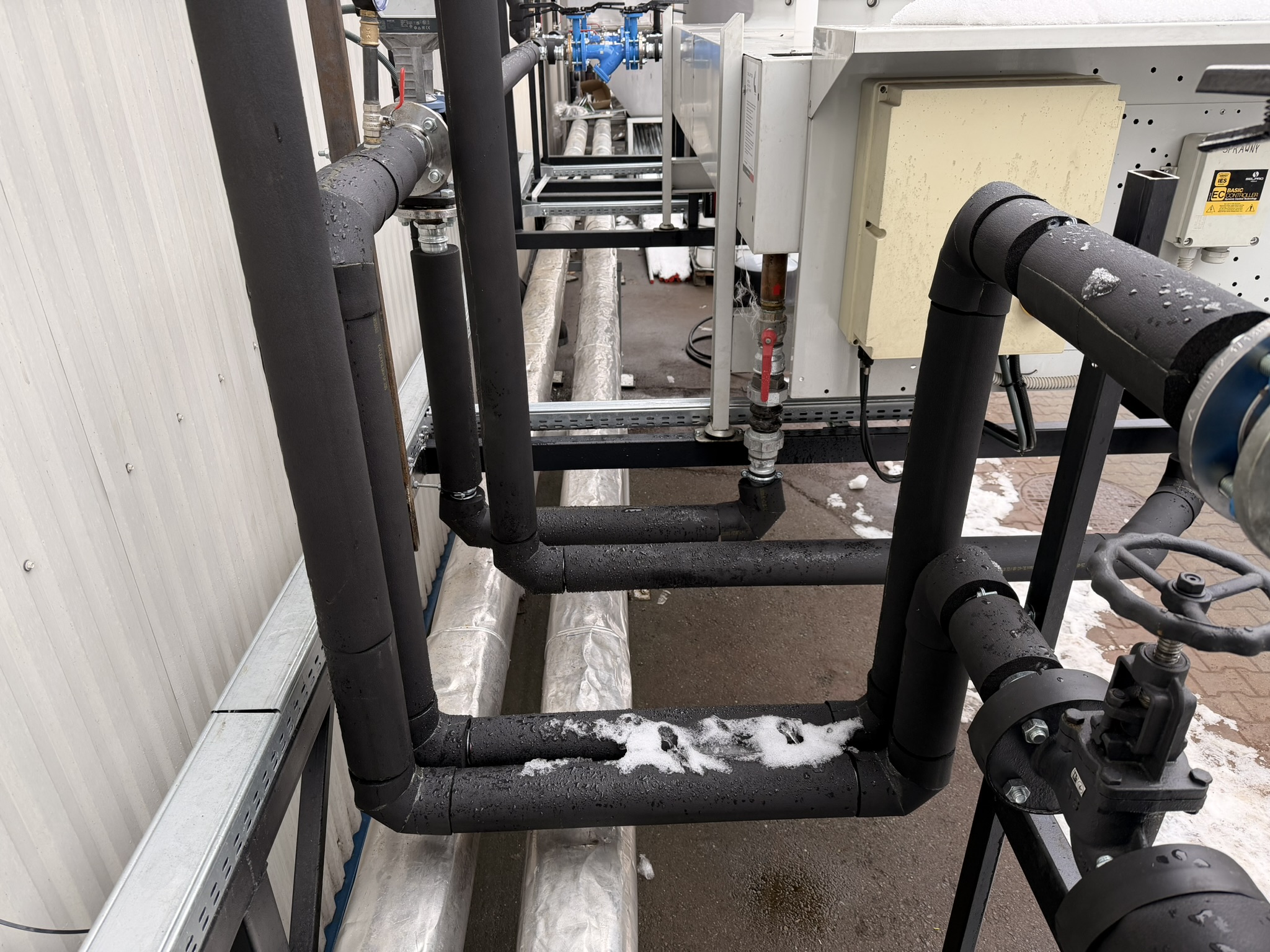

A chilled water system rarely fails all at once. Flow drops a little every month, the evaporator approach temperature creeps up, a valve starts to stick and strainers need cleaning more often. Behind most of these symptoms is the same cause: sludge, corrosion products, scale or debris circulating in the piping. Flushing removes this dirt before it damages the evaporator or the pumps. This article explains when flushing makes sense, how it is done properly and what it achieves.
Signs that your chilled water system needs flushing
- The strainer in front of the chiller clogs within weeks after cleaning.
- Flow alarms occur more often, especially at start or at low temperatures.
- The difference between leaving chilled water and evaporating temperature (approach) has risen by several kelvin compared with commissioning.
- Water drained from the system is brown, black or contains particles.
- Fan coils or process heat exchangers at the end of the network no longer reach their capacity.
- The system was extended, repaired or left drained for a longer period.
Where the dirt comes from
| Contaminant | Source | Effect |
|---|---|---|
| Magnetite and rust | Corrosion of steel pipes, oxygen ingress through leaks or plastic pipes | Black sludge, wear of pump seals, blocked strainers |
| Installation debris | Welding beads, swarf, sealing material after new works | Blocked plate heat exchangers, damaged valve seats |
| Scale | Untreated fill water with high hardness | Insulating layer on heat exchanger surfaces |
| Degraded glycol | Exhausted inhibitors, glycol older than several years | Acidic fluid, corrosion, gel like deposits |
| Biofilm | Bacteria in low temperature systems, especially after standstill | Slime, reduced heat transfer, microbiological corrosion |
How a professional flush is done
- Fluid analysis: A sample is taken and analysed for pH, glycol concentration, inhibitors, iron and copper content. This decides whether a clean water flush is enough or whether a chemical cleaner is needed.
- Isolation of sensitive components: The chiller’s plate heat exchanger and other components with narrow channels are bypassed or protected with temporary filters, so dirt from the network is not pushed into them.
- High velocity flushing: A temporary flushing pump creates flow velocities well above normal operation, section by section, so deposits are lifted from the pipe walls.
- Chemical cleaning where needed: A suitable cleaner dissolves corrosion products or scale. The product must be compatible with all materials in the system, including seals and aluminium where present.
- Neutralising and rinsing: The cleaner is rinsed out until the water is clear and the pH is neutral.
- Refilling and inhibiting: The system is filled with treated water or new glycol with inhibitor, vented and brought back to pressure.
- Documentation: Flow, pressure difference over the evaporator and fluid parameters are recorded before and after.
Flushing the network through the chiller itself is the most common mistake. The evaporator acts as a filter and collects the dirt you are trying to remove.
Clean water or chemical flush?
New installations usually need only a clean water flush with high velocity to remove construction debris. Older systems with magnetite, scale or degraded glycol need a chemical clean. The decision should be based on the analysis, not on guesswork. If a system has been running with old glycol for many years, the fluid replacement is often the key part of the job. More on fluid selection on our antifreeze fluids page.
What your maintenance team can do
Your team can clean strainers regularly, keep a log of how fast they clog, watch system pressure and take a fluid sample for analysis. These records make it much easier to decide when a flush is needed. Large scale flushing with temporary pumps and chemicals should be done by a specialist, because wrong products or flow paths can damage the chiller.
Costs
A laboratory analysis of the fluid costs 295 EUR net. Flushing is quoted per system, based on volume, number of sections and whether chemical cleaning is needed. Work on site is billed at 115 EUR net per hour plus travel at 0.75 EUR net per km. If flow problems have already caused chiller alarms, we start with a diagnosis from 800 EUR net. See also our chilled water installations page.
Frequently asked questions
How often should a chilled water system be flushed?
Can flushing damage old pipes?
Do we have to stop production?
Can old glycol be reused after flushing?
Seeing frequent flow alarms or dirty strainers? Send us a photo of the strainer, system volume and fluid type through the contact form or to info@chillerserwis.com, and we will recommend the next step.