A chiller inspection is a list of measurements compared with the manufacturer data and with the previous report, not a walk around the unit.
An inspection should answer two questions: what condition is the chiller in, and what has to be done before it stops in the middle of the season. Only readings can answer them. Below is the full list of what we measure on a chiller and what you receive afterwards.
Controller and operating history
- alarm history with dates and counts, the cheapest source of knowledge about the unit,
- setpoints, low and high pressure limits, freeze protection, start and delay times,
- run hours and starts of each compressor, load sharing between circuits.
Refrigerant circuit, each circuit separately
- suction and discharge pressure, converted to evaporating and condensing temperature,
- superheat at the compressor inlet and subcooling in the liquid line, the two readings that show whether the charge is right and the expansion valve works correctly,
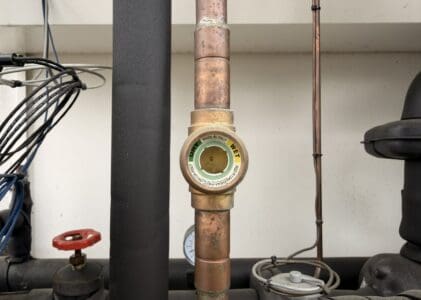
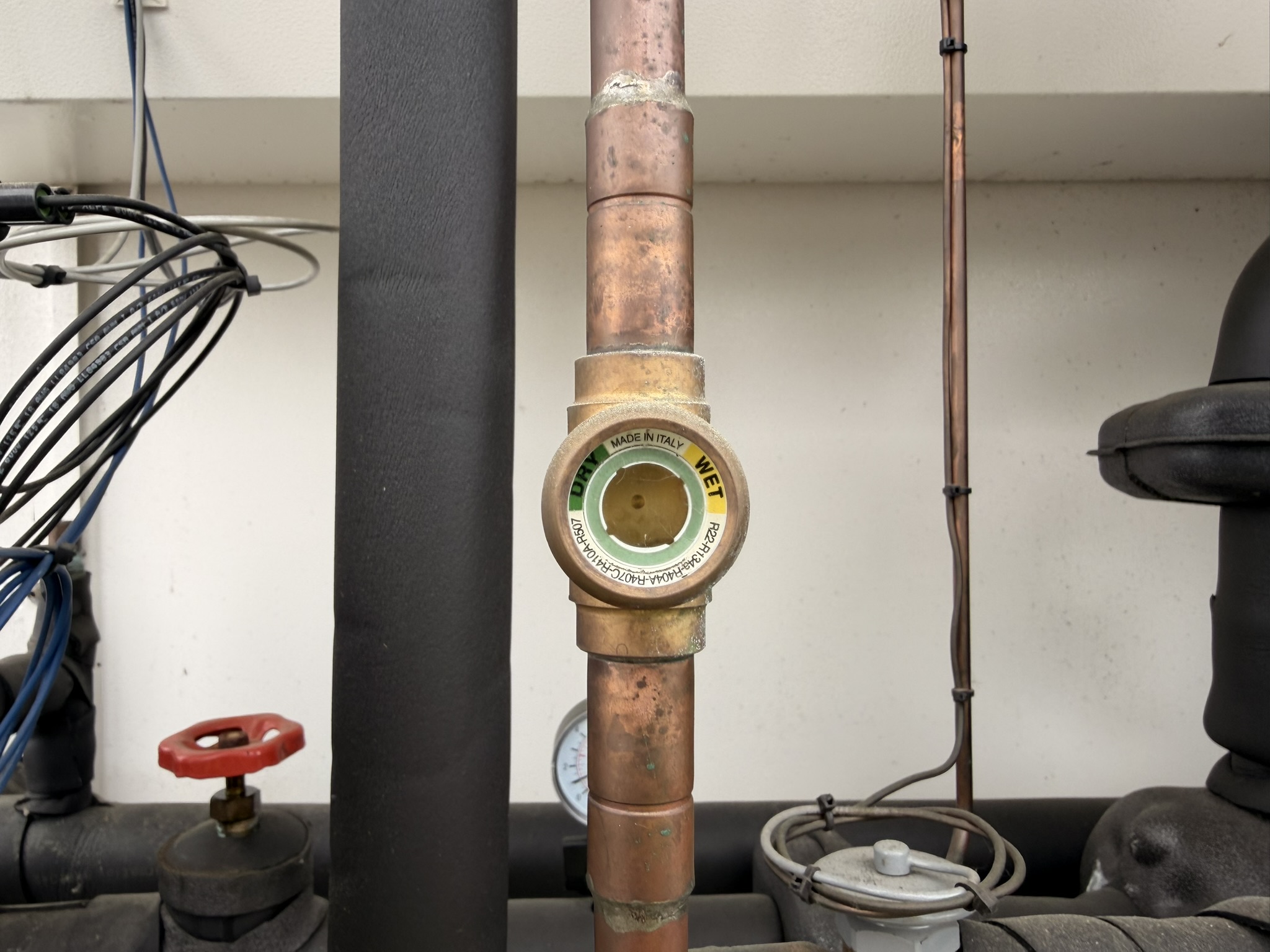
- discharge temperature, oil temperature, sight glass condition and temperature drop across the filter drier,
- leak check with an electronic detector on joints, valves and capillaries, with result and date for the records required by the F-gas Regulation (EU) 2024/573,
- refrigerant added or recovered, by scale.
Water or glycol side
- water temperature at evaporator inlet and outlet and the difference at a known flow,
- system pressure, strainer, venting, expansion vessel, buffer tank,
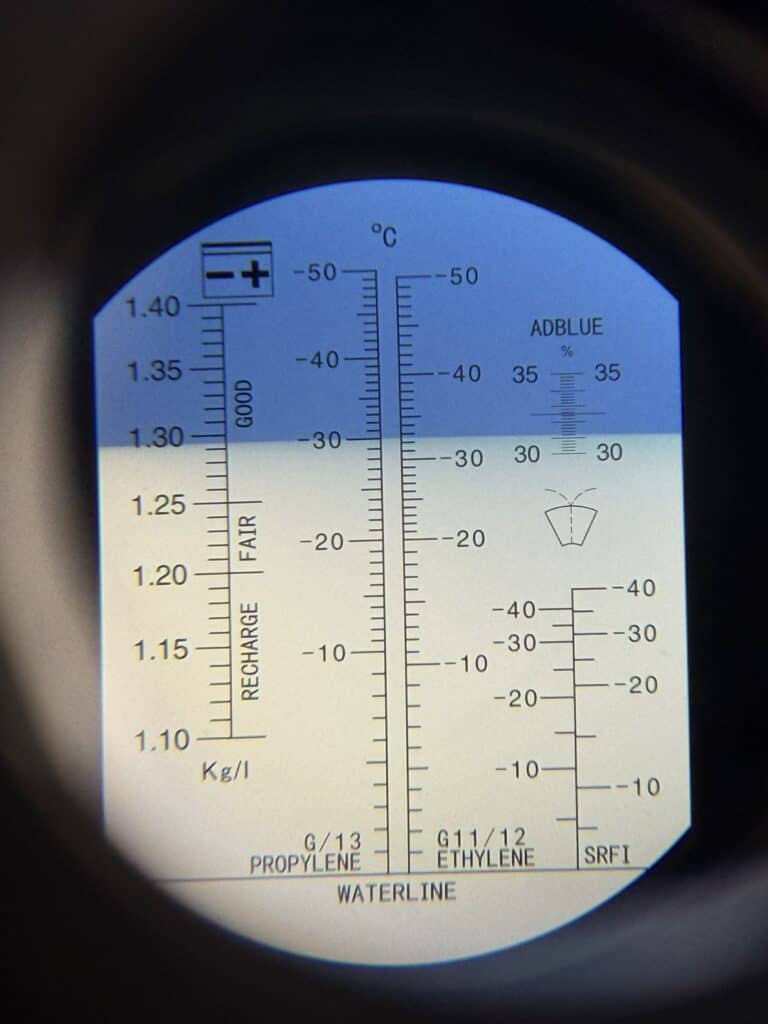
- glycol concentration by refractometer and the resulting freeze protection, with laboratory analysis of inhibitors and pH when needed,
- operation of the flow switch and freeze protection.
Condenser and fans
- condition of the fins and degree of fouling, cleaning as required,
- fan currents and bearings, head pressure control for winter operation,
- on water cooled condensers: water temperatures, pressure drop and deposits.
Electrical measurements
- phase to phase voltages and imbalance, compressor and fan currents per phase compared with the nameplate,
- tightening of terminals, state of contactors and relays, crankcase heaters, motor protection,
- insulation resistance of compressor windings when the alarm history or currents call for it.
Visual checks and safety
- fixings, anti vibration mounts, pipe insulation, cable routes, labelling,
- safety valve and pressure switches, service access.
What you receive after the inspection
Within five working days you receive a report: scope of work, all readings in tables, photos, the leak check result and recommendations numbered by urgency. If we inspected the unit before, or you have an earlier report, we compare the values. Where a repair is needed, the quote lists parts and labour separately. The decision is yours.
Costs
On site diagnosis starts at 800 EUR net, a working hour is 115 EUR net and travel 0.75 EUR net per km. For several units on one site we prepare a joint quote. Crews travel from Wałsnów and Szczecin in Poland. The maintenance visit itself is described in the chiller maintenance checklist, the service under technical inspections and the legal leak checks under F-gas leak checks.
Frequently asked questions
How long does a chiller inspection take?
Does the chiller have to be switched off?
Is the F-gas leak check part of the inspection?
Do we get the readings as a file?
Planning an inspection?
Send the model, serial number and location of the unit. We will propose a date.