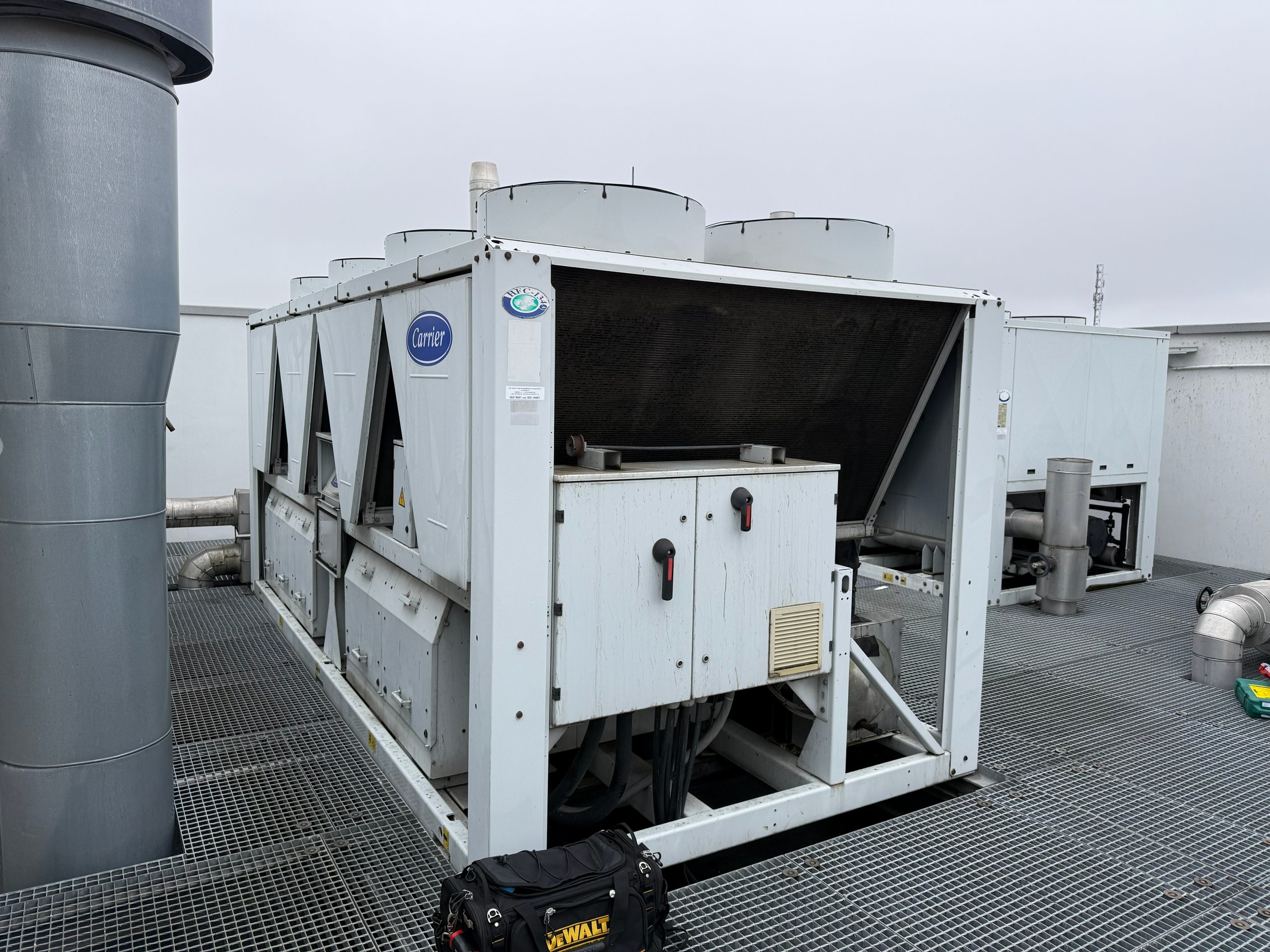
When a chiller breaks down, has to be overhauled or cannot keep up with a seasonal peak, a temporary unit keeps the process or the building running. The rental units come from our partner company ChillerTech, and our team connects, starts up and services them.
Renting a chiller is not only about delivering a machine. A temporary unit has to match the capacity and temperatures of the process, connect safely to the existing water circuit and power supply, and run reliably for the whole rental period. Splitting the job between the equipment supplier and the service team that knows chillers gives you both: ChillerTech provides the units, ChillerSerwis does the technical work on site.
When a rental chiller makes sense
- Breakdown: the main chiller has failed and the repair will take days or weeks, for example while a compressor is on order.
- Overhaul or replacement: the existing unit is taken out of service for planned work, such as a compressor change, heat exchanger cleaning or replacement by a new chiller.
- Seasonal peaks: the installed capacity is not enough during the hottest weeks of the year.
- New process lines or trials: cooling is needed before a permanent solution is decided.
- Events and temporary sites: short-term cooling where no permanent plant exists.
In the case of a breakdown, rental and repair run in parallel. While the temporary unit holds the process, we diagnose and repair the main chiller, as described on our chiller repair page.
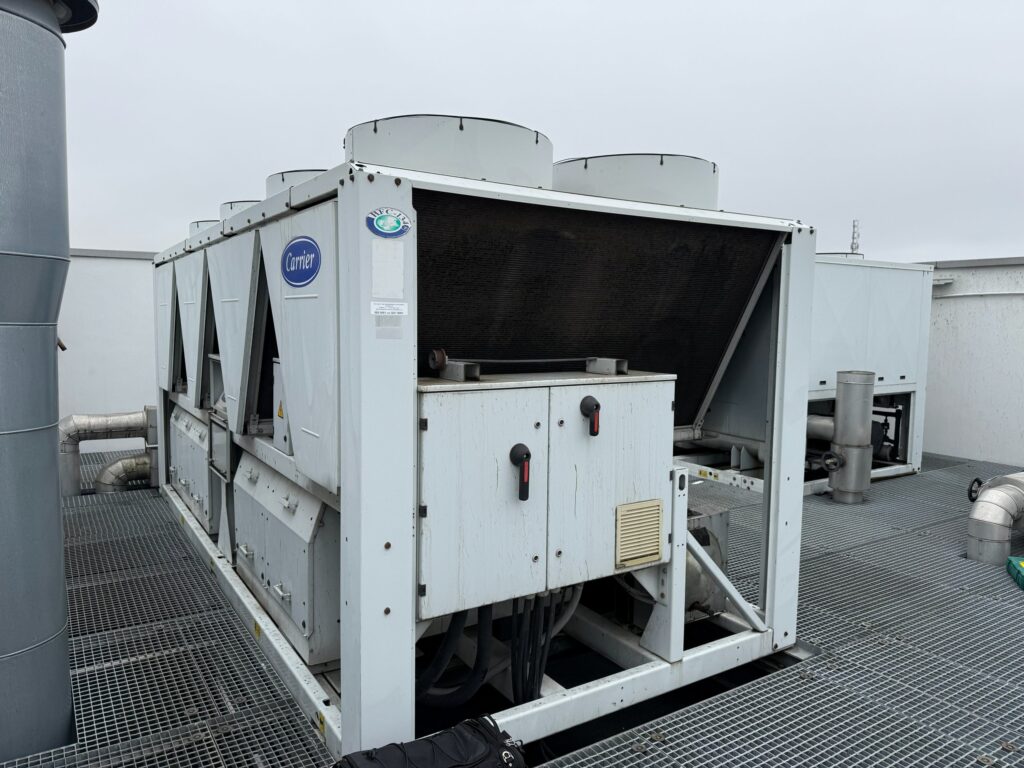
Units for process and comfort cooling
The type of unit depends on what it has to cool. Process cooling usually needs stable supply temperatures, sometimes below zero with glycol, and reliability around the clock. Comfort cooling typically works with water at 6 to 7 degrees C supply and tolerates small fluctuations. To choose the right unit we need the following information:
| Information | Why it matters |
|---|---|
| Required cooling capacity in kW | The rental unit must cover the real load, not only the nameplate of the failed chiller |
| Supply and return temperatures | Capacity of a chiller falls as the supply temperature drops |
| Fluid: water or glycol, and its concentration | Glycol reduces capacity and is needed for frost protection outdoors in winter |
| Flow and connection sizes | Hoses, adapters and the rental unit’s pump must match the system |
| Available power supply | Rental chillers usually need a 400 V three-phase supply with suitable current and protection |
| Place of installation and access | Space for airflow, ground load, access for a truck, crane or forklift |
| Rental period and noise limits | Affects the choice of unit and the service plan |
Connection and start-up
Most of the risk in a temporary installation lies in the connection. We plan it before the unit arrives:
- Site survey or photos of the plant room, the existing pipework and the electrical supply point.
- Choice of the connection points on the existing circuit, with isolation valves so the main chiller can be worked on separately.
- Connection with flexible hoses or temporary pipework, with strainers and venting points.
- Electrical connection to a supply point prepared by the site, with protection matched to the rental unit.
- Filling, venting and a check of the glycol concentration where glycol is used.
- Start-up with measurements: supply and return temperatures, flow, pressures, superheat and compressor currents, recorded in an electronic report in English.
The setpoints and alarms of the rental unit are set to the needs of the process. If the existing chilled water installation has weaknesses that affect the temporary unit too, such as a blocked strainer or low system pressure, we point them out at start-up. Larger changes to the installation are covered on the chilled water installations page.
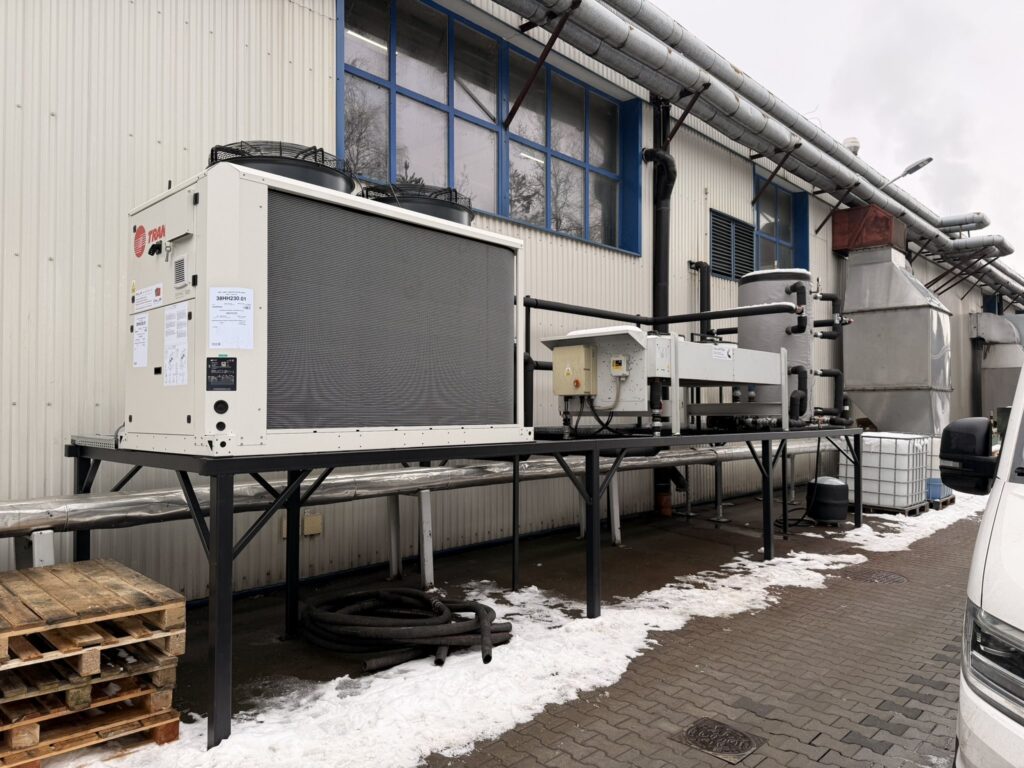
Short and long term rental
Short rentals of days or a few weeks typically bridge a repair or a planned stop. Long rentals of several months cover a season or the time until a new chiller is delivered and installed. For long rentals we agree service visits during the rental period: condenser checks before hot weather, filter and strainer cleaning, and a check of the refrigerant circuit and the leak check where the charge requires it under the F-gas regulation. For winter operation outdoors, hoses and the unit must be protected against frost, either with glycol or with heating and insulation.
Return and check after the rental
At the end of the rental we disconnect the unit, drain it and recover any glycol in a way agreed with you, and restore the original connections of your installation. The temporary unit is checked and its condition recorded before it goes back to ChillerTech. If the main chiller has been repaired in the meantime, we start it up again with control measurements, so the changeover from the temporary unit is documented from start to end.
Frequently asked questions
How quickly can a rental chiller be on site?
It depends on the required capacity, the availability of units at ChillerTech and the distance. We confirm the date when we confirm the scope.
Can a rental unit be connected in winter?
Yes, with frost protection: glycol in the circuit, or heated and insulated hoses. We plan this before delivery.
Who is responsible for the unit during the rental?
The rental terms are agreed with ChillerTech. The technical work on site, connection, start-up and service, is done by ChillerSerwis.
Can you rent a chiller in Germany?
Yes, for sites in Germany and other EU countries. Transport, connection and service are included in the offer.
Need temporary cooling?
Send us the capacity, temperatures and site details and we will prepare a rental offer together with ChillerTech.