
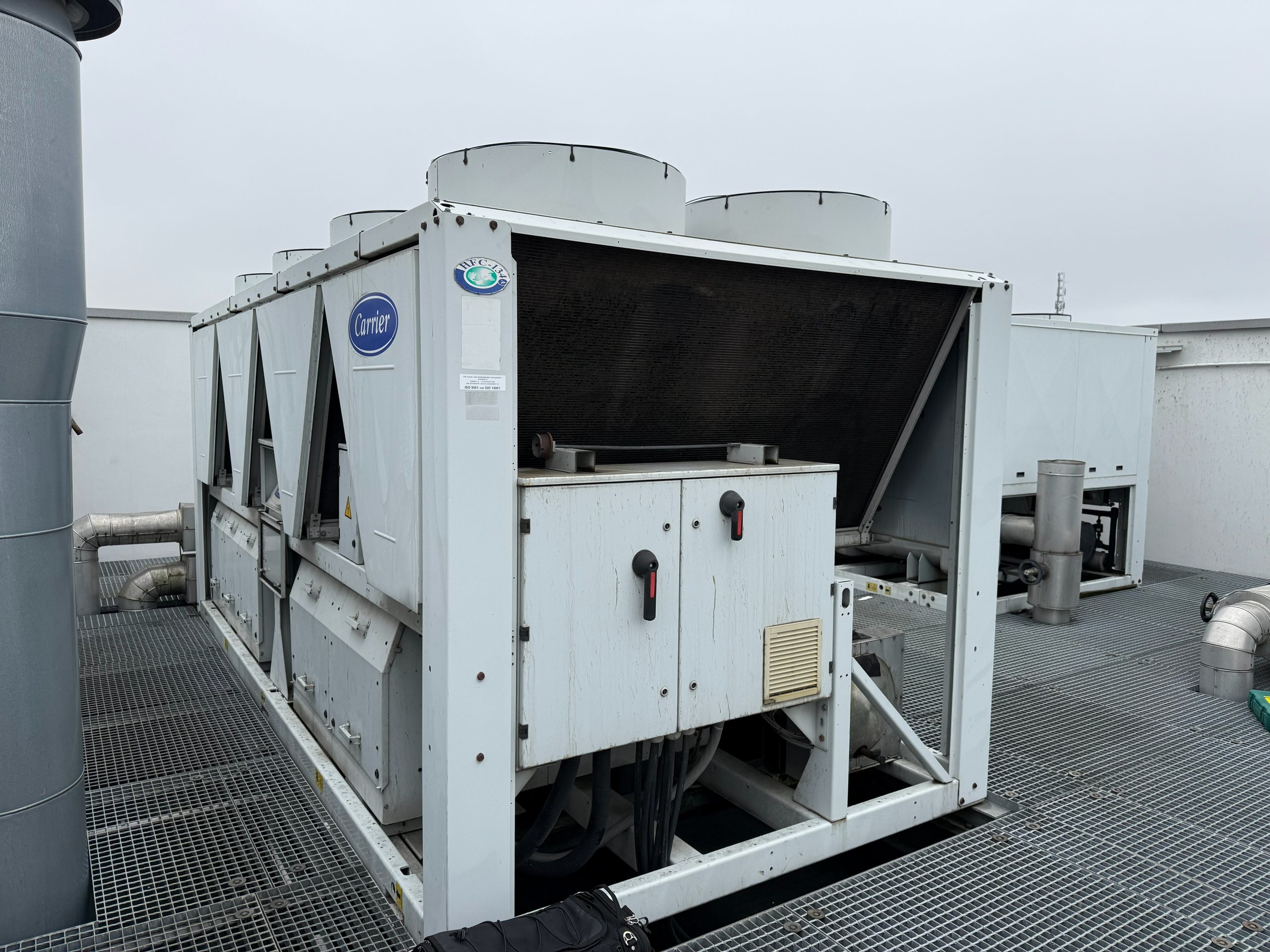
A refrigerated compressed air dryer is a small refrigeration unit, and most of its faults are refrigeration faults. We measure the pressure dew point, diagnose the refrigerant circuit, service the condensate drains and repair smaller dryers in our workshop.
Water in the compressed air network corrodes pipes, damages pneumatic valves and cylinders, spoils paint finishes and contaminates products. The refrigerated dryer is supposed to prevent that by cooling the air, condensing the moisture and draining it away. When the dryer stops doing its job, the problem is often noticed only when water appears at the point of use. By then the network is wet and needs draining too.
How a refrigerated dryer works
Warm, saturated air from the compressor enters an air-to-air heat exchanger, where it is pre-cooled by the cold, dry air leaving the dryer. It then passes through the evaporator, an air-to-refrigerant heat exchanger, where it is cooled to around +3 degrees C. Water condenses, is separated and is drained. The cold dry air is reheated in the air-to-air exchanger on its way out, which prevents condensation on the outside of the pipes. The refrigerant circuit uses a hermetic compressor, a small condenser, an expansion device and usually a hot gas bypass valve that stops the evaporator from freezing at low load.
Dew point measurement
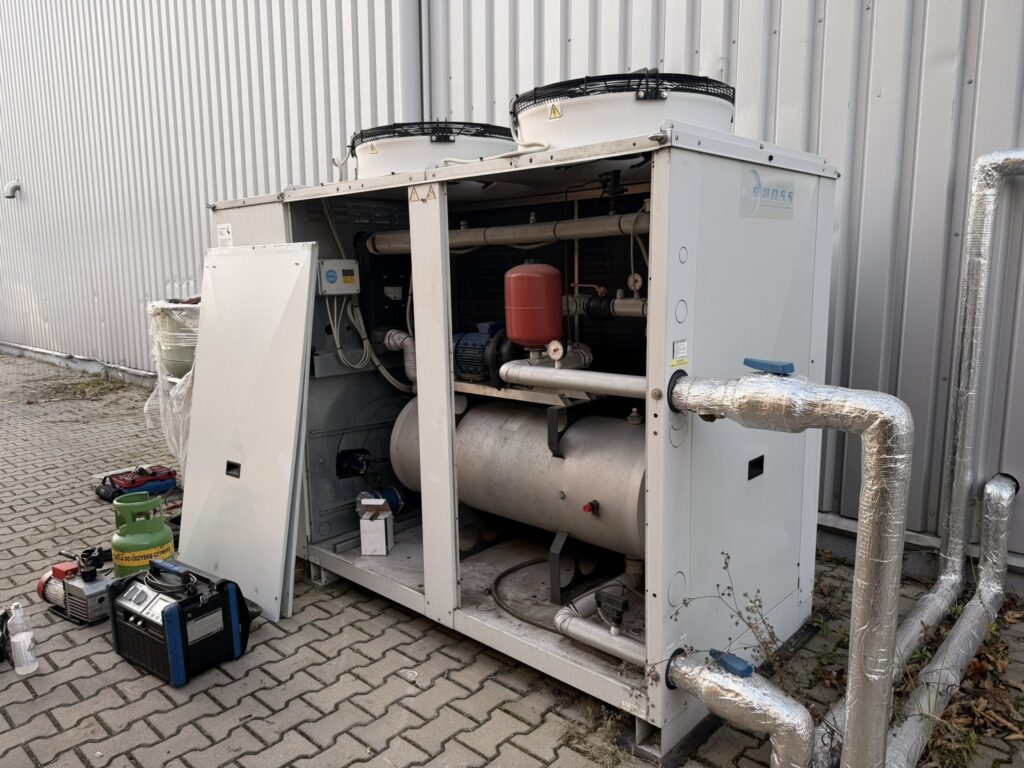
The display on the dryer often shows the evaporator temperature, not the actual dew point of the air. We measure the pressure dew point with a separate instrument at the dryer outlet and compare it with the required air quality class according to ISO 8573-1.
| ISO 8573-1 humidity class | Pressure dew point | Typical use |
|---|---|---|
| Class 4 | +3 degrees C or lower | General industrial air, the usual target for refrigerated dryers |
| Class 5 | +7 degrees C or lower | Less demanding applications in heated buildings |
| Class 6 | +10 degrees C or lower | Basic tool air |
A refrigerated dryer cannot reach a dew point below freezing. If pipes run through unheated areas in winter, or the process needs drier air, an adsorption dryer is the right tool, and we will tell you so instead of adjusting a refrigerated dryer beyond its limits.
Refrigerant circuit diagnostics
When the dew point is too high, we work through the possible causes with measurements:
- Overload: inlet air temperature, pressure and flow compared with the dryer rating. Dryers are rated at reference conditions such as 35 degrees C inlet, 7 bar and 25 degrees C ambient; a hotter inlet or lower pressure reduces the real capacity considerably.
- A failed compressor aftercooler, which sends air that is far too hot to the dryer.
- A fouled condenser or a failed condenser fan, raising the condensing pressure and reducing capacity.
- Refrigerant shortage from a leak: low suction pressure, high superheat, warm evaporator.
- A misadjusted or failed hot gas bypass valve: too warm an evaporator, or an evaporator that freezes and blocks the airflow.
- A compressor with worn valves or a failing start relay or capacitor.
Small dryers use refrigerants such as R134a, R407C, R410A or R513A in small charges. Leaks are repaired by brazing under a nitrogen purge, followed by evacuation and charging by weight, exactly as on a chiller. More about repair practice is on the chiller repair page.
Condensate drain service
A dryer that cools the air perfectly is useless if the water is not drained. The drain is the most common point of failure.
- Timer-controlled solenoid drains: we check the opening interval and duration, the strainer in front of the valve and the coil. A blocked strainer means water carried over into the network.
- Level-controlled zero-loss drains: we check the sensor, the test button function, the alarm output and the service unit, which should be replaced according to the manufacturer’s interval.
- Drain lines: free flow to the oil-water separator, no lifts the drain cannot overcome, protection against frost.
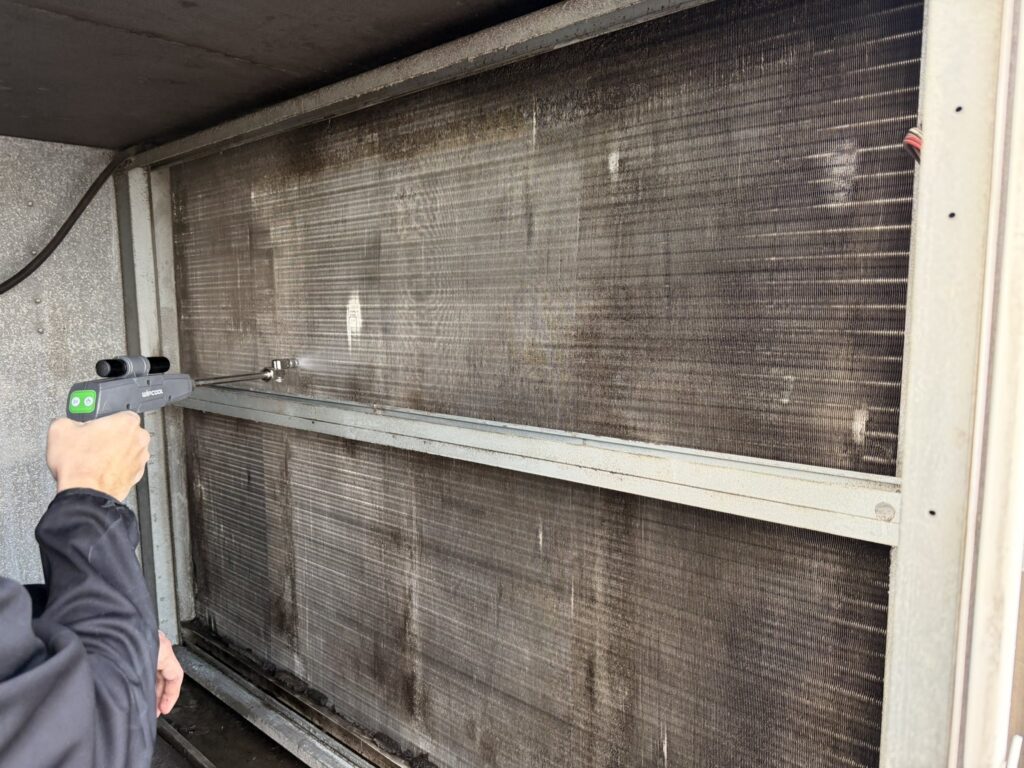
We also check the separator and the air-to-air heat exchanger. Oil and dirt from the compressor coat the heat exchanger surfaces, increase the pressure drop and reduce the heat transfer.
Workshop repair of smaller dryers
Smaller dryers can be repaired in our workshop in Wałsnów. That is usually cheaper than a long visit on site for a compact unit, and it lets us test the dryer under controlled load before it goes back. Workshop jobs include compressor replacement, leak repairs, hot gas valve replacement, cleaning of heat exchangers and drain overhauls. The process is described on our workshop repairs page. Larger dryers are serviced on site, often together with the inspection of other refrigeration equipment in the plant.
Frequently asked questions
How often should a refrigerated dryer be serviced?
Once a year as a minimum, with the drain checked more often. Dryers in hot compressor rooms benefit from a check before the summer.
The dryer display shows +3 degrees C, but there is water in the lines. How is that possible?
The display often shows the evaporator temperature. If the drain does not work or the separator is flooded, water is carried over regardless of the temperature. A dew point measurement and a drain check usually find the cause.
Do you service the compressors as well?
We service the refrigerated dryer and its refrigerant circuit. Air compressors are serviced by their specialised service providers; we can coordinate with them if the cause lies on the compressor side.
Can a dryer be repaired after a compressor failure?
Often yes. Whether it pays off depends on the age and size of the dryer. We give you the repair cost before starting.
Water in your compressed air lines?
Send us the dryer model and a description of the problem and we will plan a dew point check or a workshop repair.