A technical inspection is a planned visit during which we measure how a chiller or cooling system really works, before a fault stops production. You receive a report with the readings, the findings and recommendations ranked by priority.
An inspection is different from a repair visit. There is no alarm to chase, so the time goes into a systematic check of every part of the system under load. It is also different from a legal leak check, which only answers the question whether the circuit leaks. An inspection tells you how close each component is to its limits and what should be done in which order. Where a leak check is due, we combine it with the inspection and record it separately, as described on our F-gas leak checks page.
Pressures, temperatures, superheat and subcooling
The refrigerant circuit is read with a digital manifold and calibrated temperature probes. From the pressures and pipe temperatures we calculate the values that show the condition of the circuit.
| Value | Typical range | What a deviation tells us |
|---|---|---|
| Superheat at the evaporator outlet | 4 to 8 K (electronic valve), 5 to 10 K (thermostatic valve) | Too high: short of refrigerant, starved valve, blocked drier. Too low: risk of liquid to the compressor |
| Subcooling at the condenser outlet | 3 to 8 K on air-cooled units | Too low: undercharge or flash gas. Too high: overcharge or restriction |
| Evaporator approach | 2 to 5 K depending on the heat exchanger | Rising value: fouling, low charge or low flow |
| Condensing temperature above ambient (air-cooled) | 10 to 15 K at full load | Above 20 K: fouled coil, fan fault, recirculation |
| Discharge temperature | According to the compressor manufacturer | High value: high superheat, high compression ratio, wear |
One set of readings is useful, but readings taken at the same load at every inspection are much more useful. That is why we record numbers, not ticks, and compare them with the previous report.
Compressor currents and oil
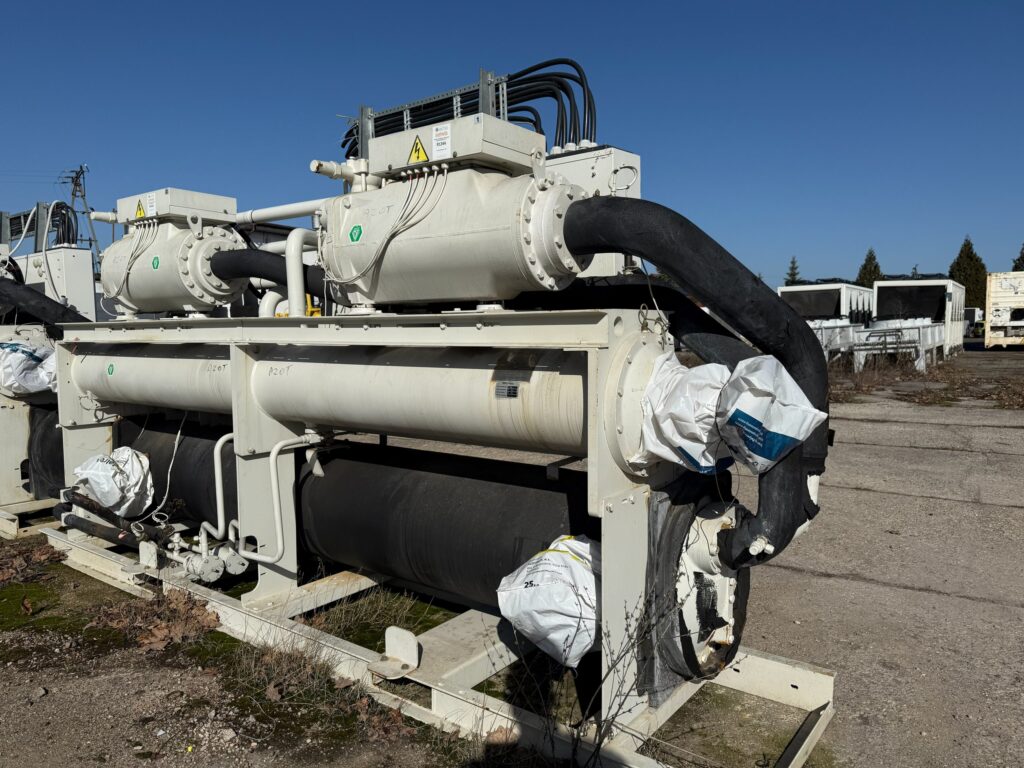
Compressor currents are measured on all three phases and compared with the rated load amps. Unequal currents point to a supply or contactor problem, currents rising over the years point to mechanical wear or high condensing pressure. On request we measure the insulation resistance of the motor windings, which shows slow deterioration long before a burnout.
Oil is the compressor’s early warning system. We check the level and colour in the sight glass, the oil pressure difference on compressors with oil pumps and the operation of the crankcase heaters. On larger screw and semi-hermetic compressors we recommend an oil acid test at regular intervals; acid in the oil means moisture in the circuit and a risk of motor damage.
Heat exchangers and the water side
The inspection covers both the refrigerant and the water side of the evaporator and condenser.
- Supply and return water temperatures and the temperature difference, compared with the design values.
- Pressure drop across the evaporator as an indication of flow and fouling.
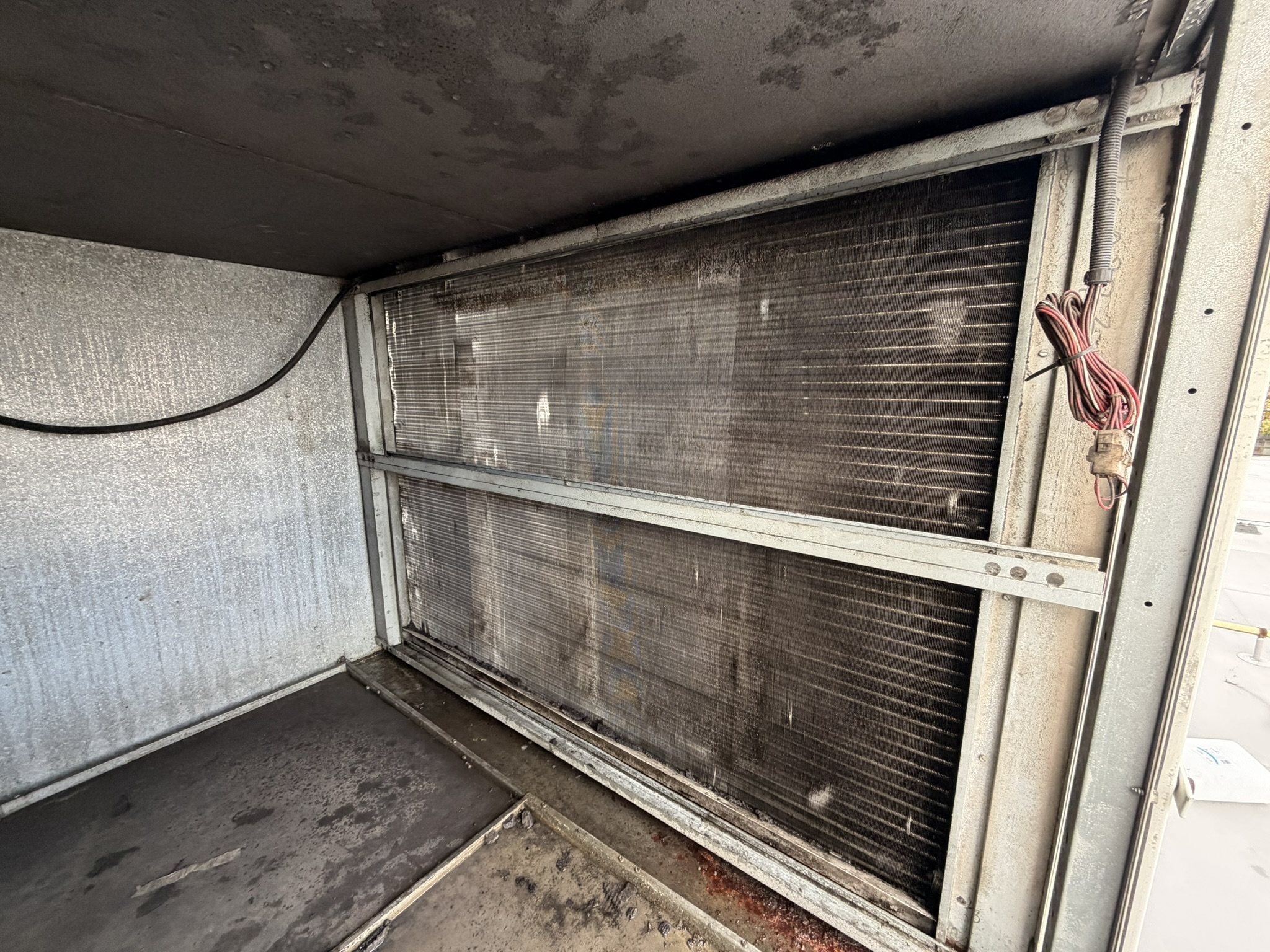
- Condition of air-cooled condenser coils and fans, or the condenser water flow on water-cooled units.
- Strainers, flow switches, expansion vessel pre-charge and system pressure.
- Glycol concentration and freezing point with a refractometer, pH and visual condition of the fluid.
- Insulation of cold pipework and signs of condensation or corrosion.
When the glycol needs more than a field test, the follow-up is described on the glycol testing and replacement page.
Controls and safety devices
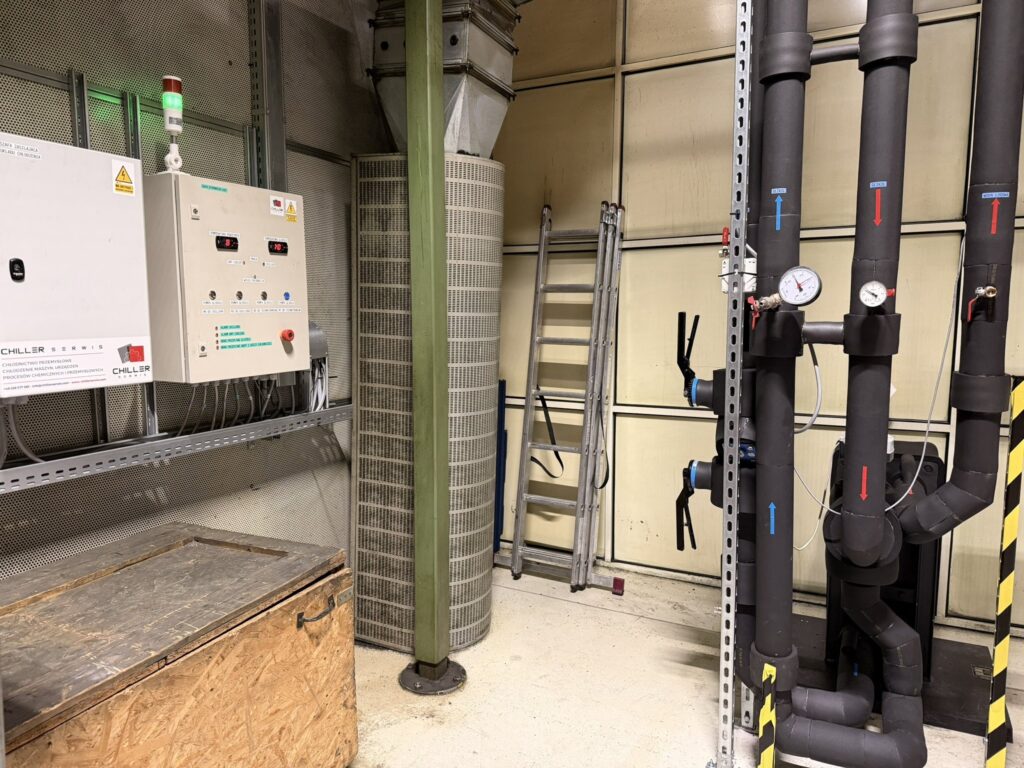
We read the alarm history and the operating hours and starts of each compressor. A high number of starts per hour is one of the most reliable signs of a control band that is too narrow or a water volume that is too small. Safety devices are tested where it can be done safely: the high pressure switch, the flow switch and the frost protection. Setpoints are checked against the documentation and the real needs of the process.
Report with recommendations and priorities
The result of an inspection is an electronic report in English, signed on site. Next to the measurements and photos it contains a list of findings, each with a priority:
- Immediate: a risk of failure or of a safety device not working, to be fixed now or as soon as possible.
- Planned: to be done within the next months or before the next season, for example condenser cleaning or a drier replacement.
- Monitor: values that are still acceptable but trending in the wrong direction, to be checked at the next inspection.
For each recommendation we can prepare a quote. If the inspection reveals a fault that needs repair, the next steps are described on the chiller repair page.
How often to inspect
For process chillers running all year we recommend two inspections a year. For comfort cooling one inspection before the season is usually enough, with a short check in the peak of summer for critical buildings. The legal leak check interval is set separately by the CO2 equivalent of the charge: every 12 months from 5 tonnes, every 6 months from 50 tonnes and every 3 months from 500 tonnes, with longer intervals when a leak detection system is installed.
Frequently asked questions
Does the chiller have to be running during the inspection?
Yes, as close to its normal load as possible. Readings from a unit at very low load or in standstill tell us much less.
How long does an inspection take?
A single medium-sized chiller usually takes half a day to a day, depending on the number of compressors and the condition of the system.
Is a leak check the same as an inspection?
No. A leak check is a legal requirement focused on refrigerant tightness. An inspection checks the whole system and its performance. We often do both during one visit.
Can you inspect units installed by another company?
Yes. We are independent and inspect all brands after the end of the warranty.
Plan your next chiller inspection
Send us the list of units and their refrigerant charges and we will propose dates and a fixed price.